









Alwaght- Tensions between Afghanistan and Pakistan have once again sparked and for the second time in less than a year, the relations of the neighbors have gone critical.
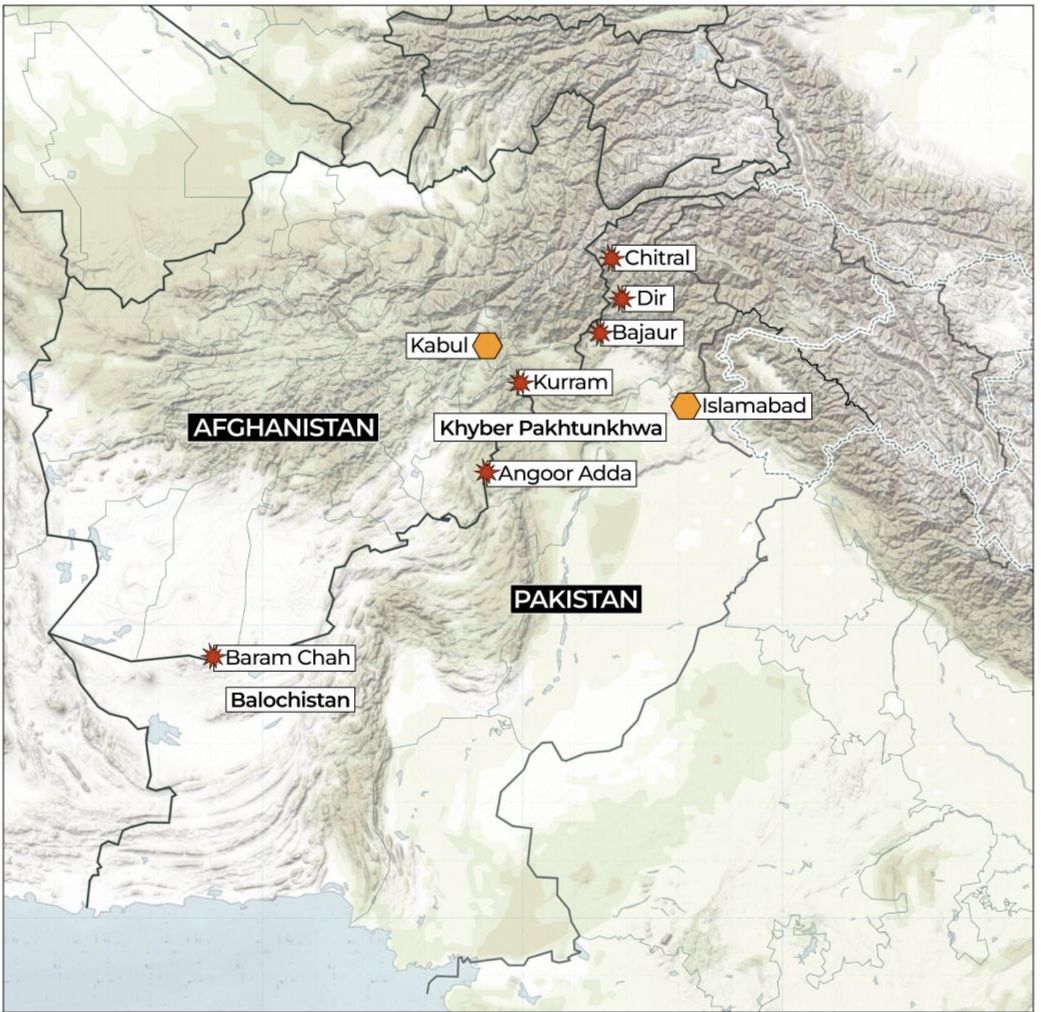
The rejuvenated round of confrontation started with Pakistani air force launching attacks on Barmal District in Paktika province in eastern Afghanistan. Pakistan's Information Minister in a statement officially confirmed his country’s action.
The minister said that the airstrikes targeted 7 posts of Tahrik-i-Taliban (TTP) and ISIS-Khorasan (ISIS-K) terrorist groups in some border regions of Afghanistan. At least 10 terrorist elements, including militant commander Akhtar Mohammad, were killed in Paktika attack, sources said.
Reports added that Pakistani airstrike targeted a religious seminary. In a separate strike in Nangarhar province, an Afghan government official confirmed that 17 civilians were killed.
The Taliban have issued a furious warning. Declaring the defense of Afghanistan's territorial integrity and the security of its people a "sacred and national duty," the Ministry of National Defense vowed a "necessary and calculated response at the appropriate time." The Taliban statement characterized the attacks on civilian targets and religious centers as clear evidence of Pakistan's "intelligence and security failure."
The strikes come after Pakistan announced that three recent suicide bombings against its security forces were planned on Afghan soil, directly implicating Afghan nationals in the terrorist acts. Islamabad has long accused the Taliban of failing to rein in militant groups operating from Afghanistan, and has issued a stark threat, saying that terrorists will now be considered legitimate targets for Pakistan wherever they are, regardless of their location.
The cross-border raids underscore a sharp rise in attacks by terrorist groups, including the Tehrik-i-Taliban Pakistan (TTP) and ISIS, targeting both Pakistani soldiers and civilians in recent months. While the Pakistani military has repeatedly struck militant hideouts and killed numerous fighters, these groups continue to operate across various regions, destabilizing the country.
This latest escalation marks a new chapter in the volatile relationship between the two neighbors. In October, the two countries were locked in a tense standoff for days. Multiple rounds of peace and ceasefire talks, brokered by Qatar, Turkey, and Saudi Arabia, ultimately failed to yield a lasting resolution.
The story of Kabul-TTP cooperation
To explore the reason behind continuation of this confrontation, we should look into the deeper and tense relations between Kabul and Islamabad; relations that for years have fluctuated between periodical cooperation and structural distrust and any security development can fast push them to a point of explosion.
In this connection, Afghanistan affairs expert Ismail Bagheri told Alwaght that "Afghanistan-Pakistan dispute over Durand Line has always existed and the Taliban do not recognize this border line. With their comeback to power, Islamabad officials thought that they could put an end to the border dispute with rise to power of a puppet government in Kabul. But this pessimism soon gave place to concerns. With takeover of power in August 2021, Pakistan stepped up its attacks on the TTP in tribal regions and Khybar Pakhtunkhwa province.
Bagheri added that Pakistan has repeatedly argued that the TTP elements use Afghanistan as a safe haven and a platform for organizing their operations, but Kabul rejects the allegations. Islamabad expected the Taliban to arrest TTP leaders and hand them over to Pakistan, but Kabul turned a blind eye to them.
Islamabad maintains that Kabul lacks either the capability or the will to rein in these militant groups, a point of contention that has become a primary driver of the escalating tensions between the two nations. The interim Taliban government, for its part, views Pakistan's strikes less as defensive actions and more as a calculated attempt to project domestic pressures onto the foreign stage.
Officials in Kabul argue that by ramping up military operations along the border, Islamabad is trying to pin its own failures to contain a new wave of terrorism on Afghanistan. In their view, this approach, rather than solving Pakistan's security crises, risks inflaming bilateral tensions and deepening the cycle of mistrust.
Mr Bagheri also highlighted the complex ties between the TTP and the leadership in Kabul, saying: "Although Tahrik-i-Taliban is independent from the Afghan Taliban, it shares deep historical, ideological, and ethnic ties with them." He explained that while the Pashtun ethnicity is comprised of three main tribes—the Ghilzai, Durrani, and Sarbani. Sarbani, who are predominantly based in Pakistan, trace their roots to the Afghan Pashtun lineage that forms the Taliban's own ethnic base. The TTP is now reminding the leaders in Kabul of the support they provided to the Afghan Taliban during the two decades of fighting against the Americans.
"The message is clear: now it is time to repay that debt. They expect the interim government in Kabul to help them establish their desired Islamic Emirate in Pakistan's Khyber Pakhtunkhwa province," Bagheri added.
Referring to the Pakistani actions against Kabul, the political analyst held:" To reach its goals, Pakistan first tried to put strains on the Afghan government using international pressures. But since this yielded no results, it moved to Plan B which was expulsion of 1.5 million Afghan refugees. Finally, it closed down borders and customs with Afghanistan in a bid to put the Taliban in an economic tight spot."
According to Mr Bagheri, the Taliban, for their part, are seeking to leverage Pakistani public opinion to advance their own agenda within the country. Meanwhile, the administration in Kabul is attempting to wield the American-created Gaza Board of Peace, of which Pakistan is a member, as a political cudgel. By framing the narrative to suggest that Islamabad has turned its back on the Palestinian cause, Kabul aims to amplify political pressure on its rival within the Muslim world.
Indian role in neighbors' tensions
Beyond the bilateral disputes over terrorist groups fueling border instability, another familiar element has consistently emerged in these tensions: a foreign hand. Islamabad accuses New Delhi of colluding with the Taliban against it, arguing that the unrest along its Afghan border and the resurgence of terrorism are direct consequences of India exploiting Pakistan's fraught relationship with its neighbor. India has repeatedly and categorically denied the allegations.
When asked about the extent of India's involvement in Pakistan's insecurity, analyst Bagheri offered a nuanced view. "While India may be directly involved in plotting specific terrorist attacks inside Pakistan, it has traditionally supported groups like the Baloch Liberation Army to destabilize the country," he stated. He noted, however, that official evidence remains scarce. "It is primarily Pakistan, and especially its Inter-Services Intelligence (ISI) agency, that asserts India plays an effective role in these crises. India and Pakistan are arch-rivals, and it is certainly plausible that New Delhi could provide support to groups like the TTP."
With no positive outlook for de-escalation between the two neighbors, Bagheri predicted a continuation of low-level conflict.
"Islamabad is trying to pressure the Taliban into bending to its demands, but Kabul's leadership is refusing to comply," he explained. "Given the Taliban's explicit warning of a 'proportional response' to the recent airstrikes, it appears these clashes will persist in a limited fashion. Pakistan will likely continue to leverage a combination of cross-border airstrikes and its refusal to formally recognize the interim Taliban government as its primary tools for pressure," the analyst further held.
In general, the recent tensions have shown once again that Kabul-Islamabad relationship is still risked by deep-rooted distrust and security rivalry, something producing a fragile equation that can fast develop into a full-blown crisis upon any border clash. In such conditions, reviving diplomatic initiatives and launching common border management and supervision mechanisms now look more crucial than any other time. Otherwise, any security development can transform into a developing cycle of confrontation with its implications exceeding their home security and overshadowing the regional stability.