








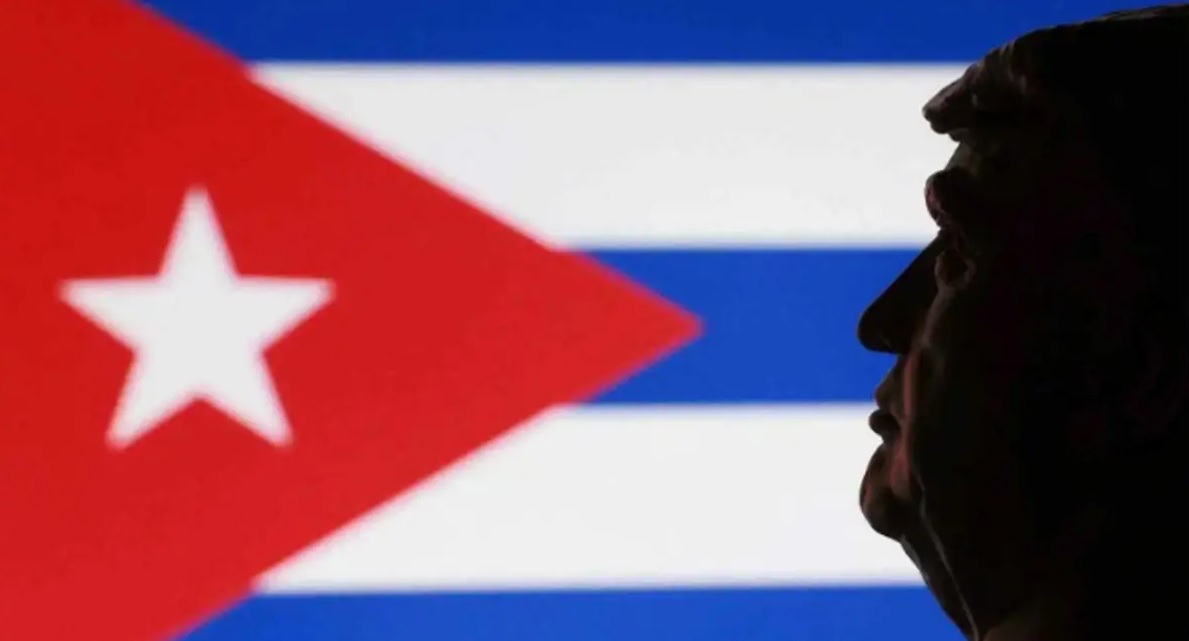


Alwaght- After the US military intervention and abduction of the Venezuelan President Nicolas Maduro on January 3, the US President Donald Trump these days has his eyes on Cuba, another South American country. After attack on Venezuela, Trump said that he will zero the Venezuelan oil exports to Cuba. He also claimed Cuba was on the brink of collapse as it is stripped of its revenues Trump said were coming from the imported Venezuelan oil.
Despite the US pressures, Cuba still meets part of its oil needs from other suppliers like Mexico. However, analysts warn that cutting off Venezuela oil supplies can bring the already struggling Cuban economy to a critical point.
Meanwhile, many ask what the US president exactly want from Cuba and why these days Washington has stepped up its anti-Havana rhetoric.
Cuba: Then and now
Ever since the 1959 revolution, Cuba has held a unique place in US foreign policy. For over seven decades, the Cuban government has consistently challenged Washington's authority. The Bay of Pigs invasion, the missile crisis, decades of US sanctions, hundreds of covert actions, and efforts to diplomatically isolate Havana have all proven that Cuba remains a persistent thorn in the US side, a challenge that continues to this day.
At the same time, since 1959, the Cuban Revolution has delivered real social achievements: near-universal literacy, life expectancy comparable to developed nations, a robust primary healthcare system, and a rich cultural life, all maintained despite severe material limitations. Cuba has also steadfastly defended its independence from the United States. Even after the collapse of the Soviet Union, Cuba neither boomed nor collapsed, it held its course.
Today, however, Cuba’s situation is profoundly different. The island is experiencing its deepest economic crisis in decades, grappling with inflation over 20%, years of declining GDP, and chronic shortages of food, fuel, and medicine. Tourism—the country’s main source of foreign currency—has been devastated by the pandemic and crumbling infrastructure. For years, Venezuela supplied Cuba’s energy, but Venezuela’s own collapse has made life even harder for Cubans. With Maduro clinging to power and Venezuelan oil flows effectively blocked, this vital lifeline has been abruptly cut. Limited supplies from Mexico are not enough. Now, Cuba faces rolling blackouts, disrupting daily life, transportation, and food production and distribution.
Yet economic collapse has not led to widespread rebellion in Cuba. Fear of chaos and violence, coupled with elite cohesion, has led Cubans to endure the current conditions. And rather than splitting the government apart, the pressure has, in many ways, made it more resilient.
What does Trump want from Cuba?
Many are left wondering what exactly the US wants from Cuba's leaders. Unlike Venezuela, Cuba, as an island nation, has very little oil and limited exports. It has even been forced to import sugar, a product it was once famous for producing.
At the same time, there is no meaningful opposition in Havana against the Cuban government.
Michael Bustamante, a Cuba expert at the University of Miami, believes that the US has not clearly and explicitly stated what it wants from Cuba. However, what the Trump administration is seeking to stop is the surge of Cuban migrants.
Bustamante said, "The Cuban government could initiate a mass migration to the US as a way to pressure Washington to come to the negotiating table for [a reduction in] sanctions." He noted that Havana has used this tactic several times before, including in the late 1960s when hundreds of thousands left for Miami via the "Freedom Flights."
On the other hand, in recent years, another massive wave of migration from Cuba to the US has occurred, with over one million people leaving the country. This large-scale exodus has caused Cuba's population to shrink by over 10 percent between 2020 and 2024. This migration was influenced by the COVID-19 pandemic, which devastated Cuba's tourism industry, a primary source of income for its residents.
In 2024, only 2.2 million visitors came to Cuba, less than half the pre-pandemic number, and Cuba has lost about 10 percent of its population since then.
This situation has led to further economic turmoil, prompting many Cubans to seek opportunities abroad. Additionally, Nicaraguan President Daniel Ortega's 2021 decision to eliminate visa requirements for Cubans facilitated this migration wave, allowing Cubans to travel to the US without needing to take risky boat journeys.
Trump is vigorously pursuing a reversal of the migration flow from Cuba to the US, deporting Cubans at an unprecedented rate. The current US administration has made legal migration from Cuba virtually impossible and last month halted all Cuban immigration and asylum applications.
However, the number of Cuban deportees has remained relatively low so far. The Trump administration repatriated 1,600 Cubans last year. Meanwhile, according to the US Customs and Border Protection reports, from fiscal year 2022 to 2025, over 675,000 Cubans have attempted to enter the US.
Cuba, source of rare earths
Cuba is also the source of rare earth elements, especially cobalt and zink, the US finds crucial to developing its tech economy. Currently, China is leveraging these elements against the US as it has much of them and this advantage is giving Beijing a trump card against Washington. Rare earths of Cuba can meet the American needs, leaving Washington in no need for Chinese supplies. This can be one of the reasons driving the Trump's pressure on Havana.
Possible military intervention
Indeed, many consider a military operation by the Trump administration against Cuba to be unlikely. Bustamante believes the Trump administration's tactic toward Cuba is to push the country toward economic and political collapse through pressure and isolation. However, such a scenario is not highly probable, as Cuba has survived several periods of severe economic hardship and massive emigration. Following the collapse of the Soviet Union in the early 1990s, the country faced a 30 percent decline in GDP, a situation far worse than today's. Yet, that dire state did not lead to the political collapse of the Cuban government, and today, it seems unlikely that economic pressure alone could bring about Cuba's downfall.
Actually, it appears that Washington’s policy toward Cuba continues to be defined by the Cold War-era paradigm, one centered on six decades of economic sanctions. Despite its failure to pressure Cuba into implementing political reforms, this framework remains in place. Yet, this pressure campaign has not produced political change in Cuba. It has, however, achieved one overarching result: consistently driving Cuba closer to Beijing and Moscow, a development Washington is far from pleased about.
With the exception of a two-year period of rapprochement during Barack Obama's second term and minor policy adjustments under the Joe Biden administration, the US continues to treat Cuba as a threat. The American policy toward Cuba, initially formulated in the early days of the Cold War, persists largely unchanged to this day.
Is Cuba truly a threat to the US?
The US has repeatedly voiced its discomfort with Cuban relations with Russia and China, though this relation is more symbolic and less strategic. The economic acts with the two powers thane faced implementation troubles due to sanctions. The Russian oil exports to Cuba to check the repeated power blackouts have not sufficient.
The Cuban relation with China is not considerable either. Cuba is one of the signatories of China's Road and Belt Initiative (RBI). It also signed infrastructure and energy agreements with Beijing and the Chinese state oil company holds shares in the Cuban oil exploration, but compared to bigger Latin American markets, Cuba is a small point for the Chinese foreign economic policy.
China’s bilateral trade with Cuba totaled roughly $862 million in 2023, only about one-third of its trade with El Salvador, a country whose population is 60 percent that of Cuba. Cuban exports of raw materials such as nickel and cobalt have also failed to gain traction, and Chinese companies operating projects in Cuba have grown frustrated with Havana’s inability to service its debts.
Cuba’s military ties with China remain limited and largely ceremonial, confined to formal exchanges between the two armed forces. Joint military exercises are difficult to organize, and there is no Chinese military base on the island. Reports in 2024 about potential Chinese surveillance facilities in Cuba stirred concern within U.S. national security circles, but it would be hard to describe the situation as a serious deterioration for Washington. Listening posts on this island country are nothing new. The Soviet Union, and later Russia, ran their largest Western Hemisphere intelligence facility for decades in Lourdes, Cuba. That said, if China were to establish a radar installation there, it could monitor increased movements of American aircraft and naval vessels in the region. However, such data are of limited value to Beijing since any potential US-Chins confrontation will take place near Chinese coasts not the Caribbean. So, the US intelligence operations in east Asia are more worrisome for Beijing and the limited military and economic activities in Cuba do not pose an immediate threat to the US.