

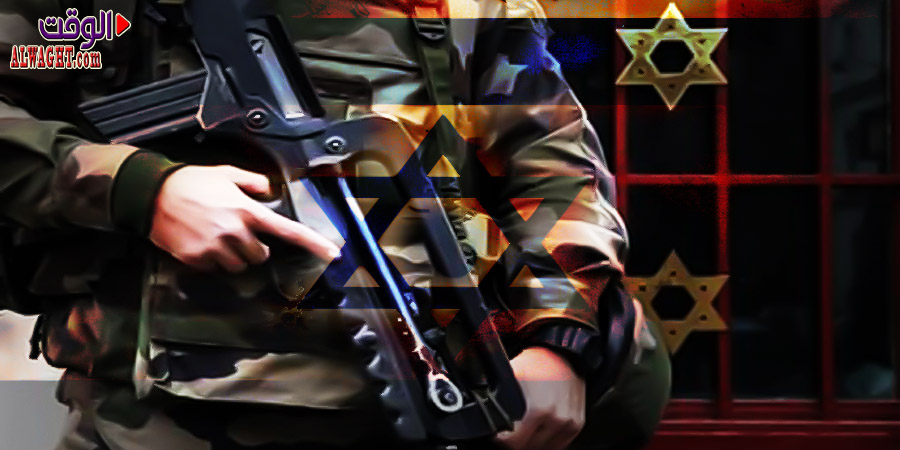


Alwaght- The Israeli war is multi-faceted. On the military front, the Israeli regime's arsenal and capabilities are ranked as the 11th most powerful in the world.
But there are other fronts where the Israeli regime is battling the voices calling for freedom and justice. In these fronts, that are as strategically essential as the direct confrontation, the Israeli regime has waged an all-out war against words. Threatened by the power of these words along with other forms of expression the occupier regime has targeted speakers, artists, poets, and journalists as part of their campaign to manipulate the image that is presented to the outside world.
When Palestinian poet Marwan Makhoul traveled to Lebanon in June, he knew the risks. But the Israeli-imposed travel ban on Palestinians did not stop him from taking the trip so he traveled from occupied Palestine through Jordan to Beirut to perform in poetry reading events.
Upon his return, the expected happened after Israeli Foreign minister Avigdor Lieberman issued a called for his detention, Makhoul was arrested, interrogated, and was only freed after his passport was confiscated.
"I heard on the news
that an artisan baker has come
to distribute bread
on the back of fresh artillery,
and I also heard
that one of his loaves feeds
at least twenty children
and is so warm it burns, and solid
like a randomly targeted shell."
These words are so powerful; they have the ability to instill fear in the Israeli military giant.
This case, however, only proves there's nothing new under the sun.
Earlier this year, the Shin Bet held Palestinian journalist Majd Kayyal in custody after returning from a conference to mark the 40th anniversary of the Lebanese As-Safir newspaper in Beirut. Kayyal is an activist and writer who often use words to battle the occupation.
Fear of Words
The crackdown on those who pass on the truth torch extends to a broader and deadlier spectrum and goes way back in the history of the Israeli regime.
In 1987, the Israeli Mossad assassinated journalist and cartoonist Naji al-Ali in London. He was shot in the face on July 22 and died on August 29. al-Ali was most renowned for Handala, a character depicted in his cartoons as a witness of satirized policies or events related to the Israeli regime or Arab states , and which grew into the Palestinian defiance symbol. Often the figure is accompanied by a few explanatory words. Yet, the killing of al-Ali was not the killing of Handala. Instead, al-Ali's work lived on and gained even more popularity after his assassination, striking the Israelis' attempts to bury the voices that speak the truth in the face.
More recently, the Israeli regime carried out what it calls "targeted killing" against journalists covering the war on Gaza.
The Press Emblem Campaign, a Geneva-based independent non-governmental organization, submitted a document to the United Nations revealing that: "15 journalists and media workers have been killed in the context of the operation "Protective Edge" launched by the Israeli forces on 8 July 2014 on the Gaza Strip."
The report went on saying: "Additionally, many journalists were injured by Israeli attacks, the houses of 16 of them were destroyed (often purposely targeted), and 8 media outlets were shelled. The Israeli army also interrupted the broadcasting of different TV and radio stations as well as media websites."
The attack on media personnel and outlets comes in line with the purpose of imposing a blackout to prevent the atrocities of the Israeli regime against the Palestinians from being propagated, and eventually turn the international community against it.
Targeting those who carry messages in their words by killing, arresting, or interrogating them is proof that the Zionists fear the far-reaching effect of language on public opinion.
Why are they so afraid of words? Well, to put it simply, words are the weapons of truth.