




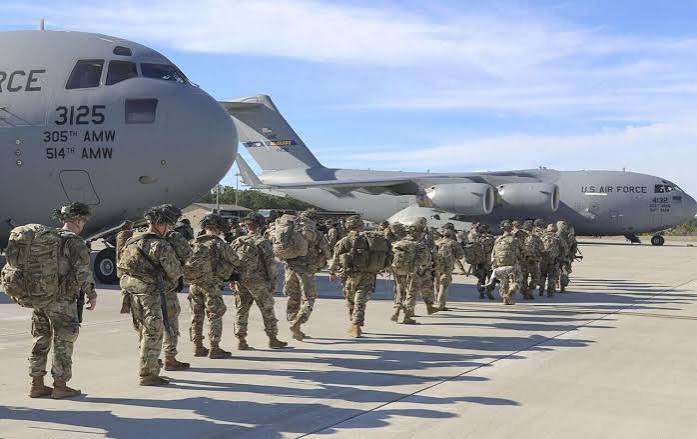


Alwaght- Reports suggest the US President Donald Trump is mulling ending the security and military support to Iraqi Kurdistan's Peshmerga forces, and if implemented, the plan would mean that the US forces will move out of Kurdistan region by end September. The issue has drawn concerns about the future of security in the autonomous region.
The US has reportedly told Kurdistan leaders it does not intend to renew the security help pact with Erbil. It is to expire on September 30, the day the US should withdraw from Iraq according to agreement with Baghdad.
The US security agreement with the Kurdistan Region was first signed in 2016 and extended in 2022. In fiscal year 2026, Peshmerga forces received roughly $61 million through the Pentagon's counter-ISIS program, funds earmarked for equipment purchases, troop training and salary payments. Now, however, the Pentagon has proposed eliminating that assistance in its fiscal year 2027 budget request, arguing that with ISIS defeated, the spending is no longer necessary and the money could be redirected elsewhere.
The prospect has stirred alarm in Erbil, all the more so given that Kurdistan has come under missile and drone attack in recent months.
Trump's view of the Kurds
Two things have driven this American decision: First, Trump's unhappiness with the Kurdish failure to align with his war against Iran and second the ambiguity surrounding the fate of the arms the US supplied to the anti-Iranian and separatist Kurdish groups. This discontent has its roots in two major views of the Trump's foreign policy.
First, there is the "America First" approach, which conditions any backing for allies on operational alignment and low cost to Washington. Second, there is his structural pessimism toward non-state actors, who he believes operate on the basis of momentary interests rather than long-term strategy.
What stands out is that Washington's distrust of Kurdish groups is long-standing. During Turkey's military operation in northern Syria, namely Operation Peace Spring, in October 2019, Trump stated flatly that US forces would not be drawn into the fight, and that the Kurds had not fought "alongside us" against ISIS but had "fought for money." That remark, which proved controversial and was denied by field commanders, laid bare the White House's instrumental view of its Kurdish allies.
On the question of weapons, Trump's criticism dovetails with Pentagon concerns. In multiple reports, Pentagon officials overseeing inspectors have warned that equipment supplied to the Syrian Democratic Forces (SDF), including anti-armor missiles and advanced munitions, could leak to terrorist networks in Syria and Iraq, or fall into the hands of the PKK, which Washington designates a terrorist organization. Trump, who has consistently spoken of a decisive withdrawal from Syria, has seized on that scenario as justification for scaling back or cutting off weapons support.
Taken together, Trump's dual approach, namely demanding the Kurds fight alongside US forces while offering no strategic guarantees, and simultaneously distrusting where the weapons ultimately end up, reflects not merely his transactional character but the inherent contradiction in American policy toward the Kurds, which is using them as a tool without accepting responsibility for the fate that follows. It is a contradiction that has bred mounting misunderstanding and resentment on both sides, among the Kurdish organizations and in the White House alike.
Experts analyses: Consequences of US exit from Kurdistan
The US plan to pull out of Iraq by September 30 is agreed with Iraq. Erbil military base will also close after the US withdrawal. This means that the US-led Western mission against ISIS terrorist groups will end in Iraq. The US military presence in Iraq and Kurdish region followed a security agreement with Baghdad and Erbil to fight ISIS.
The US presence in Iraq and the Kurdistan Region rests on a security agreement between the two governments to fight ISIS. On that basis, the US presence in the Kurdistan Region has served the bilateral accord with Baghdad and the US's own interests. Erbil has been treated as part of that mission in Iraq, and Washington has had no intent or objective to defend it against any other threat. Nor, fundamentally, has it had any particular strategic plan or blueprint for an independent future for the Kurdistan Region. The military support program for Peshmerga forces has been part of that same mission and would naturally end when the mission does.
In recent years, however, the Kurds have made extensive propaganda use of the US troop presence in Kurdistan and Pentagon financial backing for the Peshmerga. They have sought to foster the belief that the US has granted the Kurds special status and that they occupy a privileged place in US strategy, and have parlayed that perception into various political gains at home and abroad. Yet a range of cases in recent years shows that the Kurds have been a playing card for Washington, which has consistently pursued its own interests and has repeatedly sided with the sitting government in disputes between Baghdad and Erbil. Today the Kurds are seeing that reality more starkly than ever.
Yerevan Saeed, director of the Kurdish Global Initiative for Peace at the American University, has warned that cutting off US military support would leave the Kurdistan Region more vulnerable to regional threats. He argues that such a decision could hand a significant win to Iran, Russia and China.
James Jeffrey, a former U.S. ambassador to Iraq and Turkey and a senior figure in the anti-ISIS coalition, warning against scaling back support for the Peshmerga, has said that maintaining these forces costs America little and that Washington must not repeat the mistake of a full withdrawal from Iraq in 2011. That pullout created a security vacuum that helped set the stage for ISIS's rise in 2014. Seen in that light, the issue is not merely the elimination of a $61 million aid package.
The US war against Iran and rising tensions across West Asia have led the Americans to conclude they must move their personnel and equipment out of range of Iranian drones and missiles. Last month, when reports surfaced that the Patriot defense system was being relocated out of the Kurdistan Region, Kurdish officials were initially stunned, saying in their remarks that Washington had not informed them of the move. If Israel also carries out independent strikes, the US will again need to keep its assets in a safer location to protect its forces.
This issue rattled the Kurdish officials,especially at a time drone and missile threats loom larger on the Kurdistan Region.
The withdrawal of the US military equipment from Kurdistan come as in recent weeks Iranian and allied resistance groups' attacks on the American interests in the region have increased and tensions between Washington and Tehran have began to surge.
The speed and secrecy of the Western troop drawdown have revived memories of the US withdrawal from northern and eastern Syria for some Kurds. Back then, the pullout of US forces from Kurdish-held areas of Syria known as Rojava paved the way for an offensive by Turkish-backed forces and upended the region's security landscape. Kurdish officials believe the speed and manner of the latest operation went beyond a planned withdrawal.
The mystery of US withdrawal: Distance from promise to practice
Despite all this, it is unclear what the US's final decision will look like. One possibility is that the Americans will maintain some degree of security support to Iraq and Kurdistan even after their troop pullout.
At a meeting in the US between War Secretary Pete Hegseth and Iraqi Prime Minister Ali al-Zaidi, the Pentagon chief said the US, Iraq and coalition partners had achieved remarkable successes in defeating ISIS, and that Iraqi security forces, including the Peshmerga and other security forces of the Kurdistan Region of Iraq, would now lead the fight against terrorists in Iraq. Those remarks can be read as the US government's determination to cut costs and outsource its responsibilities to allies. As noted, regional conditions and the war with Iran may also have led Washington to conclude it should distance itself as much as possible from the reach of Iranian missile fire.
On that basis, Washington has placed several missions on the shoulders of Iraqi Prime Minister Ali al-Zaidi. First, trying to establish security without direct American help. Second, taking on the cost of Peshmerga forces that the Pentagon had previously funded. Third, the mission of disarming Iraq's resistance factions and strengthening the authority of the central government in Baghdad. Accordingly, beyond the practical step of withdrawing its troops, America has also mapped out the duties and missions to follow the withdrawal.
Before the recent developments, Kurds in the Kurdistan Region of Iraq had felt alarmed by the appointment of Thomas Barrack as point man for the Iraq-Syria case. The Kurds said Barrack was a proponent of strengthening the central government and handing the mission of establishing peace and security to the federal government. Based on their knowledge of the US envoy, they saw his presence at the helm of the Iraq case as at odds with their interests, and were largely braced for reduced US support for them relative to the central government. For that reason, part of the Kurdish body politic had assessed that renewal of the US-Kurdistan Region security agreement was unlikely.
With the US military exit from Iraq, the Iranian challenges in Iraq will not end, but the confrontation with the CIA will continue, which from some angles can be even more dangerous than threat posed by the US military presence. Add to this the fact that NATO forces will remain in Iraq and it its crystal clear to all what NATO means.