
















Alwaght- Reports suggest that the process of withdrawal of the US forces and Patriot missile systems from Erbil suburbs is making a gap between some media sources and Iraqi Kurdistan region's officials.
Kurdistan's Rudaw news network reported that the BBC, citing some American officials, reported on Saturday that Pentagon has notified the Kurdish leaders that it will not extend its agreement with Peshmerga Ministry that will expire September 30.
The report adds thar, the decision will also see American financial aids, which are around $61 million in the Pentagon's budget this year, to the Kurdish militant forces cut off.
The agreement was inked between Erbil and Washington in 2016 to help the Kurds fight ISIS terrorist organization and unify the Peshmerga forces. It was extended for a four-year term in 2022.
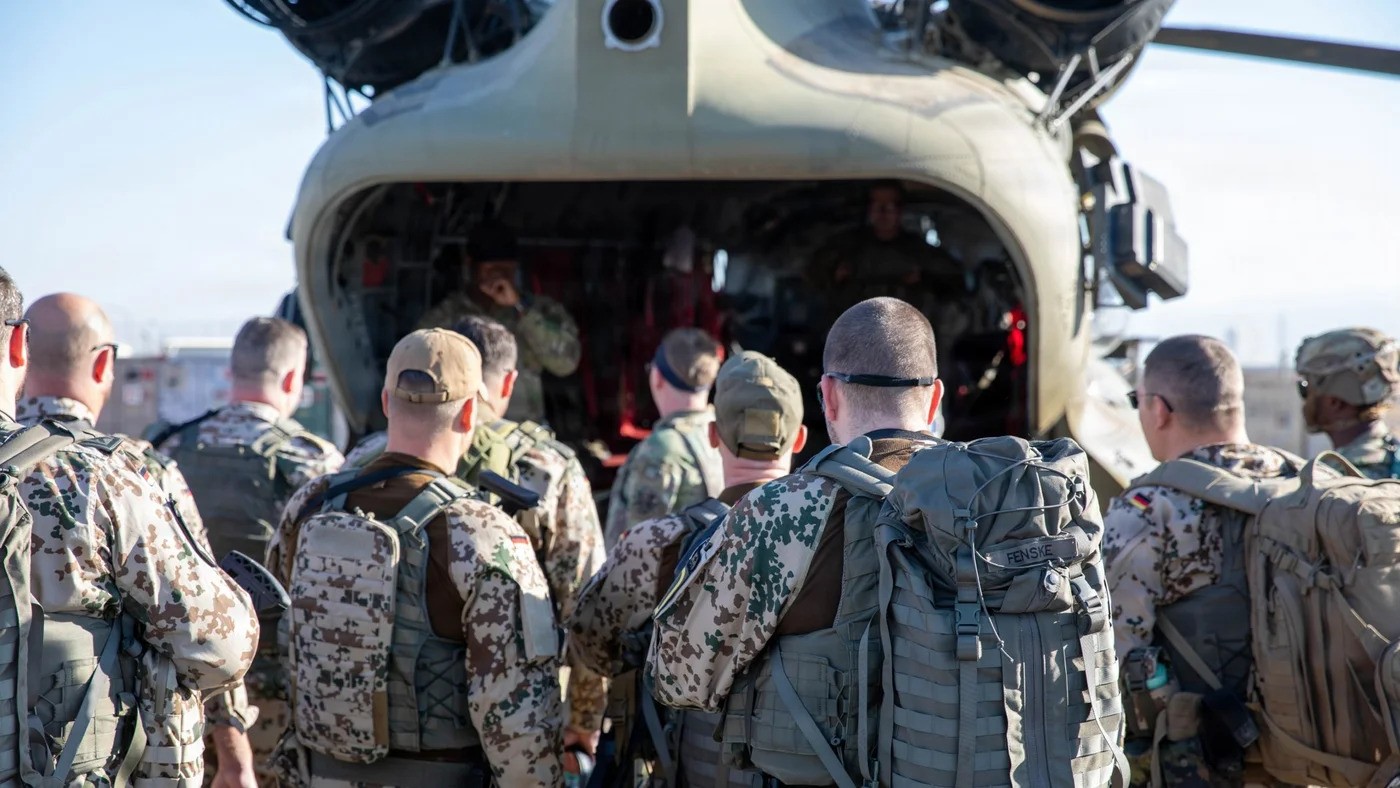
American forces previously stationed at Ain al-Assad base and in Anbar province of Iraq had already been relocated to Harir base in Erbil under agreements with Baghdad and the Kurdistan Regional Government (KRG). Now, they are moving onward to other countries. The autonomous region hosts no permanent US military bases; the personnel there are mainly advisers tasked with training and supporting Iraqi security forces and Peshmerga fighters.
Reaction of Kurdish leaders
The sudden exit of the American forces has drawn worry and a sort of shock amkg the leaders of Iraqi Kurdistan, so much so that they initially rejected such an American intent.
Kifah Mahmoud, the press advisor to the leader of the Kurdistan Democratic Party (KDP) Masoud Barzani, made it clear that the full exit was an "incorrect take", adding that such a relocation was planned from months. He added that the US will maintain part of its Patriots in Kurdish to protect its interests. There is no permanent base for the Americans in this region and the stationed forces are mainly acting as advisors, he further said.
Masrour Barzani, KRG's prime minister, flatly told Al-Monitor that the Patriot systems’ withdrawal “exposes” the region to danger. Pointing to more than 1,000 drone and missile strikes on the Kurdistan Region, he called the threat real and urged the US and other allies to provide adequate air-defense systems so the region can defend itself.
Clues rejecting claims by Kurdistan officials
According to some reports, the KRG was not given advance notice of the redeployment, a sign of just how fast and closely held the operation was. The initial landing of several heavy military transport planes in Erbil looked like a coalition buildup, but their real mission was to kick off one of the swiftest Western military equipment pullouts from the Kurdistan Region: over three days, key US and British defense systems were removed, and the Western military footprint in Erbil shrank dramatically.
Local media and non-governmental analysts acknowledge that the bulk of American forces have effectively left Erbil, and the Patriot batteries have been pulled from the base there, likely bound for Jordan, though that has not been independently confirmed by officials. Still, US special operations forces and possibly French troops remain at some locations.
It should be noted that, contrary to Kurdish officials' statements, reports point to a rapid exit of US air-defense systems and British, French, and German military gear from Erbil International Airport. The move was carried out without prior notice to KRG authorities, heightening concerns about Erbil's vulnerability to potential Iranian strikes or attacks by Tehran-aligned armed groups.
According to those accounts, a fast-moving 72-hour operation saw hundreds of American, British, French, and German troops, along with key air-defense systems, pull out of Erbil, effectively thinning the coalition base's defensive capacity in Kurdistan. Several large military cargo planes, including US C-17 Globemasters and British A400M Atlases, touched down at Erbil International Airport over the past weekend.
US forces also fully dismantled high-altitude surveillance balloons and ground-tethered Aerostats used for aerial monitoring over the Erbil area. Citing informed sources and a Rudaw English report, the US transferred eight Patriot missile-defense batteries from Erbil to Jordan within three days. At the same time, Britain moved its Rapid Sentry defense system to Cyprus.
According to Washington-Baghdad agreement, the exit of the US forces from Iraq should complete by September 30, but continuous Iranian attacks have accelerated this operation.
The accelerating withdrawal may also be driven by a growing US shortfall in Patriot missile inventories, a shortfall that American officials and military analysts have themselves acknowledged in recent days. Production capacity simply cannot keep up with consumption, and stockpiles are dwindling fast.
At the same time, Washington's military presence in the Kurdistan region was never solely about protecting the Kurds; it was always anchored in broader US strategic interests. The gradual pullout now looks like a replay of the playbook from northern and eastern Syria, and it is stirring anxiety among Kurdish allies about what comes next, and just how reliable Washington's commitments to local partners in Iraq really are.
Seen through that lens, this is not merely a tactical redeployment. It is a signal that Washington is redefining its role in Iraq and dialing back its direct footprint in the region.
Asharq Al-Awsat, citing sources, reported that Erbil is racing to secure air-defense systems before US forces leave Iraq entirely—but procuring that equipment requires coordination with both Washington and Baghdad, and crucially, budget approval from the federal government in Baghdad
Finally, Kurdish officials are deeply alarmed, especially as missile and drone threats against the region have only intensified.
The equipment pullout comes against a backdrop of escalating Iranian strikes and attacks by Iraq's Islamic Resistance groups on US interests in the region, alongside renewed tensions between Washington and Tehran.
The speed and secrecy of the Western withdrawal have resurrected painful memories for some Kurds of the US exit from northern and eastern Syria. Back then, the American pullout from Kurdish-held areas in Rojava opened the door for Turkish-backed forces to move in, upending the security situation and ultimately leading to the collapse of the autonomous administration there.
Kurdish refusal to cooperate with Trump's request for coordinated ground operations with the US may also be a factor in the stripping of air defenses from American bases in the Kurdistan region.
The prospect of widening US-Iran confrontation offers another possible motive: Washington appears to be moving personnel and equipment out of sites vulnerable to Iranian strikes, repositioning them to more distant bases to limit potential damage. If Israeli regime carries out independent strikes as well, the US would still need to keep its forces safe by staging its assets in a more secure location.
Why are Kurdistan officials worried?
The concern of the Kurdish leaders is not only driven by US withdrawal of forces and air defenses. The main issue is the potential security vacuum after exit of forces that for years have been part of the defense architecture of the Kurdistan region of Iraq.
The first concern is the Kurdistan region's air vulnerability. In recent months, Erbil and Sulaimaniyah have been repeatedly hit by drones and missiles. Some of these strikes have targeted militant separatist groups operating inside the region, groups that Kurdish authorities have refused to expel despite explicit Iranian warnings.
That refusal makes the Patriot withdrawal all the more consequential. Those batteries were positioned primarily to protect American forces, not to serve as a broader defensive umbrella or deterrent for Erbil. Still, Kurdish officials are now openly demanding stronger air defenses. On August 20, Masrour Barzani called on foreign partners to help build a more robust air-defense capability, warning that Iran-linked drone attacks continue to rise.
The second worry is the lack of an immediate replacement for US intelligence, surveillance, and early-warning capabilities. The dismantling of the surveillance balloons and Aerostat systems is particularly significant. Those tools were not just about base protection; they enabled threat detection and tracking of attack origins. Losing them means a diminished capacity to spot incoming threats before they reach their targets.
The third concern cuts to the structural weakness of the Peshmerga forces. The US-KRG security agreement was designed not only to combat ISIS but also to professionalize and unify the Peshmerga. That integration process remains incomplete, and the Peshmerga are still shaped by political rifts between the Kurdistan Region's two main factions. Earlier Pentagon reports had already noted that reform efforts are proceeding against a backdrop of political disputes, persistent ISIS threats, the presence of Turkish forces and the PKK, and ongoing Erbil-Baghdad disagreements over budgets and security, all of which have complicated the reform process.
Against that backdrop, Kurdish fears center on handing greater security responsibilities to a force that has yet to reach the desired level of command cohesion, weaponry, or air defense, and it is unlikely that the Iraqi federal government will absorb the cost of sustaining the Peshmerga in its current structure.
Seen this way, the Kurds worry that a shrinking US presence, combined with mounting pressure from Baghdad, could weaken the region's political and security standing, especially as Iraq's central government presses for full state control over security and arms, and as Washington has backed Baghdad's initiative to disarm armed groups.
Recently, a security official from Kata'ib Hezbollah resistance group of Iraq even laid out the group's conditions for joining talks on its own weapons, demanding nothing less than a full US withdrawal from Iraq, the exit of Turkish forces from northern Iraq, and the dissolution of the Peshmerga. That kind of rhetoric makes it clear: the Peshmerga's arsenal is no longer just about an external threat. It is now squarely part of the broader struggle over power structures and the restriction of arms inside Iraq.
Meanwhile, the Syrian experience still haunts Kurdish leaders. The sudden US pullback from parts of northern Syria in 2019, which opened the door for a security realignment and a Turkish incursion, has become a cautionary tale for many Iraqi Kurds. That is why, even if the current drawdown is part of a prior US-Baghdad agreement, its speed, and especially the removal of advanced defense systems, has left Erbil asking a difficult question: Is Washington merely repositioning, or is its long-term commitment to its Kurdish partners genuinely eroding?










