









Alwaght- Amid unfolding crisis in West Asia, the US and Saudi Arabia have carried out an array of airstrikes in various Iraqi regions, initiating a new round of escalation on Tuesday.
Washington claimed the attacks targeted Iran-aligned Iraqi resistance groups, but Iraqi resources condemned the strikes as a stark violation of Iraq's national sovereignty and a dangerous step to expansion of the scope of war in the region.
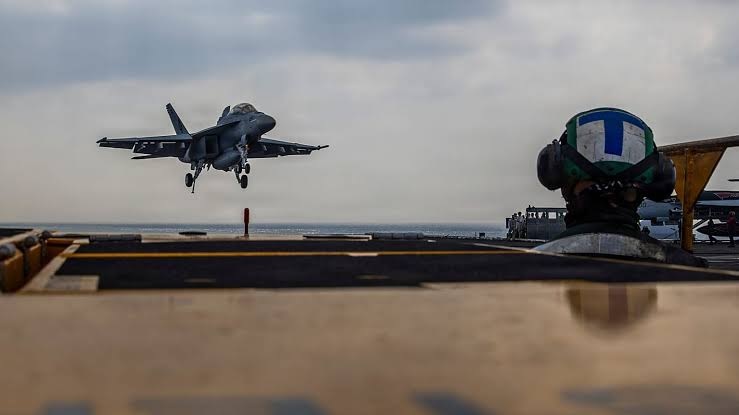
American and Saudi warplanes attacked multiple targets across several Iraqi provinces on Tuesday night, according to Al Mayadeen. The airstrikes came as Washington and Riyadh accused Iraqi resistance factions of carrying out drone attacks on Saudi oil facilities.
In a statement, US Central Command (CENTCOM) said the operation was conducted jointly with Saudi forces and targeted facilities linked to Iran-backed groups. The Pentagon maintains that those groups played a role in planning and executing recent strikes against American personnel and Saudi energy infrastructure.
Washington’s claim of "preemptive defense"
American officials alleged that the recent attacks came in response to a barrage of drone and rocket strikes aimed at American and Saudi interests. CENTCOM said all of the attacks against American forces were intercepted and so inflicted no damage, but it attacked munition storages and positions of resistance groups in Iraq to prevent further attempts.
Yet the latest strikes have once again turned Iraq into one of the most critical flashpoints between the US and the Axis of Resistance. Over the past several months, sporadic clashes between American forces and Iraqi militant groups have repeatedly triggered tit-for-tat attacks and ratcheted up tensions across the country.
The airstrikes came just hours after Washington claimed to have intercepted a ballistic missile attack, attributed to Iran’s IRGC, targeting American bases in Jordan. At the same time, escalating confrontations in the Red Sea, the Strait of Hormuz, and along Iraq’s borders have fueled growing fears that the conflict could spill over into new fronts.
Washington forging excuses to broaden the attacks range
Although Washington has framed the latest operation as "preemptive defense," the strikes have drawn sharp condemnation from resistance factions and formal protests from the Iraqi government. Many analysts argue that continued actions of this kind are turning Iraq into an ever more entrenched arena for the region's geopolitical rivalries, severely complicating any effort to de-escalate the crisis.
According to Iraqi sources, the joint strikes have so far killed at least 20 people and wounded more than 32 others.
Meanwhile, many observers argue Washington is working to manufacture the conditions to legitimize its attacks on Iraqi resistance groups. US officials have claimed that Tuesday night's attacks were a response to a drone strike against Saudi Arabia, despite the fact the Yemeni government had already claimed responsibility for that attack. That has led to accusations that the US used the drone incident as a pretext to hit Iraqi territory and target resistance factions.
This is not the first time Washington has resorted to such reasoning to strike resistance forces, which have been key to Iraqi anti-terror fight since 2014. Iraqi security sources had previously warned that suspicious US troop movements along the Iraq-Syria border were aimed at provoking resistance factions and creating a casus belli for military action.
The Pentagon said repeatedly asserted that Iraqi resistance groups have acquired more advanced drone and missile technology, giving them the capability to hit American military bases, which are used against regions. Though those claims have never been independently verified, they have been consistently invoked as justification for the US policy of so-called "preemptive defense" and its campaign of airstrikes.
The goal: Undermining Iraqi resistance
A look at recent developments makes it clear that the US excuses for attacks on resistance forces is more about its push for disarming them. As the US built up its pressure on Baghdad to dissolve and disarm the resistance groups or at least integrate them into the formal military, leading resistance groups have been clear in denying the demand to hand over arms.
These groups assert that these arms are pivotal to defenfing Iraqi national sovereignty and countering the illegitimate US military presence on the Iraqi soil. They add that as long as foreign forces exist in the country against Baghdad's demand and security threats prevail, they will not lay down arms.
It is notable that a majority of these forces were formed in 2014 following a fatawa by grand Shiite cleric Ayatollah Sayyed Ali al-Sistani after foreign-backed ISIS terrorist organization in a lightning operation seized large tracts of Iraqi territory as Iraqi military units easily fall apart against its progress.
Kata'ib Hezbollah, Al-Nujaba Brigades, Asaib Ahl Al-Haq, and Ansarullah Al-Awfiya Brigades are the most important resistance groups within the framework of the Popular Mobilization Forces (PMF), a recognized formal Iraqi armed force, that have so far rejected disarming push.
Against that backdrop, the latest US-Saudi strikes appear to be part of a broader Washington strategy to ratchet up military and political pressure on these groups while degrading their operational capabilities. Yet the track record of recent years suggests that this approach has not only failed to eliminate the resistance factions, but also it has often fueled further escalation and widened the scope of conflict across Iraq and the region.