
















Alwaght- The agreement that was supposed to initiate a new chapter of civilian nuclear cooperation between the US and Saudi Arabia has faced serious questions less than a day after being inked.
On Wednesday, the US Energy Secretary Chris Wright signed with his Saudi counterpart a civilian nuclear deal with the online presence of officials of the two countries. The deal was described as one of the key gains of recent years of a close relationship between the two allies.
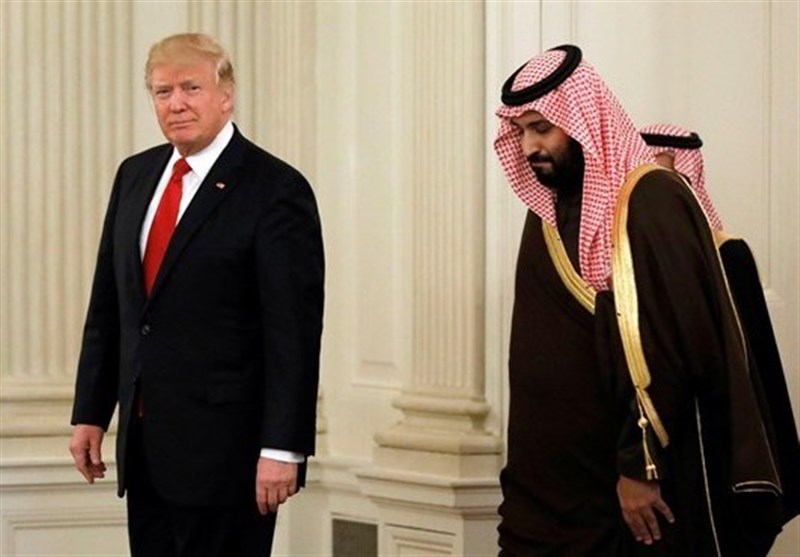
However, the erratic US President Donald Trump was fast to frustrate the Arab kingdom. He tied implementing the agreement to Riyadh joining the Arab-Israeli normalization, officially called Abraham Accords. He also denied that Washington gave the Arab kingdom the right to develop its own local uranium enrichment program, a standing that not only raised questions about terms of the agreement, but also sent its future into a dark path.
As a result, two competing narratives now frame this agreement. Washington’s version ties the nuclear deal directly to normalizing ties between Riyadh and Tel Aviv. Saudi officials, however, insist on a very different story: no normalization with Israel unless a independent Palestinian state is established along the lines of UN resolutions.
The condition missing in text of the agreement
The biggest open question hanging over the deal is a condition that Trump introduced after the signing. With the full text still unpublished, it remains unclear whether normalization with Israel was written into the agreement itself, or whether the president tacked it on afterward as a prerequisite for implementation.
The deal is not yet final and, by law, must go to Congress for review. That window gives the Trump administration room to negotiate new terms with Riyadh—or even stall the rollout altogether.
Trump has also said the agreement will not grant Saudi Arabia uranium enrichment rights, though he offered no details. The American officials, meanwhile, have described the deal as including only a two-year study period to assess the economic and technical feasibility of a Saudi nuclear fuel cycle. Some informed officials held Washington could delay Riyadh’s enrichment capability for several years, but there is no guarantee of a permanent block.
On the other side, many analysts doubt that the Saudi king-in-waiting Mohammed bin Salman will walk away from his long-standing demand for a domestic nuclear fuel cycle. Nor, they note, has Riyadh ever readily embraced the sweeping, short-notice inspections that the International Atomic Energy Agency (IAEA) would require, a sticking point that has long divided the two capitals.
Agreement struck by crisis before birth
What followed the deal after 24 hours pushed even some American media outlets to the notion that the nuclear deal suffered a crisis before its official implementation.
In a report for CNN, Kevin Liptak and Kristen Holmes wrote that the deal, rushed into existence, hit roadblocks almost as fast. According to their account, Trump was furious that the announcement went forward without his full sign-off, with some sources saying the Energy Secretary never even briefed the president on the timing before the rollout.
The backlash only grew as conservative media outlets, including Fox News and the Wall Street Journal editorial board, piled on with sharp criticism. Their central complaint was why to sign a nuclear agreement with Saudi Arabia that was not explicitly tied to normalizing ties with the Israeli regime.
Compounding the confusion, the administration has refused to release the full text or technical annexes, deepening suspicions. And in a telling snub, Trump himself was absent from the signing ceremony, a move that many observers read as the White House deliberately keeping its distance from the very deal it had just sealed.
Concerns in Washington and Tel Aviv
The negative reactions were not limited to the White House and some politicians have warned about strategic fallout of this deal with Riyadh.
Ex-Israeli Defense Minister Avigdor Lieberman warned that a civilian nuclear program in Saudi Arabia risks initiating a very dangerous nuclear race in the region.
In the US itself, some Democratic lawmakers viewed the deal pessimistically. Congressman Ro Khanna, of California, told the BBC that this was a "one-way privilege" to the Arab kingdom, warning that such a deal will only cause further instability in West Asia region.
Strategic message of deal to the Israelis
Whatever the deal’s ultimate fate, many experts see Saudi Arabia’s move toward a nuclear fuel cycle, even under a civilian guise, as a signal that could redraw the West Asia’s balance of power.
Imran Bayoumi, a fellow at the Atlantic Council and a former Pentagon adviser, argues that the agreement builds the very infrastructure and know-how that could one day smooth Riyadh’s path to a more advanced nuclear capability.
In the view of analysts, even if Saudi Arabia never pursues an actual bomb, acquiring fuel-cycle technology and infrastructure would, in itself, give Riyadh a potent deterrent and a political lever against regional rivals, a prospect that has already deepened unease in Tel Aviv. More troubling still for Israel is that a Saudi fuel cycle would become a permanent source of anxiety. And should anti-Western or anti-Israeli factions ever gain influence within Saudi governance, Tel Aviv could find itself sandwiched between two nuclear-capable powers: Tehran and Riyadh.
Trump's shift in American nuclear policy
If finalized, the deal can mark, many observers agree, a turning point in the US nuclear policy regarding Saudi Arabia.
President Barrack Obama administration had sought to limit nuclear cooperation with West Asian countries to the "gold standard", a model that barred recipient nations from enriching uranium or reprocessing plutonium.
The Biden administration, while supportive of civilian nuclear cooperation with Riyadh, had tied it to normalization between Saudi Arabia and Israeli regime, along with progress on the Palestinian case, a condition that ultimately prevented a final deal.
Trump's approach, however, appears to be different. He first cleared the path for the nuclear agreement, then dangled normalization with Tel Aviv as a condition for its implementation, a sequencing shift that many analysts attribute to intensifying US strategic competition with China and Russia.
In their view, Washington's overriding fear is that any American hesitation could push Saudi Arabia toward Beijing or Moscow for its nuclear development. So the Trump administration has chosen to lock in the nuclear framework first, and only then bargain over other political demands, including the normalization push with the Israeli regime.
However, until the deal text is published and reviewed by the Congress and Saudi Arabia has its final say on the new conditions of Trump, one question remains up: Will Washington-Riyadh nuclear deal be concluded or just turn into one of Trump’s unfinished agreements?










