
















Alwaght- The US aggression against Iran that these days has started attacks on infrastructure has become one of the key tests for the international security order, especially for regional organizations, to an extent that reaction of the powers to this war has more than ever revealed the gap between unilateralism and multilateralism supporters.
While the Western governments with political and military support to the US and Israeli regime walk in line with policy of pressure on Iran, regional organizations and institutions to which Iran is a member have taken different standings, calling for respect to Iran's sovereignty, territorial integrity, and legitimate rights.
Meanwhile, the Shanghai Cooperation Organization (SCO) as the biggest regional organization in Eurasia has voiced one of the strongest oppositions to the anti-Iranian military action, asserting that it supports international law principles and the UN Charter regarding Iran.
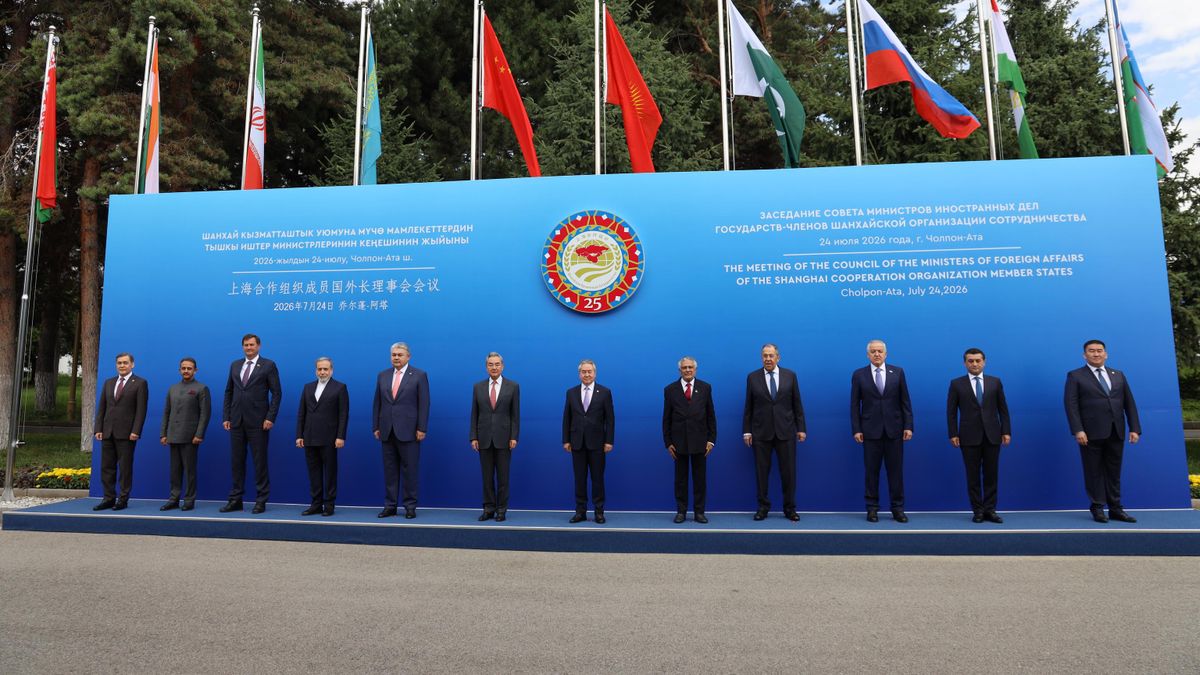
The SCO's foreign ministers met Friday in Cholpon-Ata, Kyrgyzstan, with US attacks on Iran emerging as one of the focuses of the talks.
Iran's Foreign Ministry spokesman Esmaeil Baghaei said the final communiqué from the SCO Council of Foreign Ministers, underscoring UN Charter principles, condemned the US military aggression against Iran as a flagrant violation of international law and core UN tenets. The rebuke, he added, reflects member states' concern about West Asian turmoil and their rejection of military action against Tehran.
"While Iran is fully capable of defending its national security, sovereignty and territorial integrity," Baghaei maintained, "the political stance of regional countries and organizations opposing US and Israeli military aggression carries significant weight. It raises the political cost of such operations for the aggressors."
The stance signals that the SCO, unlike many international bodies that have struck cautious or equivocal notes on recent events, is positioning itself as a defender of international legal principles against unilateral action.
Iranian Foreign Minister Abbas Araghchi, addressing the gathering, warned that continued American and Israeli strikes against his country, which are targeting educational and medical facilities, critical infrastructure, economic sites and even IAEA-monitored peaceful nuclear installations, threaten the security of all nations if the global community looks the other way.
Seeking to highlight how important the condemnation of the war is in preventing its continuation, Araghchi told his counterparts that "years of experience have taught us that if any military aggression is met by silence or ambiguous stances of the world community, not only will it not stop, but also will provide a pattern for repeat. So, the responsibility for upholding international order does not rest solely with the direct perpetrators of aggression. Countries that enable such actions to persist, whether through political or intelligence support, or even through silence, are equally complicit in eroding the international legal system.”
Persistent support of member states to Iran
In recent months, the standings of the SCO member states may have not been similar, but the majority highlighted their opposition to strikes on Iran and the need to respect Iranian sovereignty and to avoid war expansion.
China and Russia have led the charge among SCO members, repeatedly characterizing US and Israeli strikes on Iran in official statements as flagrant violations of Iranian sovereignty, security and territorial integrity.
Chinese Foreign Minister Wang Yi, in his meeting with Araghchi, called the attacks inconsistent with the UN Charter and international law, reaffirming Beijing's support for Iran's sovereignty, independence and territorial integrity.
Russian Foreign Minister Sergey Lavrov condemned the strikes as an obvious breach of international law and voiced Moscow's commitment to continued coordination with Tehran in international forums to push back against unilateral actions.
Also, Belarus's foreign minister denounced the military aggression against Iran as a violation of state sovereignty and backed the SCO's condemnatory stance.
Pakistan's Foreign Minister Mohammad Ishaq Dar declared Islamabad's solidarity with Iran, condemned both Israeli strikes and broader military actions against Tehran, and underscored Iran's right to self-defense under Article 51 of the UN Charter.
India's S. Jaishankar, by contrast, struck a more guarded note—reflecting New Delhi's warm ties with Washington and Tel Aviv, expressing concern over escalating hostilities and urging restraint on all sides.
The foreign ministers of Kazakhstan, Kyrgyzstan, Tajikistan and Uzbekistan likewise emphasized respect for state sovereignty, opposition to further escalation and the need to resolve differences through dialogue.
Iran's strategic significance for the SCO
The SCO's support to Iran is not an occasional political standing, but one having its root in the existential philosophy of this Eastern bloc. One of the key aims of the SCO is to counter instability, prevent foreign interventions, and save collective security in Eurasia.
Members of this organization know well that if respect to sovereignty of countries is undermined and unilateral strikes go politically unanswered, this will pose threats to security of members prospectively. From this viewpoint, supporting Iran is not just a support to a member, but backing principles on which security of all members rest.
Additionally, instability of Iran can have major blowbacks to the SCO members. Iran is one of the key rings of land corridors and plays a pivotal role in strategic projects like North-South Corridor, China's Belt and Road Initiative (BRI), and energy cooperation of the member states.
A broader war on Iranian soil would severely disrupt transport routes, trade, investment and energy transmission, hitting the economic interests of SCO members where it hurts. In that sense, defending Iran's stability is tantamount to defending the economic and geopolitical security of the entire region.
Though standings of regional organizations alone cannot stop the war, they carry meaningful political and legal weight. They deny unilateral military action any veneer of legitimacy and send a clear signal to global public opinion that a significant swath of the international community rejects the use of force.
Beyond that, growing political consensus among non-Western nations can raise the diplomatic cost for the US and Israel if they press ahead with the war.
All in all, this week's SCO meeting made plain that the organization views countering unilateralism and the use of force in international relations as a core concern. By tightening the diplomatic squeeze on the aggressors, it aims to raise the price of Washington and its allies' destabilizing war against Tehran.










