














Alwaght- The recent Israeli-American war of aggression against Iran was not a simple military confrontation. For many world armies, it was a grand training ground. One of the key lessons of this conflict was the decisive role of the drones in the modern warfare, something now pushing many countries to fast develop their drone power.
South Korea is the latest example of this shifting paradigm. Its defense ministry recently announced plans to mass-produce over 110,000 attack drones by 2029, drawing directly from the battlefields of Ukraine and Iran. Seoul also aims to stand up a 500,000-strong drone-trained force.
Defense Minister Ahn Gyu-back laid out the vision, saying that every soldier should carry a drone as their "second personal weapon." Speaking to Sputnik, he stressed that drones are no longer the exclusive domain of specialized units, they must become a standard combat tool across the entire military. Citing the recent conflicts in Ukraine and Iran, he noted: "In the past, battles were fought with a handful of expensive unmanned systems. Today, the mass deployment of low-cost drones has fundamentally transformed the very nature of warfare."
Economics of war: The advantage the drones caused
The course of military transformation in recent years shows that nearly every global power is rethinking its doctrines. From Ukraine to Gaza, from the Red Sea skirmishes to the latest war in Iran, the combat drone has proven its worth beyond any doubt.
One key driver is economics. Producing and fielding a drone costs a fraction of what a fighter jet, helicopter, or even certain missiles demand. Yet intercepting those same drones typically requires air-defense missiles that can cost tens of times more. That imbalance has pushed many militaries to a stark conclusion: drones can upend the very calculus of warfare.
Analysts call this the "economics of war", which means inflicting crippling costs on the enemy with bargain-price equipment and weapons. Even the US Council on Foreign Relations, in a post-Iran-Israel war analysis, described Iran's drone model as "precise mass" and concluded that the future of conflict will hinge on the widespread deployment of low-cost, high-accuracy systems.
Iran, a model grabbing attention of world armies
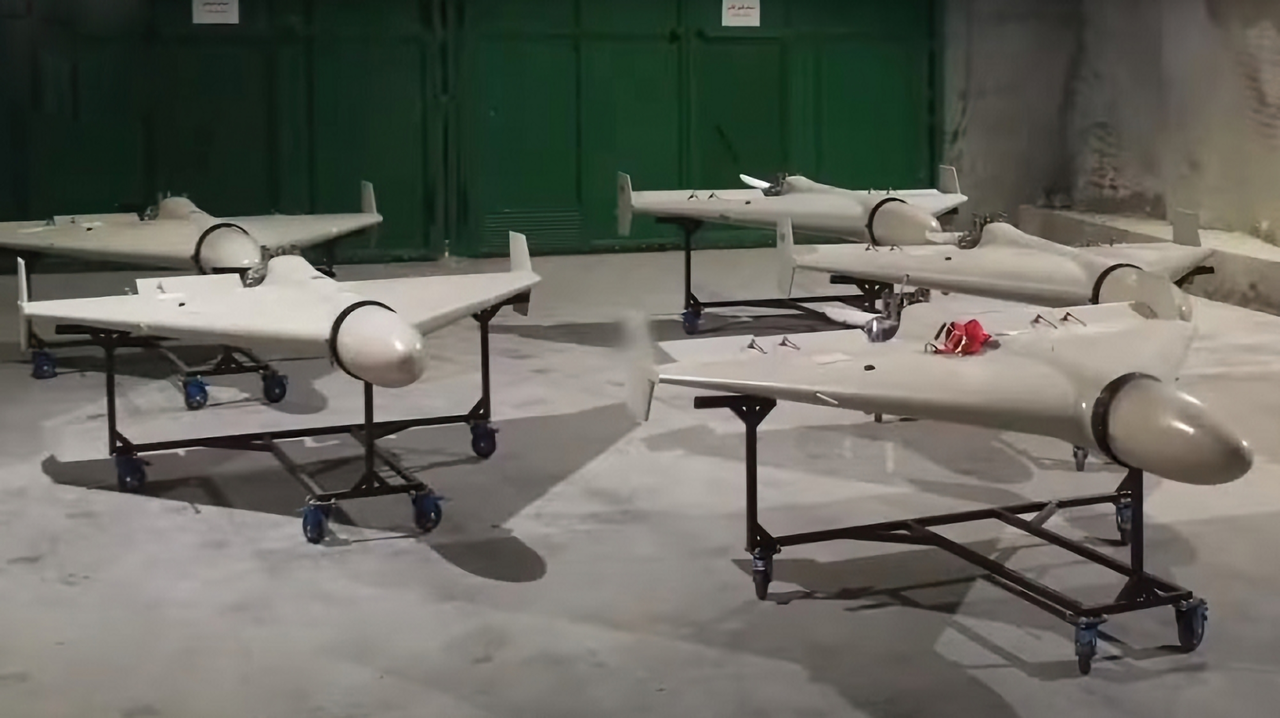
The recent war against Iran showed that air superiority no longer is gained by advanced aircraft and expensive missiles. A country that can produce thousands of drones in a short time and constantly deploy them to the battleground can impose considerable operational pressure on the enemy.
The Washington Institute for Near East Policy identifies three core pillars of Iran's drone strategy: mass production, dispersed manufacturing facilities, and sustained operational capability under combat conditions, a model now being studied closely by militaries worldwide.
In a related development, the Financial Times reports that India, after poring over lessons from the recent war, has accelerated its indigenous combat drone program and ramped up investment in the sector.
Meanwhile, analysts at the Royal United Services Institute (RUSI) argue that the latest conflict has cemented loitering munitions and suicide drones as mainstays of future warfare. In their view, armies must not only expand their drone fleets but also pour serious resources into counter-drone systems, electronic warfare, and low-cost interceptors.
Another hard-learned lesson is that the attrition of air defense. Even if a significant portion of incoming drones are shot down, sustained barrages can gradually drain missile stockpiles and erode operational capacity, a point underscored by both the Council on Foreign Relations and the Washington Institute, and a template Iran repeatedly employed against aggressors in the 40-day war.
Global competition to develop drone power
Today, developing drone power has become one of the top priorities of the world military powers. The US is developing a new generation of combat drones, fighter-carried drones, and unmanned naval systems. China has firmly cemented its position as one of the world's largest producers and exporters of military drones. Turkey, with its Bayraktar and Akıncı platforms, has carved out a significant share of the global market. Meanwhile, countries ranging from India, Japan, South Korea, and Australia to numerous European nations are all injecting cash into unmanned systems programs.
Alongside this this path, investment in counter-drone capabilities is moving just as fast. From electronic warfare systems and high-energy lasers to jammers and low-cost interceptors, they are sending a clear message that drones are no longer a supplementary tool, but they have become a permanent fixture of future warfare. This is a reality that the latest war against Iran has once again laid bare for militaries around the world.