









Alwaght- Since the foundation of the Israeli regime in the occupied Palestinian territories, the Israeli officials have always defined themselves as an invincible and self-sufficient power in West Asia, capable of fighting on multiple fronts and maintaining military superiority without reliance on others. But the recent years developments, especially the indirect and then direct confrontation with Iran have shown that security and survival of this regime rests not on the domestic capabilities but on the political, military and financial support of the US and other Western allies.
At the level of public opinion, for years there was a belief that the Israeli regime cannot hold without Western backing, but now the interesting point is that today this issue is not only underscored by the opponents of the Israeli regime, but also senior Western officials assert that survival of this regime is a matter of question without foreign support.
In this relation, the US President Donald Trump in remarks about what could happen to the Israeli regime if the US was not offering it help said that "Israel would have been blown up a long time ago, had I not gotten involved. I can stop Israeli attacks on Lebanon. They respect me and do whatever I say."
These words signal beyond a political rift between Washington and Tel Aviv. Trump practically admits that Israel not only is dependent on Washington’s will for continuing the war but also for its strategic decisions. When Trump says he can rein in Israel in the region or sway its actions, this signifies nothing but strategic dependence of this regime to the US.
Washington's large-scale aid to Tel Aviv
Trump’s comments come as a review of Washington and Tel Aviv’s 78-year partnership reveals that the bulk of the Israeli regime’s military might and security infrastructure has been built on the back of massive US and allied support.
According to official US government data, Washington has funneled over $300 billion in direct and indirect aid to Tel Aviv to date. Under a 2016 ten-year deal, the US committed to $3.8 billion in annual military assistance. Since the Gaza war broke out, Congress has greenlit tens of billions more in emergency aid to bolster Israel’s war machine.
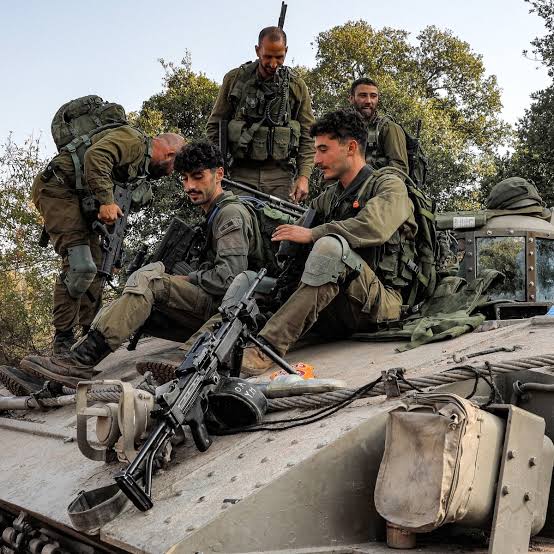
A sizable chunk of the regime’s military arsenal comes straight from the US, from F-15 and F-35 fighter jets to bunker-busters, interceptor missiles, air-defense systems, and cutting-edge intelligence gear, all supplied without restriction for use against its adversaries. Even the famed Iron Dome, long touted as a symbol of Israeli defensive prowess, was developed with billions in US funding.
White House officials have repeatedly acknowledged the sheer scale of Washington’s backing in recent years. During the height of the Gaza war, for instance, former President Joe Biden stated: “If Israel didn’t exist, we’d have to invent one to protect American interests in the region.” Biden also stressed time and again that Washington’s commitment to Israel’s security is “ironclad” and even declared himself a Zionist. His words essentially confirm that the occupation regime is no independent actor, but one of US’s most vital strategic tools in West Asia region, whose survival carries major geopolitical weight for Washington.
Beyond financial and military aid, Tel Aviv has long enjoyed Washington’s protective umbrella in international bodies. Dozens of anti-Israeli resolutions at the UB Security Council have been torpedoed by US vetoes, a move analysts see as a key reason Israel has been shielded from international pressure. Without that political cover, Tel Aviv would face far deeper isolation and a much steeper price.
Power of Axis of Resistance highlights Israel's weakness
Though the US and European countries have tried to prevent exposure of the Israeli vulnerability by providing vast military and security assistance, the consequent blows by the Axis of Resistance to the Israeli regime more than ever have disclosed the structural erosion and fragility of the occupation regime.
In the past, Tel Aviv, relying on aerial superiority and military technology, could end the wars in a short time and force the opposite side to retreat, but things have changed today.
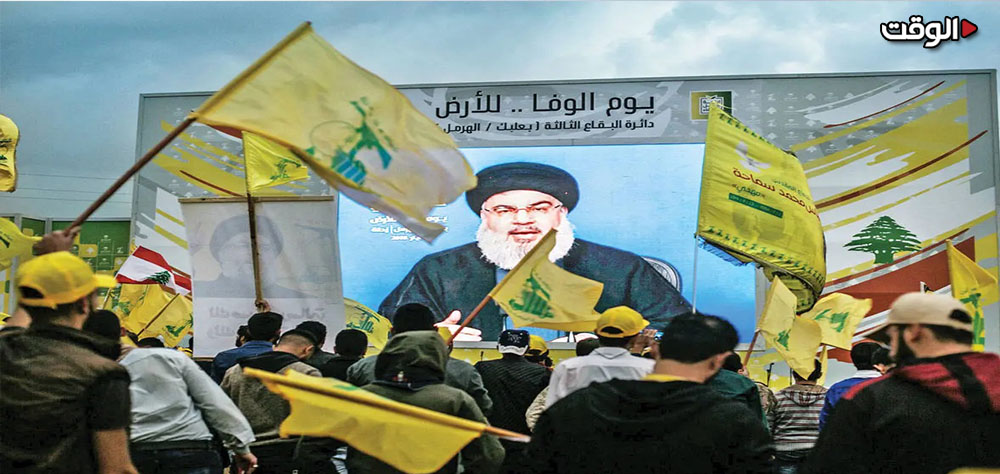
But the most significant shift has been the gradual rise of the Axis of Resistance's capabilities and the steady erosion of Tel Aviv's deterrence edge, the first signs of which emerged during the 33-Day War with Hezbollah in 2006. That conflict, billed as a quick wrap-up within days, morphed into one of the Israeli military's toughest challenges. By the end, despite Washington's backing, Tel Aviv had failed to achieve many of its stated objectives, and for the first time, the myth of an invincible army faced serious cracks. Repeated Gaza battles have since shown that Israel's war machine no longer possesses the necessary punch to convert tactical wins into strategic gains.
In recent years, this trend has entered a new phase. Iran and the Resistance groups' expanding missile and drone arsenals have put the Israeli regime under greater threat than ever before. Cities once far from the front lines are now part of the conflict zone, raising the cost of any military adventurism by the regime to a level that is impossible to ignore.
In such conditions, Tel Aviv more than any other time desperately needs financial and military support of the US and other Western patrons to maintain its military superiority, manage security crises, and save its regional position. In fact, if the protective umbrella of the US and NATO members is removed from Tel Aviv, many factors that have so far ensured survival of Israeli regime will begin to crumble, a prospect that can realize the scenario of the collapse Israel far sooner than predictions made in the Jewish apocalyptic texts.