
















Alwaght- Iran’s national football team made their 2026 World Cup debut against New Zealand, and it was more than an ordinary match. Weeks before kickoff, political and media hype had already turned this qualifier into one of the most talked-about games of the tournament’s early stage.
While the players and coaching staff took to the pitch determined to put on a strong showing of Iranian football and snatch a favorable result, anti-Islamic Republic groups abroad were busy trying to turn the sporting event into a stage for political demands and conflicts.
The World Cup has always been football’s biggest showcase, an event that draws billions of viewers worldwide and locks in international media attention. Seizing on that, monarchist factions had been plotting for weeks to leverage the spotlight on the Iran-New Zealand match, whipping up political distractions to steer public focus away from the technical and athletic side of the game.
Against that backdrop, rallies sprang up around the SoFi Stadium, where Iran and New Zealand were set to face off. Protesters waved monaechist flags of Iran and chanted political slogans, trying to color the atmosphere outside the venue.
Some reports pointed to verbal clashes, and in a few cases, minor scuffle, between Team Melli fans and demonstrators along the routes leading to the stadium.
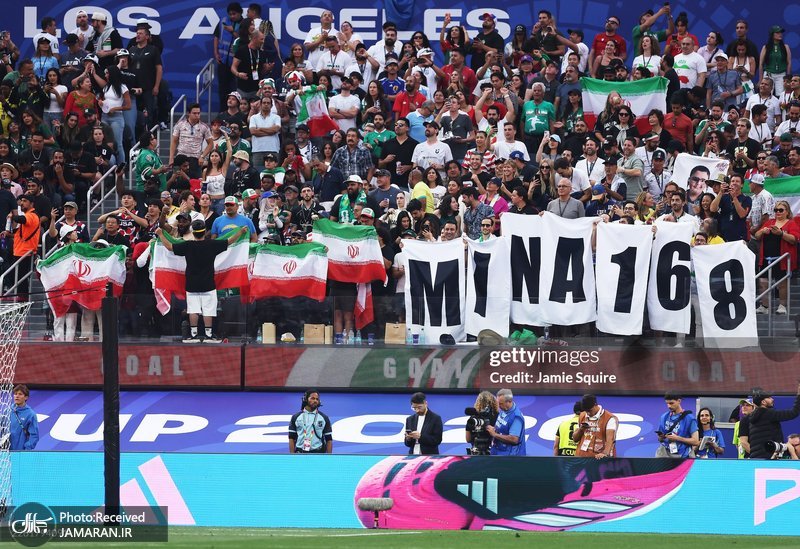
Inside the arena, a number of opposition supporters tried to hijack the stands by cheering for New Zealand and shouting political slogans, aiming to throw the players off their game and pile psychological pressure on Iran’s representatives.
Past matches had shown that such tactics could stir up tension inside stadiums. But what actually unfolded on game day told a different story. Thousands of Iranians, across all political stripes and personal backgrounds, packed the stands, and for most of the match, their shared love for the national team won out.
The roar of Iranian fans echoed through the stadium for long stretches, creating an electrifying atmosphere for the players. It proved that football can still rise above political divides and spark a sense of national unity, a point even FIFA officials acknowledged with appreciation.
Players stay calm in the face of marginal issues
Another hot-button issue that grabbed plenty of attention was the pre-match ceremony, specifically, the playing of national anthem. Opposing factions had fully expected the national team players to break rank during that moment, hoping to milk some political message out of it. But the Iranian squad stood firm, going through the official pre-match formalities like any other national team and singing the anthem loud and clear. That effectively defused a big chunk of the political grandstanding that had been teed up beforehand.
On the pitch, Iran turned in a more than respectable performance, with the match against New Zealand ending in a 2-2 draw. While bagging all three points would have been a sweeter outcome for coach Amir Ghalenoei's men, pundits reckon the overall technical display was encouraging, proof that Iran has what it takes to hold their own as the tournament rolls on. Ghalenoei himself said he was pleased with how his side played and singled out their fighting spirit for praise.
After the final whistle, several players made a point of steering the narrative back to football in their interviews with reporters. They underscored the importance of fan support, team cohesion, and staying focused on pushing deeper into the tournament. The only gripes they aired revolved around the shoddy conditions for preparation and recovery, something they pinned on FIFA and the US government, with no mention whatsoever of political sideshows.
Throughout those chats, the players kept coming back to one thing: their drive to bring joy to the people of Iran. Skipper Mehdi Taremi, in his post-match interview, stressed that football should stay well clear of political tensions. "We are here to play football," he said. "We have always tried to stand with the people. As national team footballers, we want to bring all Iranians together, both those at home and those abroad. We do not pay attention to anything else, especially political stuff. We just want to play for Iranians everywhere and unite them. Right now, there's no issue on that front."
That stance left many media outlets with little to spin in political terms.
The players also pushed back on the opposition narrative about the stands, insisting the crowd atmosphere actually worked in their favor. Taremi drove that point home: "I want to thank our fans in Los Angeles for creating an amazing atmosphere for us over the full 90 minutes. We are really grateful, it felt like we were playing at home. I hope they show up just as strong for our next match."
Ghalenoei, also used his post-match presser to thank the Iranian fans for their support, calling the show of unity inside the stadium one of the biggest takeaways from the game. He said his players managed to keep their heads straight despite the fraught atmosphere and turned in a performance they could hold their heads up about.
The efforts by certain opposition factions to overshadow Iran's World Cup presence simply did not pay off. The real headline from this match was not the 2-2 draw against New Zealand; it was the failure of those attempts to turn national team's World Cup run into a political flashpoint. The players and the fans refused to let planned controversy cast a shadow over the match, proving once again that football can still serve as a rallying point for unity and solidarity among Iranians.










