













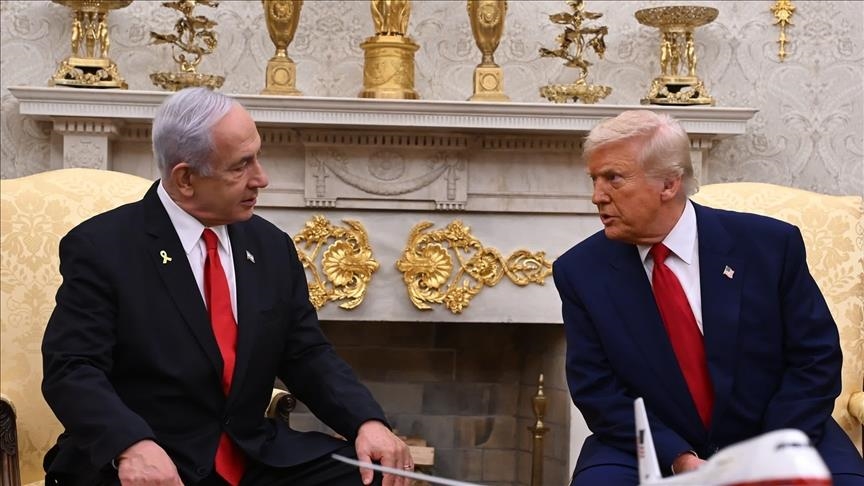


Alwaght- The deal Trump reached with Iran is not just a simple agreement to end the war, it is one reshaping the architecture of relations between Washington and Tel Aviv. The Foreign Policy magazine argues in a recent analysis that although the military and security cooperation between Washington and Tel Aviv is at its height level, the shift in public opinion, diminished influence of the pro-Tel Aviv lobbies in the US, and the fallout of Gaza and Iran wars have left the pillars of this alliance in critical conditions.
The magazine reports that despite unprecedented military and strategic cooperation between the US and Israeli regime, the very foundations of that alliance are eroding, and the relationship may be entering a period of long-term decline. It holds that Netanyahu is already bracing for a future with reduced US military aid. Yet, he himself, more than anyone, has driven that deterioration.
So as Tel Aviv and Washington drift apart in the wake of Trump’s deal with Tehran, their rifts are coming into sharper focus. But where, exactly, can we trace those fractures right now?
Trump and Netanyahu separating ways
Trump has repeatedly voiced frustration over the war in Lebanon dragging on in recent weeks. He believes Tel Aviv's heavy strikes, particularly the bombardment of residential areas in the Lebanese capital Beirut, have exacted a steep political and human cost, and are now threatening the momentum of thr deal with Tehran. Trump has even said Israel's campaign against Hezbollah has "gone on far too long." Netanyahu, meanwhile, insists operations against Hezbollah must continue until security threats are neutralized, and that Tel Aviv reserves the right to act militarily in Lebanon whenever it deems necessary.
This has made Israel's ongoing strikes on Lebanon a fresh sticking point between Tel Aviv and Washington. And with Tehran making clear that any agreement hinges on a halt to fighting across all fronts, including Lebanon, Trump now sees Netanyahu's Lebanon campaign as directly at odds with his own interests.
Can Trump curb Netanyahu?
Analysts say Trump's sharp criticism of Netanyahu over the strikes on Dahieh in southern Beirut is likely to keep escalating, and while Trump might manage to rein Netanyahu in by Friday, the 60-day window set for finalizing the broader deal will be just as critical. Netanyahu could well resort to every possible pretext to damage that process, making it extremely difficult to keep Israel in check during this period.
Still, Trump does have leverages in dealing with Netanyahu.
Reports suggest that in the event of a major confrontation with Iran or a prolonged war in Lebanon, Israel would rely heavily on US ammunition, missile interceptors, satellite intelligence, logistical support, and political backing. Without that lifeline, the cost of sustained fighting would climb sharply. So if the White House concludes that a deal with Iran, stable energy markets, or averting a regional war takes priority for US interests, it can apply serious pressure on the Israeli government to stand down.
Historically, too, US administrations have repeatedly managed to curb or scale back Israeli military operations. That track record shows Washington does hold real cards on critical security matters. That said, Netanyahu is unlikely to go quietly, he and much of Israel's security establishment view Iran and the resistance axis as the country's foremost threat, and they may well be willing to risk tension with Washington to confront it.
And if Netanyahu calculates that backing down against Hezbollah or Iran would translate into political defeat at home, he will have even more incentive to push back against American pressure.
At the same time, the US president has his own political constraints. He can not simply cut off US support for Israel without facing blowback from key congressional factions, pro-Israel lobbying groups, and a significant slice of his own voter base.
On Lebanon, however, Trump stands a better chance of succeeding. If Washington decides to block a wider war there, it typically has ample tools to limit the scope of Israeli operations. Lebanon is not a top-tier U.S. security priority the way Iran's nuclear program is, and Israel generally needs to coordinate more closely with Washington on this case.
However, Iran case is different. Reining in Netanyahu on that front is far more difficult. If the Israelis believe they are facing a strategic, existential threat, they may press with military action even against US objections. That said, waging a large-scale, protracted war against Iran without active Washington support would be vastly more complex and costly for the Israeli regime.










