















Alwaght- The latest round of Iran-Israeli tensions was not simply a limited military encounter, but, as regional and international observers suggest, it bore signs of a transformation in the principles ruling the confrontation of the two sides. While the Israeli regime has always tried to take the initiative in various fields and give a massive response to any threat, the recent developments have indicated that this is changing.
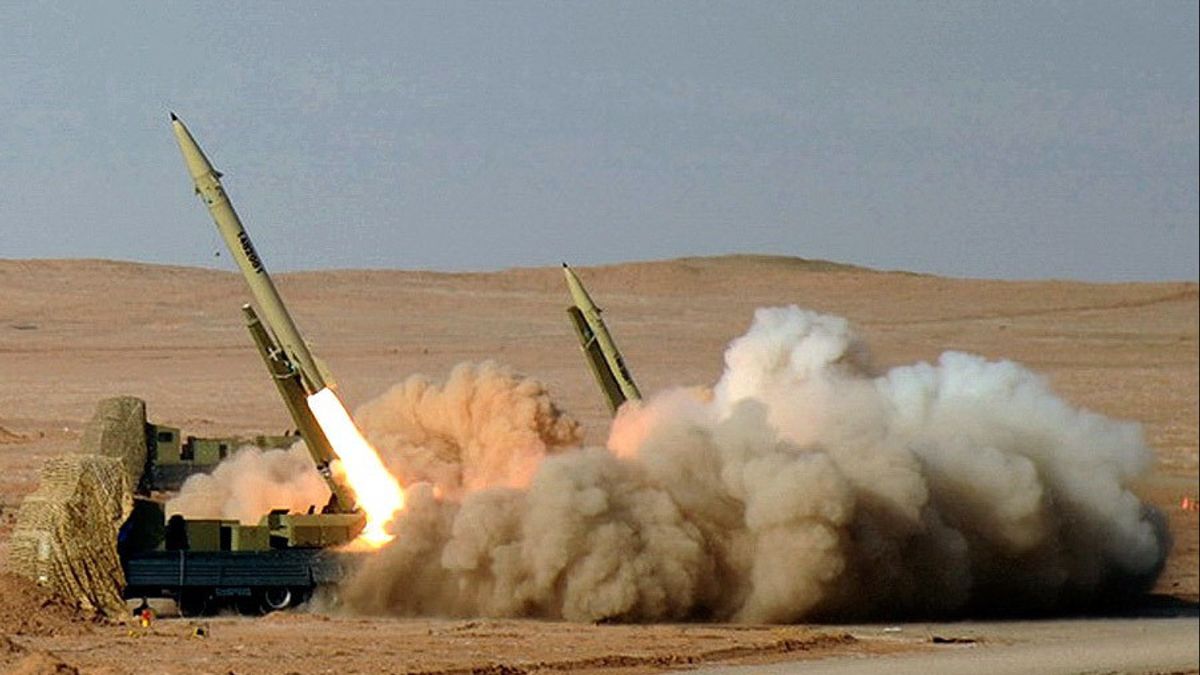
Iran's missile response to the Israeli aggression in southern Lebanon came as many analysts thought that Tehran will avoid direct confrontation with Tel Aviv for Israeli attacks in Lebanon. However, the Islamic Republic has shown that the earlier calculations about the limits of the Iranian reactions are no longer valid and new equations are brewing.
What matters more than the attack itself are its political and strategic consequences. For the first time, the perception took hold across the region that Iran is now ready to step in directly, and raise the cost of the other side’s actions, if its declared red lines are crossed. That, in turn, turned the debate over changing the region’s deterrence rules into a central focus of media analysis.
Collapse of old assumptions about Iran’s behavior
For years, Western and Israeli circles believed that economic pressures, sanctions, and home reservations have limited Tehran's power to make decisions to directly engage in regional crises. They thought that Tehran preferred to respond to the developments through its allies and avoid direct confrontation with the Israeli regime.
Lebanese Al-Akhbar newspaper wrote that the recent developments have seriously challenged this assumption. Iran's missile response to violation of the ceasefire in Lebanon indicated that in some cases, Tehran is ready to act beyond the established policy of the past. This was neither a symbolic action, nor start of a comprehensive war; it was an effort to draw new deterrence boundaries.
Through this attack, Iran sent the message that any expansion of the Israeli operation in Lebanon or crossing the drawn red line can stir direct military action of the Islamic Republic. That is why many analysts agree that the aim of Iran is not to expand the war, but to sway the opposite side's calculations.
How do tensions impact Washington-Tel Aviv relations?
One of the most critical dimensions of this crisis was the emerging divergence in outlook between the US and the Israeli regime over the future of the tensions. Though Tel Aviv has long relied on Washington's strategic backing, recent events showed that the US has little appetite for entering a full-blown regional war.
Many observers believe Netanyahu cannot make major military decisions without coordinating with Washington, since a significant part of Israel's deterrence capability and combat capacity depends on American political, financial, and military support. Yet during the latest crisis, the gap between Israel's desire to escalate pressure and Washington's caution about widening the war became more evident than ever.
This dynamic allowed Tehran to exploit the situation to ramp up political pressure on Tel Aviv. In fact, the more cautious the US acts about an all-out war, the more constrained Israel's room for maneuver becomes, a point repeatedly highlighted in regional media analyses.
Iran breaks out of purely defensive approach
Many Arab media outlets suggest that the most important development having happened recently is the gradual shift of Iran's approach from a merely defensive deterrence to active deterrence and offensive. These media outlets, including Al-Nashra, emphasize that Tehran no longer settles to reaction after threat materializes, but tries to deter the opposite side through flexing is muscles.
So, Iran's missile strikes at Israel were read as a preemptive action to save the rules of ceasefire in Lebanon. Such an approach, analysts maintain, can give rise to equations that can, beyond Lebanon, influence other fronts in the region.
Also, this development beefs up Iran's position in the Axis of Resistance, a bloc containing actors opposing Israeli occupation and American imperialism in the region. Many Tehran-aligned groups have described the attack on Israel a sign of Iranian readiness to support its allies, something inclined to influence future regional developments.
Israeli media admit Tel Aviv’s strategic failure
Inside the occupied territories, observers do not rate this confrontation affirmatively. Some analysts have been blunt that Israel has failed to realize its objectives and even in some areas has faced new challenges.
Ronen Bergman, Israeli journalist, author, and senior military and security analyst at Yedioth Ahronoth, is among those specially focusing on confrontation with Iran. He believes that Tel Aviv has neither managed to broaden Iran war, nor get the US on its side, nor deter Iran from a direct military response. On the other side, Tehran presented itself as an actor capable of impacting the developments and imposing new rules on the opposite side.
Some Israeli media have even talked about Israeli deterrence power taking damage. They argue recent clashes have shown that Israeli threats no longer work as they did before and the other side has grown more prepared for responing.
Reviving the "unity of fronts" idea
Another important outcome of the recent crisis was the "unity of fronts" being highlighted. Iran for years has stressed on the need for coordination among various fronts from Lebanon to Palestine to Yemen to Iraq.
Now even some Israeli media admit that recent developments have revived the bonds between various fronts of the Axis of Resistance. In other words, what Israel wanted to limit to Lebanon spiralled into a wider crisis and took regional dimensions.
This was alarming for Tel Aviv since any clash on one front can fast spread to others and increase Tel Aviv’s security costs.
Iran's missile power, new source of concern
Alongside the political fallout, the recent clash drew heavy scrutiny to Iran's missile power. Several former Israeli commanders and experts, voicing surprise at how quickly Iran bounced back militarily, stressed that Tehran had managed to rebuild part of its capabilities in a relatively short time.
In their view, the recent strikes showed that Iran still packs a significant missile punch, something that could further complicate Israel's security calculations. The speed with which these capabilities were restored and the maintenance of operational readiness were among the points that caught the attention of media outlets and think tanks.










