

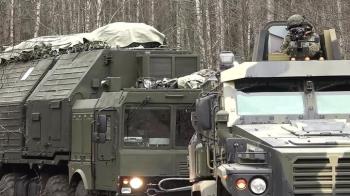















Alwaght- While the US President Donald Trump everyday talks about being close to a deal with Iran, the developments on the ground suggest that there is a considerable distance between these claims and the field realities. The course of developments shows that not only the regional atmosphere is not going to a de-escalation, but also the new American military actions pave the way to the return of the dangerous cycle of conflict and instability.
Just two days after Iran’s armed forces launched missile strikes on occupied territories, and despite the US partially grasping Iran’s seriousness in defending its interests and allies, the American military moved once again to test Iran’s resolve. In a situation where mediators are scrambling to keep dialogue and de-escalation on track, Washington carried out fresh attacks on several locations inside Iran.
US Central Command (CENTCOM) claimed the operation in southern Iran was in self-defense and a response to the downing of an Apache helicopter. Around the same time, reports emerged of explosions in Bandar Abbas and Sirik. The American officials said the strikes targeted air defense and radar systems, but Iranian authorities reported that the missiles hit civilian infrastructure, including two water supply reservoirs in Sirik.
As CENTCOM launched its operation against Iran, Trump weighed in, saying: “I think responding is very important. They shot down a helicopter, and we’re responding right now. I believe the response should be very strong and powerful, and it is.” This came after the US president had previously dismissed the downing of the Apache as not serious.
That abrupt shift suggests Washington’s decisions are driven less by a clear crisis-management strategy and more by short-term calculations and political considerations.
Regardless of the narratives from either side, the key point is that these attacks have effectively shattered the fragile calm and pushed tensions back to a higher level.
Iran's tough response
Given Iranian armed forces' warnings about response to any aggression, immediately after the American attacks, Iran struck a number of American positions in the region.
Reports said Iran hit the Fifth Fleet base in Bahrain. Media outlets reported explosions were heard in Sakhir neighborhood where Issa Airbase is located.
“In continued counter-operations against the provocations and disruptions caused by the terrorist US military for residents in the south of the country, the Islamic Republic of Iran’s military has launched a wave of drone strikes, hitting American bases and radar systems of the US Fifth Fleet in Bahrain," Iran’s military public relations office stated.
Meanwhile, local sources reported explosions shaking Kuwait, though no warning sirens were activated. The base hosting UA forces in Kuwait’s Al Jahra region is believed to have been targeted.
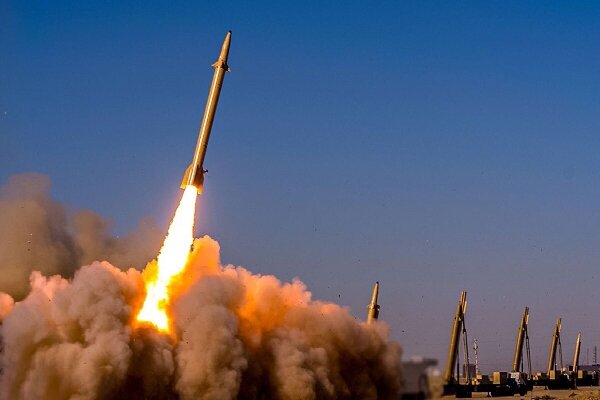
In a separate statement, the Islamic Revolutionary Guard Corps (IRGC) said that “following the successful Navy operation that struck 21 targets at US air and naval bases in the region and downed an MQ-9 drone over Jam town, and given the enemy’s continued hostilities in this retaliatory operation, the brave fighters of the IRGC Aerospace Force used long-range solid-fuel missiles to hit and destroy four key targets, including F-35 fighter hangars at the airbase and the US military’s command and control center in Al-Azraq, Jordan.
After these strikes, Iran’s Foreign Ministry issued a warning, saying that Tehran will not hesitate to exercise its inherent right to self-defense, including by striking the origin of attacks, as well as bases and logistics facilities used to carry out and support aggressive operations against Iran. Foreign Minister Seyed Abbas Araghchi also stressed that any threat or action against the country will be met with a proportionate and decisive response.
Diplomatic moves for de-escalation
Having in mind that flare-up of tensions is pushing the world to the brink of a serious crisis, some players stress on diplomacy. Chinese Foreign Ministry spokesperson reacted to the trade of fire between Washington and Tehran, saying that all of sides in the Middle East should stay calm and exercise self-restraint and avoid escalation. Washington and Tehran should take certain steps towards de-escalation and commit to diplomacy to settle their disputes.
Meanwhile, Saudi Foreign Minister Faisal bin Farhan and his Egyptian counterpart Badr Abdelatty discussed regional developments in a phone call, stressing the need for de-escalation efforts to preserve regional peace and security.
Most governments in the region fully understand that any new instability could jeopardize economic development trends, foreign investment, and major regional projects, so they are working hard to prevent the crisis from escalating further.
Energy and financial markets fear tumult
Continued esclatorty approach of Washington will impact the financial and energy markets and stir a new wave of concerns among investors and traders. A report by the Financial Times maintained that Brent crude jumped to $92.30 after the US attacks. WTI oil added 60 cents to reach $88.80.
Though this increase looks modest at first glance, its real significance lies in the political and economic message behind the numbers. Oil markets have always been sensitive to developments in the Middle East, given that a vast share of the world’s energy production and exports is concentrated there.
Priyanka Sachdeva, a senior energy market analyst, believes the latest attacks have once again put traders on alert over geopolitical risks and potential oil supply disruptions. While diplomatic efforts to contain the crisis continue, she notes that recent military escalations have made the prospect of war and instability a major factor influencing energy markets once more.
The markets’ main concern is not just the limited clashes themselves, but the risk of them spilling over into critical energy transit routes. The Strait of Hormuz, one of the world’s most vital maritime chokepoint, plays an irreplaceable role in regional oil and gas exports. Any threat to its security could disrupt global energy supplies and trigger a severe price shock. As a result, energy traders are closely watching military and political developments, with even the slightest sign of rising tensions capable of moving prices.
Financial markets have not been spared either. Reports show that US stock futures and Asian equity markets dipped following news of the confrontations.
Specifically, Dow Jones Industrial Average and S&P 500 futures each fell about 0.3 percent, while Nasdaq 100 futures dropped 0.4 percent. The MSCI Asia-Pacific ex-Japan index declined 0.6 percent, Japan’s Nikkei fell 0.9 percent, and South Korea’s KOSPI, heavily weighted toward tech stocks, slid 2 percent.
It is noteworthy that in unstable conditions, capitals usually pull out of risky assets and migrate to safer markets, something that can bring further volatility to the world economy.
In general, the missile strike on US bases and the recent attacks on occupied territories are not merely a reaction to a miscalculation or routine incidents during a ceasefire. Rather, they cement a new equation, one that hands Iran the initiative in a "no war, no peace" battlefield.










