
















Alwaght- While the resistance groups and other victorious factions in the Iraqi parliamentary elections are busy debating new prime minister and president posts, some political parties are once again trying, with US direction, to stir tensions in the country.
These political factions, which routinely spring into action at critical junctures, are now seeking to sour the aftertaste of Iraq’s recent elections, where voter turnout was notably high. In this context, calls to disarm resistance groups raised by some Iraqi political figures, have once again resurfaced in recent days.
Against this backdrop, Faiq Zaidan, head of Iraq’s Supreme Judicial Council, claimed on Saturday that resistance factions had responded positively to his recommendation to cooperate on disarmament. The remarks, however, triggered a swift and forceful backlash from the resistance groups, which categorically rejected any notion of compromise or agreement on the issue.
Abdul Qader al-Karbalaei, the military deputy of the al-Nujaba Movement, said the group will continue resisting U.S. forces “by all means,” describing the American military presence as a blatant violation of Iraq’s sovereignty.
In a statement, al-Karbalaei said the continued deployment of US troops in Iraq, despite official and popular demands for their withdrawal, amounts to direct interference in the country’s internal affairs. “Occupation constitutes a legitimate justification for resistance,” he said, adding that this right belongs to all occupied nations and “stems from the dignity of the Iraqi people.”
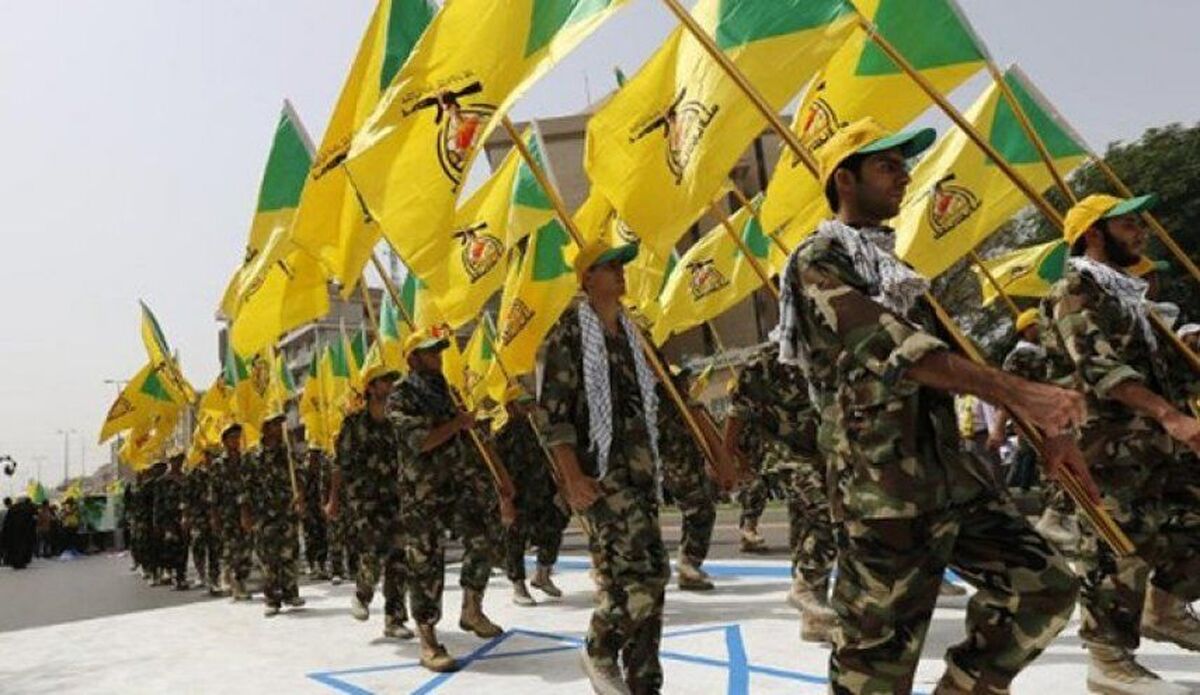
At the same time, Kataib Hezbollah Iraq issued its own statement opposing disarmament, stressing that full sovereignty and security are prerequisites for any such move.
The statement said resistance is a legitimate right and that weapons will remain in the hands of the group’s fighters. Any talk of an agreement with the government on disarmament, it added, can only take place after the complete withdrawal of all NATO occupation forces and Turkish troops from Iraqi territory. The group further noted that anyone choosing to surrender weapons before full sovereignty is achieved is making a purely personal decision.
Earlier, Qais al-Khazali, leader of Asaib Ahl al-Haq, had said: “We believe in the principle of restricting weapons to the state, because we are part of this state.”
US pressures for disarming resistance factions
Disarming the resistance groups is a project Washington has been insisting on strongly in recent years, and after recent parliamentary elections, in which resistance forces gained the majority of the seats, the Americans brought the case under further concentration.
Iraqi officials are cited as saying that Washington asked Baghdad to act to disarm at least six armed groups. The US also asked for zero participation of these groups in the Iraqi government that is set to be formed.
Relying on aligned factions in Iraq, the US is pressing to remove the main obstacle of realization of its agenda in Iraq, but resistance forces, which are the backbone of the Iraqi defense structure, have so far thwarted these scenarios that are aimed at destabilizing the country.
Washington’s pressure to disarm Iraq’s resistance groups continues, even as these forces have played a decisive role in safeguarding the country’s security over the past decade. When large parts of Iraq fell under occupation by the terrorist group ISIS, it was the resistance factions that, through sacrifice and determination, defeated the militants and restored stability and calm to the country.
Since then, they have continued to confront takfiri threats without seeking any reward, and this responsibility remains ongoing. Almost daily, reports emerge of operations by Popular Mobilization Forces (PMF) units neutralizing ISIS threats across Iraq. These groups also deployed along the borders of the Kurdistan Region during the September 2017 independence referendum, when Iraq’s territorial integrity was under serious threat, in order to prevent the country’s fragmentation.
On the political front, the resistance groups, despite securing the largest number of parliamentary seats in each of the past three election cycles, have pursued a path of national cohesion and unity. They prevented political deadlock, engineered by Washington, from pushing the country toward instability. Their decisive victory in the latest elections and the renewed public mandate underscore that the resistance is on the right track both militarily and politically. From the Iraqi public’s perspective, the presence of resistance groups is seen as an indispensable pillar of peace and stability.
By contrast, the US seeks to portray the resistance as the primary source of insecurity and instability in Iraq. Yet it is evident that Washington itself has been the single greatest driver of violence and destruction in the country over the past two decades. Washington has not only failed to take meaningful steps to stabilize Iraq, but through its destructive policies has pushed the country into deeper security crises.
From backing ISIS terrorist group to launching attacks on resistance positions, these actions have been aimed at weakening the resistance and removing it from Iraq’s political and security equation, paving the way for dominance over a weak and dependent state. Washington knows full well that as long as the resistance remains an active force in Iraq, its plans will not succeed.
For this reason, now that these groups have secured an influential role within Iraq’s security and political structures, Washington has thrown its full weight into the arena, once again seeking to test its chances of achieving its objectives.
ISIS and US threats still in place
The resistance groups, widely regarded as the main guarantors of Iraq’s security, have made it clear that they will not lay down their arms as long as external threats persist. At a time when ISIS elements have once again become active in both Syria and Iraq, and continue to pose a serious threat to the security of the two countries’ borders, the resistance forces say they stand ready to defend the Iraqi people and the country’s territorial integrity against any renewed movement by the takfiri group. Accordingly, as Kataib Hezbollah and the Al-Nujaba Movement have stated, disarmament of the resistance is off the table under current conditions.
Another key factor behind the resistance groups’ insistence on retaining their weapons is the continued presence of US troops in Iraq, whose expulsion remains one of their central demands. From the perspective of these factions, the withdrawal of occupying American forces could pave the way for a return to stability and calm, and as long as thousands of foreign troops remain on Iraqi soil, talk of disarmament is meaningless.
The Al-Nujaba Movement has explicitly stressed that no amount of pressure or threats will alter the course of the resistance, reaffirming its commitment to confrontation until the end of all foreign military presence in Iraq. Al-Nujaba and Kataib Hezbollah have said that discussions about restricting weapons to the central government can only take place after the withdrawal of NATO forces and Turkish troops from the country, conditions that do not currently exist.
They argue that without the resistance groups, Iraq would be vulnerable to external threats, putting at risk all the gains these forces have secured over the past decade in the name of stability and security. For this reason, resistance leaders say they will not yield to foreign pressure, particularly at a time when the Israeli regime, backed by the US, is pursuing broader designs across the region.
Threat of Peshmerga arms
The US is insisting on disarming the PMF while in northern Iraq, the Kurdish Peshmerga forces have been independently holding arms over the past two decades. Though in the Iraqi constitution the armed nature of Peshmerga is pointed to, these forces are categorized as militias, acting off the control of the central government. The resistance groups argue that if the restriction of arms to the government applies to them, it also applies to the Peshmerga.
Hezbollah Brigades in their statement cited home threats as one of the main reasons behind resistance forces keeping their arms, saying: “We need assurances for the security of Iraq and its sanctities against the threats posed by al-Jolani militias [in neighboring Syria] and the Peshmerga forces [in Kurdistan region]."
The transfer of weapons to the Peshmerga during the drafting of Iraq’s new constitution and in the aftermath of the US-led invasion was intended to prevent instability in the Kurdistan Region. That said, while Kurdish parties and Washington regard the disarmament of these forces as unlawful, this legal framework is neither immutable nor beyond revision. Moreover, in March 2018, the PMF were formally integrated into Iraq’s official military structure by order of then–Prime Minister Haider al-Abadi and are now considered a core pillar of the country’s security apparatus.
From this perspective, the stance of the resistance groups suggests that, in the absence of the resistance, Peshmerga forces, much like foreign occupying troops, could pose a serious threat to Iraq’s unity and territorial integrity. Under such circumstances, the Kurdistan independence scenario that was thwarted eight years ago through the vigilance and intervention of the PMF could resurface if the central government weakens.
Despite this, the US has adopted a selective and calculated approach to disarmament. Washington’s incremental moves, including the deployment of troops at bases in the Kurdistan Region and the opening of its largest consulate in Erbil, send a clear signal of US efforts to engineer instability in Iraq.
In addition, reports have emerged of a secret agreement between Erbil and Turkey to station Turkish forces in northern parts of the region, a move that openly contradicts Iraq’s constitution, as only the federal government has the authority to sign such agreements. Taken together, these developments indicate that Erbil leaders, backed by Washington, are seeking to consolidate their leverage and create pressure points against the central government, an approach that could significantly disrupt Iraq’s internal balance of power and undermine its national security.
Experience has shown that the US policies not only do not contribute to Iraq’s security and political crises, but also growing interventions in the country’s home affairs have pushed Iraq to further instability. In the current conditions, the resistance groups that earlier stood against such hostile scenarios will not allow Washington and its loyalists to jeopardize Iraq once again. So, Washington’s push for disarming them will go in vain since these groups not only had not bent under the foreign pressures but also have seen their political sway and popular base strengthening day by day, something making these deep-rooted factions extremely hard to counter.










