













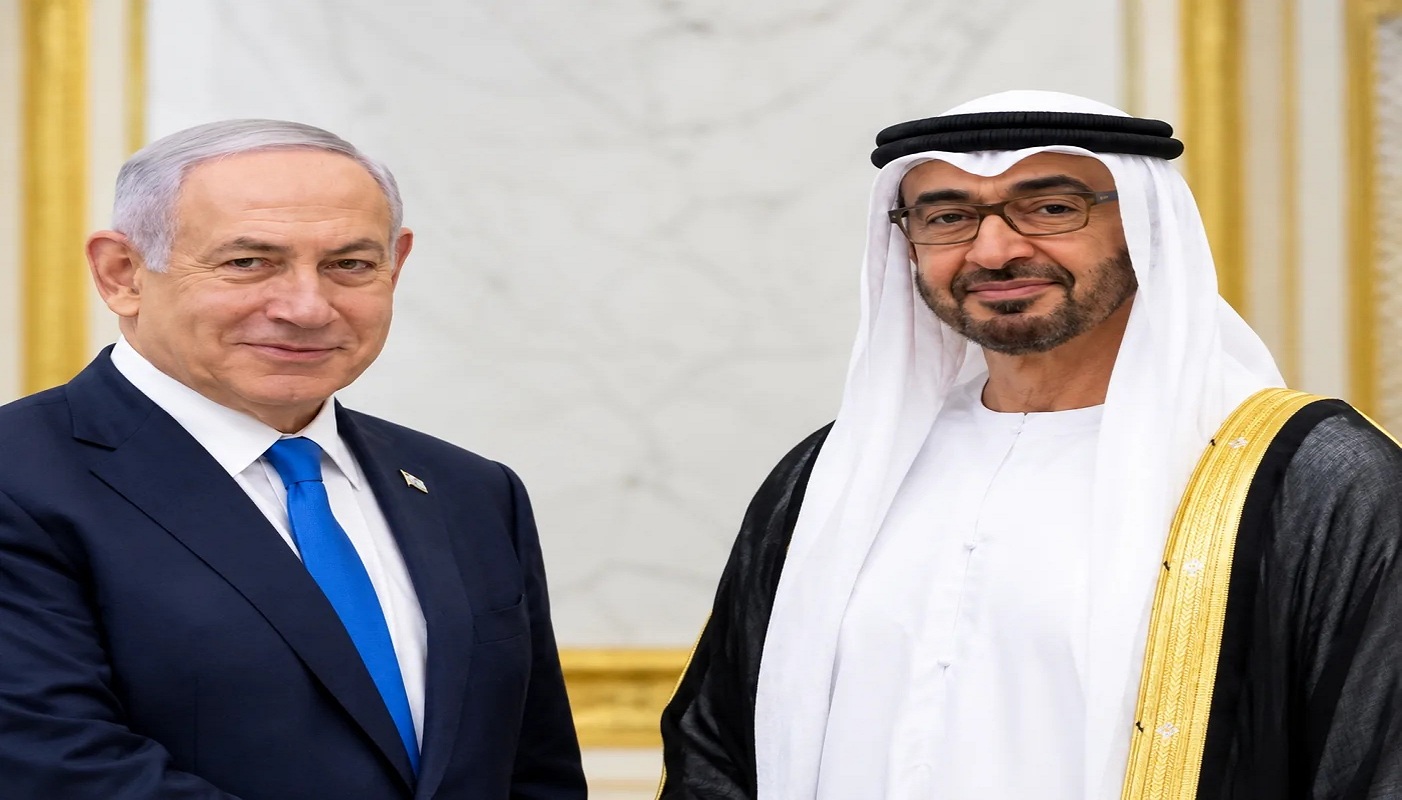


Alwaght- A review of reports published through September 28 shows that the core fact of Benjamin Netanyahu's covert trip to Abu Dhabi and his meeting with the UAE ruler Mohammed bin Zayed is more reliable than some of the details surrounding the visit.
Netanyahu's unannounced, one-day trip to Abu Dhabi on Sunday and his meeting with bin Zayed were confirmed to Reuters by a senior Israeli official. Reports say Netanyahu flew to Abu Dhabi on a private plane, and his office offered no explanation of the meeting's details.
But the significance of the trip lies not merely in its secrecy, but in its timing, which lends the meeting special political weight.
It must be added that the trip came just as Tel Aviv was once again consumed by debate over what Netanyahu knew before the October 7, 2023 attack.
In early September, Haaretz reported, based on investigations by two of its journalists, that roughly 10 days before the attack, Mohammed bin Zayed warned Netanyahu in a phone call lasting about 45 minutes that Yahya Sinwar, the late head of Hamas's political bureau, was preparing a major operation.
What is interesting is that this account is still under debate. Netanyahu's office described it a "outright lie", adding that such phone conversation never happened. Emirates officials more than once have avoided directly confirming the phone call was made. In a formal statement, an Emirati official said that Abu Dhabi shares security matters with other countries through related institutions and that it does not discuss details of such matters the with leaders of countries.
So, here we should consider a gap between Haaretz report and the proven reality.
Why has Netanyahu's trip become important at present time?
It needs to be added that a fresh Haaretz report on the Abu Dhabi trip claims Netanyahu asked bin Zayed during their meeting to deny the report about the pre-October 7 warning. According to that report, the prime minister of the usurping Zionist regime also sought some form of political or moral backing from the Emirati president. This claim, too, rests on unnamed sources, and Israeli and Emirati officials have not formally released details of the meeting.
If the report is accurate, the meaning of the trip changes: Netanyahu would not necessarily have gone to Abu Dhabi to launch a new regional initiative, but might have made the journey in part to manage the political fallout from an old case that has suddenly returned to life.
Seen that way, the case is critical for Netanyahu because the debate is no longer merely about an intelligence warning; the bigger question is whether, in the days leading up to October 7, warning information reached the highest political level, and if so, why no commensurate decision was made.
A more important document: Where is really Saudi Arabia involved in the case?
But Saudi Arabia is involved in the case in a various form and it is the normalization negotiations that preceded the October 7 attack.
A report published by the New York Times on September 25 and echoed by the Times of Israel, based on minutes from an October 1, 2023, security meeting, claims that after receiving the Emirati warning, Netanyahu stressed the need to maintain calm in Gaza during a meeting with the regime's security officials. The reason cited in the report was that military action against Hamas could damage US-mediated talks on normalization with Saudi Arabia.
If this account and the documents cited by the New York Times are deemed credible, the issue becomes far more complicated than a single ignored warning.
In that case, a paradox in pre-October 7 political calculations comes into view: preserving calm to advance a major diplomatic shift in the region versus the need for a security response to signs of mounting Hamas activity.
That distinction in wording matters, because there is still not enough public documentation about the details of the meeting, particularly regarding any Saudi presence.
Finally, it should be added that Netanyahu's secret trip to Abu Dhabi cannot be seen as merely an ordinary meeting between two leaders. The timing of the trip, the pre-October 7 warning case, and the return of the Saudi normalization case to the center of the Israeli regime's political disputes, is what gives it special weight.
At the same time, it should not be concluded that the UAE, Saudi Arabia, and Israeli regime have entered a unified coalition, or that Saudi representatives attended the meeting. There is not enough public evidence for such a conclusion.
What is more firmly documented for now is that serious report about bin Zayed's pre-October 7 warning has been published, Netanyahu has denied it, the UAE has taken a cautious position on its details, and now, just weeks before elections in the occupied territories, Netanyahu has personally met with the same Emirati leader.
From this aspect, the UAE is not just a geographical destination, but it is a confluence of three cases: The political responsibility of the October 7, the Israeli regime's relations with Arab countries, and the future of Netanyahu’s position in the Israeli home policy.
And perhaps key questions remain unanswered: If the so-called warning was made, who did receive it? Who did make a decision about it? Why did not it trigger an effective security response? Answer to these questions more than any denial or secret meeting can give a real picture of what happened before October 7.










