






Alwaght- While the political rift about the future of the Iraqi resistance groups and the way of their organization is growing, the draft law of the Popular Mobilization Forces (PMF) has once again become one the most controversial legislation cases and the political parties in the parliament are set to discuss it in parliamentary meetings.
Member of Azm Coalition Fawaz Mohammad al-Dalimi in comments said that the PMF draft law will soon enter stage of implementation, adding that there is a consensus in the parliament to remove the obstacles ahead of approving the bill.
The ruling Shiite Coordination Framework (SCF) over the past days has been working to alter the bill, and in its latest meetings has stressed on the importance of passing it.
Hadi al-Amiri, secretary-general of Iraq's Badr Organization, told tribal leaders at a meeting that "we will pass the Popular Mobilization Forces law. We have discussed this with the prime minister, and he supports it."
Iraqi Prime Minister Ali al-Zaydi once again stressed that the measure sits atop the government's legislative priority list awaiting parliament's approval, noting that work is underway to finalize the amendments and formally refer them.
Political sources close to the SCF told Shafaqna that "political blocs are trying to exploit the current climate to push through a law that satisfies the PMF and its factions, offering them legal guarantees and institutional rights in exchange for a peaceful transition to the next phase, which is organizing weapons and restricting them to state institutions."
The sources stressed that "PMF forces have for years been part of the state's official structure. The new question, then, is not their recognition but a law that could reorganize their structure, powers, affiliations, ranks and pensions, and, most importantly, define their relationship with armed groups operating outside its direct organizational framework."
They noted that "if the goal is protecting fighters' rights and regulating the institution, that is a natural right. But if this law represents the first step in a larger project to restructure weapons and security decision-making, then the factions face a historic test: whether they accept the new state's rules or balk at moving from the legitimacy of the gun to the legitimacy of the institution. The sensitivity of the next phase lies precisely there."
While some political circles see the law as a way to rein in the factions and offer them institutional guarantees in the weapons organization process, observers warn that passing it does not mean the issue is settled. The central question is whether the law can actually restructure decision-making on weapons and security matters inside the country.
Amending the PMF law, and the US interference
Though the draft law is meant to appreciate the sacrifices of the PMF, officially called Hashd al-Shabi, and to officially organize them, the amendments to some of its terms compared to the original one relates another story.
Dhahi al-Bahadli, a member of parliament from State of Law coalition, has revealed that the current version of the law has undergone alterations and omission of a number of terms that were opposed to. He believes that these amendments have created a better room for approving the law, adding that it is impossible to predict the US position or to say if the US will give the final confirmation to it.
Al-Bahadli says the PMF law is "one of the most important and sensitive pieces of legislation, and its passage must therefore follow constitutional and legislative procedures in a way that guarantees the rights of PMF members while preserving clarity in the military institution's structure and its security decision-making authority."
Sources close to the Coordination Framework stress that the insistence on pushing the law through amounts to turning it into part of a calculated containment process, first reassuring the factions, then inviting them to move their weapons into PMF depots, so that the process reads not as disarmament by confrontation but as settling them within a formal institution.
According to Mahmoud al-Hayani, an SCF member, "the new draft law is the same one that failed to pass last year, but with fresh amendments."
Several service and retirement provisions have also been adjusted. At the same time, the law's core has been preserved: organizing the PMF's structure, setting its chain of command, and placing it under the commander-in-chief of the armed forces.
Reports also point to a reduction in some of the PMF's operational powers and tighter restrictions on its movement inside cities, a bid to keep it from becoming, in arms and organization, a force parallel to the army.
The US footprint
What emerges from Iraqi lawmakers' remarks and media reports suggests that US pressure and intervention shaped the changes to several provisions of the new PMF law.
According to Iraqi outlets including Shafaqna, the most significant change in the revised version compared with the 2025 draft is the removal of two contentious clauses, one creating a "staff college" and another for "Al-Muhandis Company", both of which Iraqi sources say Washington opposed.
Iraqi analyst Abbas al-Ardawi told Shafaqna: "The issue is not just about amending the PMF law. It is about what you might call the US red lines. If those considerations still hold for the new version, I don't think the law will survive in its current form."
He added that "without seeing the full new text, and given the lack of clarity on the US position and the extent of any understandings or accommodations reached, it is hard to say whether there is agreement on this formula or whether it will hold, especially with Kurdish and other concerns among some political forces on the Iraqi scene."
Washington has in recent months pressed Baghdad to disarm resistance groups and tighten state control over them, even tying political, and particularly economic, cooperation with Baghdad to closing the case.
What was the PMF draft law and why was it not passed?
The draft law of the PMF was aimed at consolidating the voluntary force's place in the country's security structure and determining the laws regarding the organization, command, salaries, retirement, and staff status. The law was actually a step to redefine the place of the PMF in the government structure and was different from the 2016 law.
One of the most contentious issues was defining the PMF's relationship with the army and other armed forces, and how much structural independence it would retain. Critics argued that certain provisions could entrench the PMF as a powerful, semi-independent military structure. After several rounds of review, the draft received its final reading on July 16, 2025 and was ready for a vote, but the final vote never happened, for reasons both domestic and external.
At the time, political currents, even Shiite groups, were divided over when and how to pass the law. Some argued that in such a sensitive regional moment, no such legislation should go through without broad consensus.
Washington, for its part, sharply opposed several provisions of the draft, calling them at odds with efforts to curb armed groups' activities and strengthen the state's monopoly on weapons. That pressure was cited as a key reason for the vote's postponement.
The push to pass the law came amid a wider debate over the future of armed groups' weapons, their relationship with the state, and the possibility of merging or disarming some of them. Passing the law, then, could be read as legally entrenching armed groups' status, inflaming both internal and external disputes.
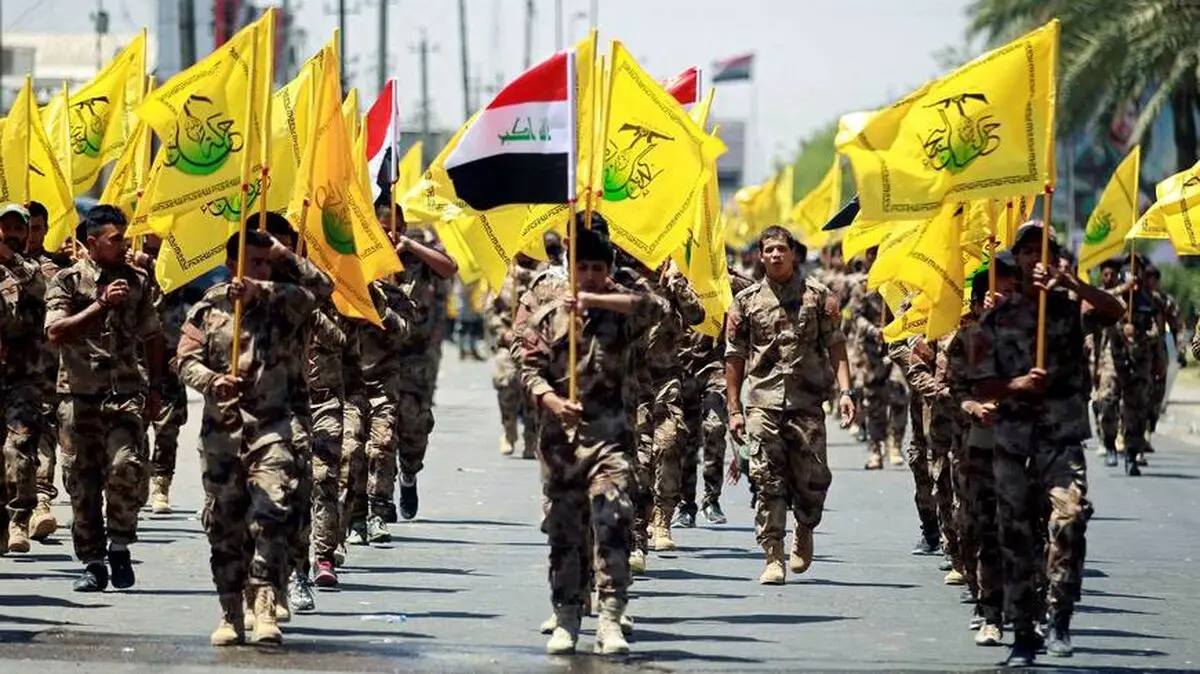
It is worth noting that the push for a state monopoly on weapons does not enjoy a unified position among armed groups. Some have declared their readiness to renegotiate military and security ties with the government. But Kataib Hezbollah, the Al-Nujaba Movement and Kataib Sayyid al-Shuhada have refused to hand over their weapons, conditioning any discussion on the end of foreign forces' presence and guarantees protecting Iraq from external attacks.
Ambiguity surrounding the US exit from Iraq at the scheduled time
Despite the warnings and conditions set by resistance groups, the full withdrawal of US forces remains mired in uncertainty, a situation that could inflame tensions between those groups and American troops if US forces stay past the September 30 deadline.
Resistance leaders have repeatedly declared they will not accept even a single American soldier remaining after the deadline, warning of a military response if that happens. Akram al-Kaabi, secretary-general of the Al-Nujaba Movement, warned on September 2 that if the US has not fully withdrawn from Iraq by September 30, resistance forces will be ready to confront American troops.
Facilitating US access to PMF data
Even if the new law keeps the PMF within Iraq's official military structure and entrenches its legal and organizational standing, the process could still bring serious changes to its resistance character and factional makeup.
In other words, legalizing the PMF's structure does not necessarily mean preserving its old identity and function. By precisely defining its powers, affiliations and operating rules, the law could pave the way for a gradual transformation, turning the PMF from a force with resistance components into a purely military, state institution.
As provisions of the new PMF law are amended and softened, US access to information about the institution's structure and activities may become easier. If new organizing and oversight mechanisms are created, state bodies would hold more data on personnel, logistical capacity, headquarters locations, communications, the command network and operational methods, potentially opening the door to indirect foreign access to part of that information.
Details of the PMF's strategic and tactical planning, troop deployments and equipment movements could also come under greater scrutiny. Fixing the locations of command tiers and restricting their presence inside cities, for instance, would generate significant intelligence about these groups' operational structure.
Curtailing PMF influence in economy
The US pressure for disarming the resistance groups in Iraq is not limited to security matters. Rather, according to observers, the broader goal of Washington is cutting these groups' political and economic foothold in the government structure.
Some armed factions over the past few years beside their political presence have built considerable influence in parts of the economy, with companies and institutions affiliated with them still active. The US Department of Treasury has squarely accused some of them of using economic resources of the state to fund their activity.
The US regards the resistance groups' economic footprint as part of Iran's influence network in Iraq and is working to weaken it. The White House fears that, amid regional tensions and Iran's economic blockade, Iraqi companies and banks tied to these groups could be used to move foreign currency and help Tehran dodge sanctions, which is why economic pressure serves as a complement to the push for disarmament.
So, the new PMF law cannot be dismissed as a mere administrative measure. It could mark a turning point in redefining the relationship between the state, resistance groups and foreign actors, and shape Iraq's balance of power for years to come.