



Alwaght- The new Iraqi government under Prime Minister Ali al-Zaydi has put restriction of weapons to the state at the top of its security and political agenda, an approach that on the surface may seem to be aimed at ending armed activities outside the umbrella of the official institutions, but its real aspects go beyond the issue of arms of the resistance groups and even the Popular Mobilization Forces (PMF).
What over the past years came as election campaign rhetoric and a political principle now has entered the execution stage. Al-Zaydi made it clear that the government should hold the monopoly of use of arms. In a op-ed he published on The Washington Post in July, he highlighted his government's commitment to realization of this goal. He said that in the first 60 days of his government, he took measures to disarm a number of militias and to prepare the ground for their integration into the regular army.
This approach showed itself in the presented official government plan, where it stresses on reforming security structure, restricting arms to state institutions, and increasing capabilities of the security forces of the country.
However, the restriction of arms in Iraq should not be reduced to handover of arms or integration of armed groups into the army. Iraq today is one of the most armed societies in the region and arms are distributed in various levels; from the regular army and federal forces to the PMF to the Kurdistan region's Peshmerga paramilitary forces, to armed groups affiliated with political factions and tribes.
From this perspective, al-Zaydi government's project is not a simple operation for disarming a number of armed groups, but an effort to redefine the relation of the government with the society, tribes, Kurdistan region, and armed forces in Iraq, a process that can prove to be one of the most complex political and security challenges of the new government.
Iraq, a society immersed in weapons
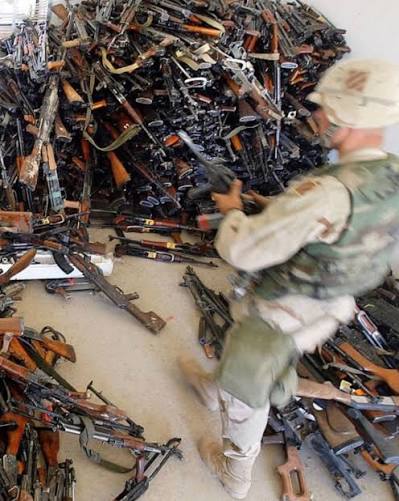
One of the most critical dimensions of this crisis is the sheer volume of civilian firearms across Iraq. In July 2024, the interior ministry put the number at roughly 15 million weapons in the hands of citizens. To get a grip on the situation, the ministry has started registering illegal arms while simultaneously clamping down on gun sales.
On December 24, 2024, Miqdad Miri, the interior ministry spokesman, announced the launch of a campaign to register illegal weapons. The initiative is being carried out under the country's 2017 firearms Law No. 51, and aligns with the government's broader agenda to maintain stability and ensure citizen security.
Under that law, married Iraqi citizens are permitted to own one small firearm or pistol, along with a limited cache of ammunition: 50 rounds for handguns and 200 rounds for other types of weapons.
According to Al Jazeera, the US is the primary arms supplier to Iraq, accounting for 41 percent of its military imports. Over the past five years, South Korea has also ranked as Iraq's third-largest weapons provider, and between 2017 and 2021, Iraq was the world's 11th-largest arms importer.
But various estimates suggest the true scale of the problem may be even larger than the interior ministry's figures indicate. The Iraqi Center for Strategic Studies puts the number of unlicensed firearms in the country at more than 20 million, a figure that, if accurate, points to an unprecedented depth of weapon proliferation in Iraqi society.
Meanwhile, one of the most respected international benchmarks comes from the Small Arms Survey. In its 2017 data, the organization estimated that Iraqi civilians held roughly 7.59 million firearms, or about 19.6 guns per 100 people.
Indeed, this figure does not mean that 19.6 percent of Iraqi population have arms, rather, it simply reflects the approximate ratio of civilian firearms to the total population. Still, even that estimate lays bare a crucial reality: the gun problem in Iraq extends far beyond organized militant groups. It is deeply embedded in everyday civilian life.
In other words, even if the government manages to disarm all of the organized armed groups, it still has to cope with a society where weapons are part of its security, social, and even cultural interactions.
Legacy of 2003 invasion: How was Iraq armed?
The roots to this current challenge should be traced back to contemporary history of Iraq. The Iraqi-Iranian war, Persian Gulf War, 1990s sanctions, collapse of Saddam's dictatorship in 2003, dissolution of Iraqi army post-occupation, collapse of the security structures, rise of rebel groups, sectarian clashes, and then emergence of foreign-backed ISIS terrorist organization all helped weapons proliferation in the Iraqi society.
After fall of Ba'athist rule, a considerable part of weapons of the army in stockpiles were sold out to the groups and ordinary citizens. The security vacuum catalized by army dissolution intensified this crisis.
In the years that followed, the rise of armed groups, sectarian bloodshed, and then the war against ISIS transformed weapons into something far more than tools of combat, they became embedded in the very fabric of individual and collective security.
For a significant segment of Iraqi society, possessing a firearm is not automatically viewed as a legal infraction. Rather, it is seen as a means of defending one's family, tribe, and property.
Iraqi political and tribal figures have underscored this reality. Adnan al-Danboub, a politician and tribal leader, has attributed the high rates of arms ownership directly to decades of war and instability, emphasizing that in parts of Iraqi culture, the gun is intertwined with notions of power, honor, and personal safety.
This reality poses a fundamental challenge to any disarmament initiative: before the state can take away people's weapons, it must first earn their trust that it can keep them safe.
Tribes, the missing part of weapons restriction project
Another fundamental challenge for the state is the question of weapons among the tribes.
Iraq, by virtue of its social and historical fabric, is one of the Arab countries with extensive tribal networks. In many regions, tribes continue to play a pivotal role in dispute resolution, local security, and social affairs. This structure, combined with the historical weakness of state institutions, has turned arms into an integral part of power dynamics within some tribal communities.
Tribal clashes in recent years, particularly in the southern provinces of Basra and Dhi Qar, have become a serious security headache. Maysan, Diwaniyah, Babel, Wasit, and even parts of Baghdad have also witnessed such flare-ups.
According to data from Iraq's Interior Ministry, in 2020 and 2021 alone, some 74 tribal conflicts and nearly 234 tribal attacks were recorded across the country. Basra topped the list.
Some of these clashes go well beyond small arms. Riyadh al-Ali, a security expert, has reported the presence of Russian, American, and Iranian machine guns among certain tribes, along with medium-caliber weapons and even anti-aircraft guns. Since 2003, he says, some tribes have gotten their hands on mortars, RPGs, sniper rifles, and various types of ammunition.
While judicial and security crackdowns on tribal conflicts have intensified in recent years, with Iraq's Supreme Judicial Council in some cases prosecuting such acts under anti-terrorism laws, the sheer scale of weaponry in tribal hands underscores a deeper truth: any bid by the state to monopolize the use of force will require confronting deeply entrenched social structures.
Peshmerga, the more complex challenge
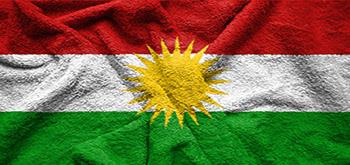
If the armed groups and civilian arms are the top challenge of Baghdad government, Peshmerga forces might be the second and the most complicated challenge of the weapons restriction project.
Here, the issue is not just disarming an armed force, but is the Iraqi constitution and the relation between the Baghdad-based federal government and the autonomous Kurdistan region.
Iraq's constitution grants the Kurdish region considerable authority over internal security. Article 121 recognizes the region's right to establish and organize internal security forces, including its own guard forces.
Kurdish officials, for their part, insist that the Peshmerga are a legitimate and official force, and argue that the federal government should play a role in arming, training, and funding them.
The complication lies in history. The Peshmerga structure has long been closely tied to the two main Kurdish political parties: the Kurdistan Democratic Party (KDP) and the Patriotic Union of Kurdistan (PUK).
In recent years, the Kurdistan Regional Government has sought to unify the Peshmerga under a single "Ministry of Peshmerga Affairs", streamlining their administrative, financial, and organizational structures. But party-affiliated command structures still weigh heavily on how these forces are organized.
Estimates published in 2026 put the number of Peshmerga fighters at over 150,000. According to a report by the KurdFile research team, some 3 million weapons are in the hands of Kurds in the region.
Such figures make clear that integrating or unifying these forces is far more than an administrative exercise, it cuts straight to the power balance between Baghdad and Erbil, and to the internal dynamics among Kurdish parties.
If al-Zaydi's vision of "monopolizing arms" means bringing all of Iraq's armed forces under direct Baghdad command, he will face a formidable legal and political roadblock.
The core question is this: should the Peshmerga be accepted as part of Iraq's legitimate security architecture, or will Baghdad insist on full command and control being transferred to the federal government?
The answer could determine the fate of the entire disarmament project.
It is not just the PMF
In this context, reducing the new Iraqi government's project to simply "disarming resistance factions" would offer a deeply incomplete picture of reality.
Even if Baghdad manages to strike a deal with politically aligned armed groups and absorb some of their fighters into official security structures, several other layers of the arms problem would remain: privately owned weapons, armed tribes, the Peshmerga forces, political parties with military wings, and local armed social networks.
Nor is this issue confined to the PMF. The PMF is already legally recognized as part of Iraq's national security apparatus, so for many of its component groups, the core question is not simply the existence of weapons but rather the chain of command, operational independence, and degree of compliance with the central government's authority.
Ultimately, the concept of "monopolizing arms" in Iraq must be disentangled from the simpler notion of "handing over weapons." The state may succeed in collecting a group's firearms, but if that same group retains its political network, organizational structure, financial resources, and independent command, the broader challenge of a true monopoly on force will remain unresolved.
Failure of weapons registration campaign signals a deeper problem
The experience of registering illegal weapons has laid bare another obstacle: a glaring deficit of public trust in the state.
Iraq's interior ministry has rolled out a registration process for unlicensed firearms and taken steps to curb illicit sales, aiming to get a grip on the vast arsenal in civilian hands. But according to Iraqi media reports, turnout has been abysmal, despite incentives offered for citizens to sign up through online platforms or in-person branches.
The Baghdad-based newspaper Al-Mada has reported that public participation in the campaign remains well below government targets, with many citizens unwilling to register their weapons or sell them back to the state.
This resistance cannot be chalked up simply to a disregard for the law. In parts of Iraqi society, years of turmoil have turned the firearm into a kind of personal security insurance.
A citizen who lived through the 2003 collapse of the state, the sectarian bloodbath, the rise of ISIS, and the repeated failures of security forces is unlikely to surrender their only means of self-defense, even in relatively calm times, unless they are fully convinced that the state can protect them, their family, and their property when crisis strikes.
Seen through that lens, the low enrollment in the weapons registration plan is not merely an administrative failure. It is a telling symptom of the trust deficit between the state and the society it seeks to govern.
Project that can change Iraq's political structure
Al-Zaydi's government now faces a historic choice. If the goal is merely to reduce the number of armed groups, then striking deals with political factions and absorbing their fighters into state structures could go a long way.
But if the true objective, as the government has declared, is to achieve a " restriction of arms to the state" in the hands of the state, then Baghdad will have to contend with a far broader cast of actors: armed factions, the PMF, the Kurdistan Region, the Peshmerga, tribes, weapons dealers, and millions of armed citizens.
This process would also require redefining the central government's relationship with the Kurdish region, recalibrating the ties between political forces and security institutions, overhauling the licensing system for firearms, strengthening police and military capabilities, and, above all, building public confidence in the state's ability to provide security.
Seen in this light, the monopoly on arms in Iraq is less a narrow security project than an ambitious bid to rebuild state authority.
What the Iraqi government is really attempting is a redefinition of a structure forged over more than two decades of war, instability, institutional collapse, and political strife. And that very ambition means that the success or failure of this plan will not hinge solely on Baghdad's ability to negotiate with armed groups.
If the government fails to adequately ensure security, justice, and public services, the citizens will still have reasons to keep their weapons. If Baghdad wants to restrict military powers of the Kurdistan forces without an inclusive political deal, it can turn into a federal tension. And If the plan focuses solely on the resistance factions, it will essentially overlook a vast swath of Iraq's armed reality.