













Alwaght- The death of two American soldiers at a American military base in Jordan has once again thrown the spotlight on a troubling question: Why is US casualty count in the war with Iran so striking compared to other conflicts? Since the war began later February, the US has officially reported 16 dead, one missing, and hundreds wounded.
While past wars have seen far higher overall US fatalities, it should be taken into account that those 16 deaths have come in under six months, whereas heavy American losses in other conflicts were spread across years.
Experts point to the sheer intensity and scale of Iranian attacks as a major factor driving these casualties, but they also highlight a host of military, geographic, and operational challenges in the region that have seriously undermined American defensive capabilities. Together, these factors, they argue, have made US losses in the war against Iran notably high.
1. Distribution of US bases: Iran has many targets
Experts point to the sheer breadth of American military footprint across West Asia as one of the primary drivers behind rising casualties in the war with Iran. The US operates dozens of military bases and facilities spread across Iraq, Syria, Jordan, Kuwait, Bahrain, Qatar, the UAE, and Saudi Arabia. Reuters, in a recent analysis, notes that this very geographic dispersion hands Iran a wide array of targets to strike at US forces. At the same time, defending such a vast network of installations simultaneously, even with advanced air-defense systems, proves immensely difficult, forcing Washington to spread its defensive assets thin across multiple fronts. That dilution of capability, in turn, has left certain bases dangerously exposed and vulnerable.
2. Military bases within Iran's missile range
Observers note that the bulk of US bases in the region sit within easy range of Iranian ballistic and cruise missiles, making strike time just minutes. That razor-thin window slashes the time available for detection, decision-making, and interception, pushing even the most sophisticated air-defense systems to their limits. Military experts argue that under such compressed timelines, no shield can adequately counter every incoming threat.
3. Iran's combined and saturation attacks
Western media have zeroed in on one of the most significant developments: Iran's use of combined-arms strikes. The AP reports that Tehran is simultaneously deploying ballistic missiles, cruise missiles, and suicide drones, a tactic that forces US defense systems to engage threats coming at different speeds, altitudes, and trajectories all at once. Under that kind of saturation, the odds of some missiles and drones punching through the defensive shield rise sharply.
4. The inherent limitations of Patriot and THAAD batteries
Military experts stress that no missile defense system in the world can intercept 100 percent of incoming targets. The Patriot and THAAD batteries, while among the most advanced systems on the planet, hit a hard ceiling when faced with saturation-style attacks. Elias Hanna, a military affairs expert, made it clear in an interview with Al Jazeera that fielding these systems does not mean stopping every missile; there is always a percentage that will get through. And Iran's recent barrages have laid that limitation bare once again.
5. Iran missile technology upgrade
Media outlets in the US have openly acknowledged Iran's advancing missile capabilities. The Wall Street Journal reports that Tehran is now fielding high-velocity, maneuverable missiles capable of altering course in their terminal phase, making them significantly harder for systems like Patriot to track and intercept. The New York Times, citing US officials, adds that the scale of recent attacks suggests Iran still holds substantial missile reserves and has grown increasingly adept at breaching American air-defense networks.
6. Jordan growing more strategically significant
According to The New York Times, in the run-up to the war, the Pentagon relocated a portion of its forces and equipment from several Persian Gulf states to Jordan. Restrictions imposed by some US allies on the use of bases or airspace turned Jordan into one of the most critical staging grounds for American troops. That very concentration of forces has raised the operational value of these bases, and made them prime targets for Iranian strikes.
7. Erosion of the US defense capabilities in a lengthy war
Months of sustained war have placed immense strain on US defense systems, operational forces, and the entire support chain. Experts argue that round-the-clock alert status, the massive consumption of interceptor missiles, and the simultaneous need to protect dozens of bases have gradually eroded the effectiveness of America's defensive network, and raised the likelihood of more hits getting through.
8.Large number of forces, increased possibility of injuries
To protect its military bases, shipping lanes, and regional interests, the US has deployed tens of thousands of troops and a massive arsenal of equipment across the region. Military analysts argue that the larger a country's military footprint, the greater the likelihood its forces will come under fire. By that logic, US's sprawling presence in West Asia has become a liability in its own right, one that amplifies vulnerability and drives up casualties.
Taken together, the analysis emerging from Western media and military experts makes one thing clear: the rising US toll cannot be pinned on a single attack or any one factor. Rather, it is the product of a deadly convergence, a vast and exposed force posture, Iran's advancing missile prowess, saturation-attack tactics, the inherent limits of defensive systems, and the grinding attrition of a protracted war. All of it has combined to push the human cost of this conflict for the US military to strikingly new heights.
9. Iran's geographical and militarily upper hand
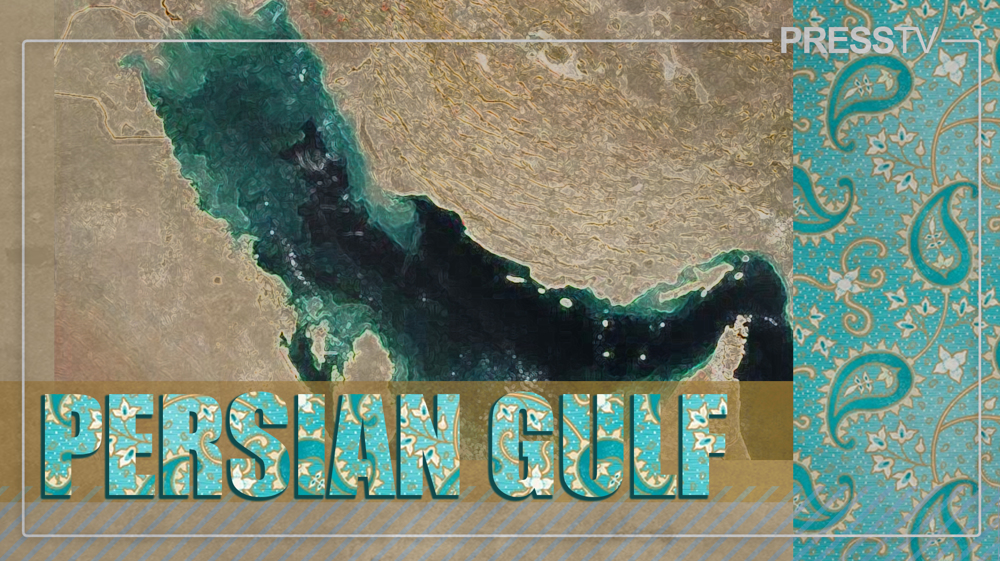
Michael Knights, a fellow at The Washington Institute, refers to Iran's geographic edge: seated at the heart of the Persian Gulf with sweeping command over the region's sea and air corridors. In his view, the vast majority of US bases sit squarely within missile range, and their proximity to Iranian soil compresses warning and reaction times to a razor-thin margin.
Fabian Hinz, a researcher at the International Institute for Strategic Studies (IISS), highlights Tehran's heavy investment in precision-guided, maneuverable solid-fuel missiles over recent years. He says that these projectiles, capable of last-minute course shifts and quick-launch readiness, have made interception significantly tougher for US air defenses.