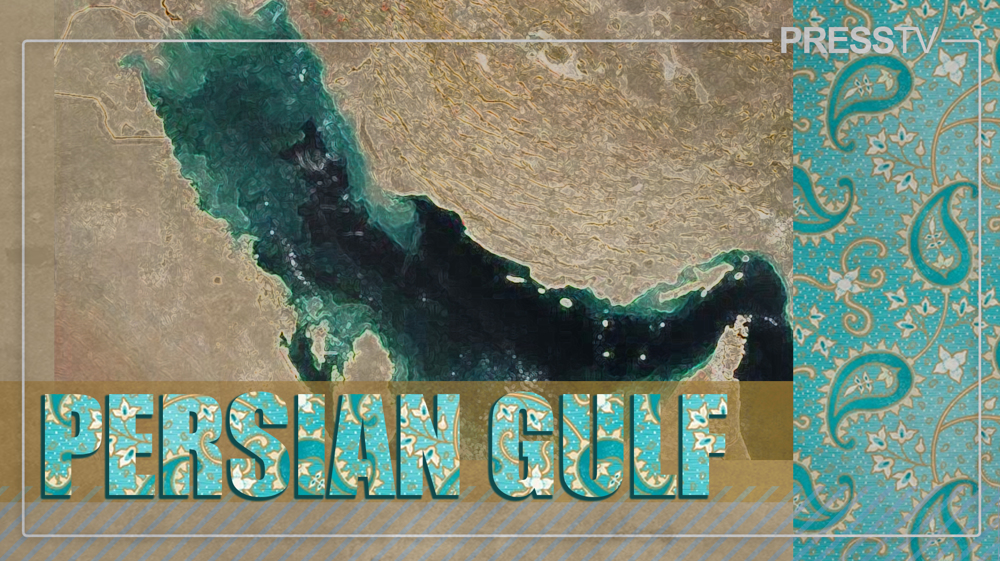










Alwaght- Military clashes in the Persian Gulf in recent days and weeks display the fact that Iran will not back down from its position regarding the control of the Strait of Hormuz and that Tehran has made this issue one of the most important red lines and its strategic interests. The Islamic Republic insists on approving a new legal mechanism for transit in the Strait of Hormuz in association with Oman as the country on the southern side of the key waterway.
To that end, Foreign Minister Abbas Araghchi left for Muscat on Saturday for talks centered on reaching an agreement over the future management of the Strait of Hormuz. What has played out so far on the open stage of diplomacy suggests Oman's approach has been markedly different, and at times contradictory, to Iran's policies on the strait's future governance. Tehran is therefore seeking to resolve this divergence, largely driven by US pressure, through dialogue and negotiation.
That said, even during the two-month ceasefire, Iran's armed forces have made it clear they will show zero flexibility on sovereignty and security arrangements for this strategic waterway. Any action they deem contrary to Iran's interests and security considerations will not go unanswered.
In this context, the Revolutionary Guards' Sunday statement regarding strikes on logistical support centers for American naval vessels in Oman takes on particular significance. The IRGC announced that forces from its Aerospace Force, in the third phase of retaliation for US aggression, had targeted support facilities for US warships and refueling platforms for American aircraft carriers at the Port of Duqm with a heavy and surprise attack.
Throughout the war, and even during the ceasefire period, Iran repeatedly struck US positions and bases in the Persian Gulf Arab monarchies, but Oman had remained outside the circle of attacks. Now, with Duqm on Iran's missile target list, it appears the small sultanate is no longer in a safe zone. This development cannot be assessed apart from the intensifying contest over new security arrangements and the management framework for the Strait of Hormuz.
Port of Duqm logistical significance
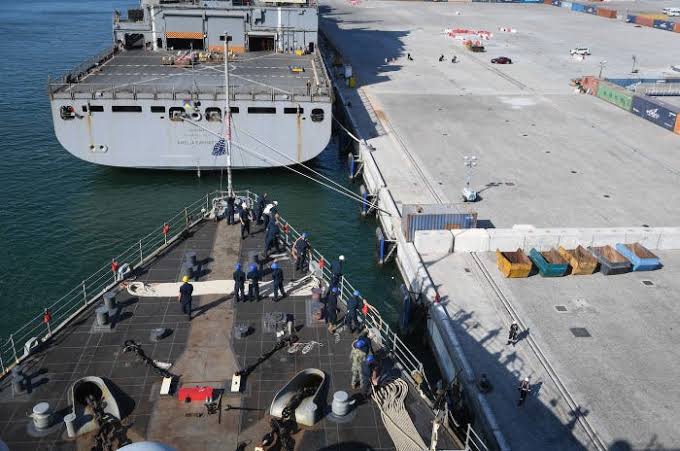
The importance of this Omani port is not just about its geographic location and over recent years, it has become one of the most critical operational support hubs for the American naval vessels and its Western allies in the northern Indian Ocean.
Situated outside the Strait of Hormuz and adjacent to major global shipping lanes, the port enables Washington to service its warships and vessels without direct dependence on the strait itself. With deep-water berths, large repair dry docks, refueling facilities, and infrastructure capable of accommodating aircraft carriers and submarines, the port plays a key role in maintaining the operational readiness of the US fleet.
The Americans have poured significant investment into developing Duqm's infrastructure in recent years, using it as one of its primary support nodes for naval operations in the region. In times of crisis, the port can also absorb part of the operational load from U.S. bases in Bahrain, Qatar, and the UAE, ensuring the continuity of the US's military footprint in the area.
Because if this, any threat or strike against Duqm is not merely an action against Omani territory, it is a direct message to the US about the vulnerability of its logistics support network and supply lines for naval forces in the region. This is precisely what has elevated the port's strategic importance in the security equations of the Persian Gulf and the Arabian Sea.
Military message to Muscat amid diplomacy
Certainly, the timing of the strike on the US facility at Duqm, coming right alongside Araghchi's Muscat trip and his talks on the Strait of Hormuz, could easily push the Omanis toward a different reading of the attack. Namely, that Iran is keeping its deterrent tools fully in hand even as it engages in diplomacy, and will not allow negotiations to become a platform for cementing plans that disregard its sovereign rights and interests.
The core friction stems from Oman's equivocal, two-faced posture on strait management. CNN recently reported that in the latest talks, Oman floated a proposal for two independent shipping corridors: one in southern waters under Omani management with no permit requirement, and another within Iran's waters to be run with Tehran's authorization and a toll system.
The real aim of this proposal, which aligns neatly with Washington's preferred scenario, is to shift a significant portion of shipping lanes south of Oman's Musandam Peninsula, pushing vessels farther from Iran's northern shores so Tehran can no longer levy tolls or service and security fees on them.
From Tehran's perspective, such a plan would not only undercut Iran's legal standing in the Strait but would effectively strip part of the waterway's management from its historical and geographic framework. The Islamic Republic continues to insist that the main shipping route must remain the traditional passage between Qeshm and Larak islands, with navigation, safety, and traffic management services provided under mutually agreed mechanisms between the two riparian states.
Additionally, reports suggest Oman is also cosying up to a European-backed scheme. The Guardian recently reported that the Europeans, who stand to lose the most from a closed strait, have signed onto a voluntary, non-mandatory payment system for transiting the waterway. But this too is at odds with Iran's view of its sovereignty and legal authority over strait management.
So Oman is caught at a fateful dilemma, tangled in complex equations. For decades, the sultanate has played the reliable intermediary between Iran and the US, carefully balancing its ties with both sides. At the same time, Oman's geographic position on the southern part of the strait means any shift in the management framework will directly hit its own economic and security interests.
In such conditions, it seems that repeated visits of the Iranian FM to Muscat have so far failed to remove the ambiguities of the Omani side, though they have kept the channel of dialogue open. The Omani foreign ministry announced the aim of the talks with the Iranian side is guaranteeing the security of navigation, freedom of shipping, and managing the consequences of the current regional developments, a standing showing that Muscat is yet to accept the need to approve a new legal status or at least is hesitant about it and so views the negotiations as an effort to manage the tensions.
Iran's Foreign Ministry spokesman Esmaeil Baghaei stated after Araghchi's trip to Muscat that Tehran and Muscat had agreed to continue political and technical-legal talks on future arrangements for managing traffic and shipping in the Strait of Hormuz.
The spokesman held that Tehran has stressed that any new mechanism must be formulated in consultation with both states and must take into account the security developments of recent months and their impact on shipping safety.
In general, the signs suggest Iran's patience is wearing thin, and the window of opportunity for Oman to join in reaping shared benefits from the Strait of Hormuz is closing fast. Muscat now finds itself at a stark crossroads. It must choose between illegal pressure from extra-regional forces pursuing only their own interests, and Iran's lawful, legitimate, and mutually beneficial path for both nations. The decision does not, indeed, look easy, but weighing the costs and benefits hardly seems like a difficult calculation.