














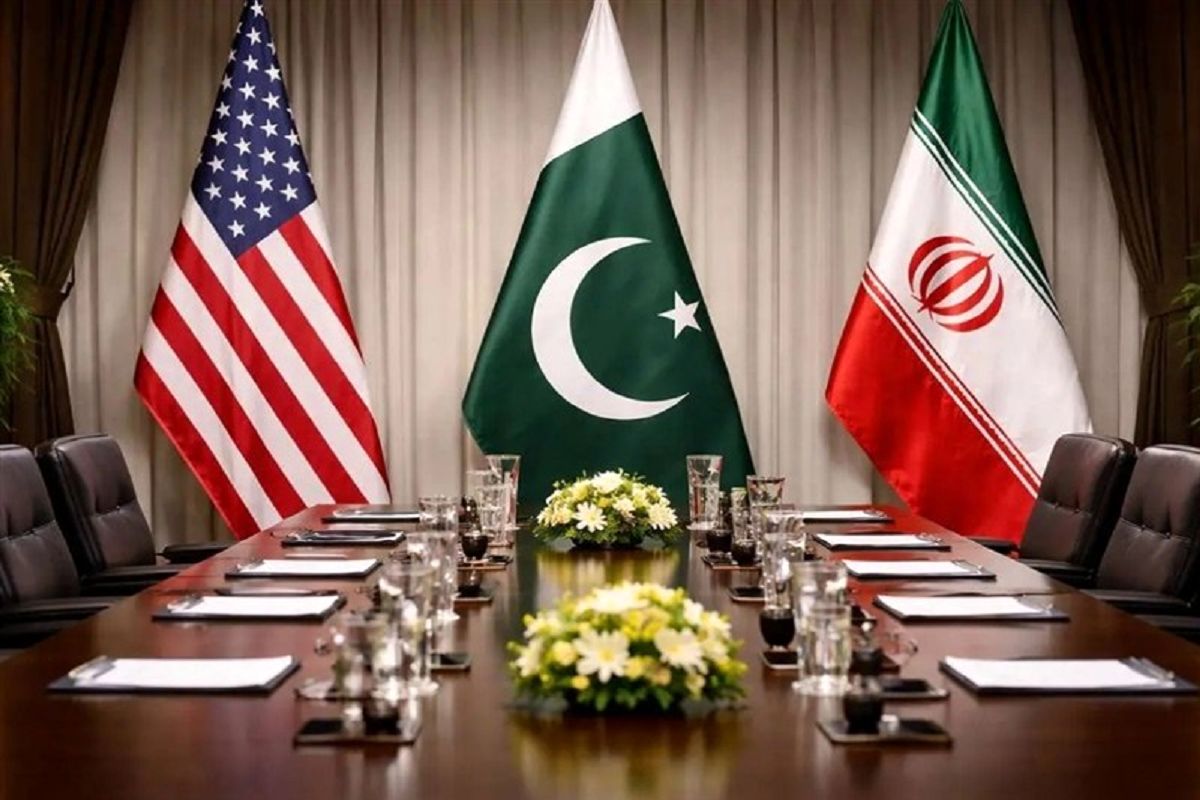


Alwaght- Three days to the end of the two-week ceasefire between the US and Iran, the second round of negotiations for a deal is uncertain. Iran's Foreign Ministry Spokesperson Ismail Baghaee said on Monday that Tehran is yet to decide to take part in Islamabad talks. The Iranian officials blame the American "excesses and illegal blockade", which are a violation of the truce, for their rejection to talk to Washington.
Amid the uncertainty, Pakistan has ramped up its diplomatic push to secure a deal and keep the ceasefire alive following the first round of talks in Islamabad. Prime Minister Shehbaz Sharif’s visits to Saudi Arabia and Turkey, along with army chief General Asim Munir’s crucial trips to Iran and then the US, are part of that effort. Even now, Pakistani officials speak hopefully of their ongoing attempts to bring both sides to the negotiating table.
Pakistan’s efforts, especially its stunning success in persuading Tehran and Washington to agree to a two-week ceasefire in the heat of battle, have underscored its role as a stabilizing force and a credible regional mediator with close, friendly ties to most parties. Today, Pakistan is increasingly seen by key players and stakeholders in the current crisis as more capable than traditional mediators like Oman and Qatar of bridging gaps and earning trust on all sides.
That raises the question: How did Pakistan suddenly emerge as a regional mediator, and what does it stand to gain from this role?
1. Pakistan's economy heavily vulnerable to energy crisis and Strait of Hormuz remaining blockaded
Pakistan is one of the main countries that would take the biggest hit if the Strait of Hormuz remains closed. The vast majority of its oil and gas comes from Arab suppliers across the Persian Gulf. So when the strait was shut during the recent war, Pakistan plunged into a full-blown power crisis. Despite government promises to keep outages to just two or three hours a day, blackouts have already exceeded that in the past week.
At peak hours, Pakistan faces a 4,500-megawatt shortfall. To bridge that gap, it urgently needs four liquefied natural gas (LNG) shipments to fuel five gas-fed power plants. With any military escalation or direct confrontation in the Persian Gulf threatening shipping security through the strait, Pakistan now risks losing its vital energy lifelines.
That’s why every diplomatic effort to preserve the ceasefire and keep trade flowing through this chokepoint is directly tied to Pakistan’s economic survival and internal stability. For Islamabad, mediation isn’t just a diplomatic option—it’s a necessity to stave off an energy collapse that could spiral into social unrest.
2. Worry about expansion of crisis and instability on the borders
The country has long wrestled with security challenges along its western and northern borders, from militant and separatist groups to the spillover of instability from Afghanistan. As past regional crises have shown, if the Persian Gulf war expands beyond its current borders, it could unleash a fresh wave of insecurity, population displacement, and a surge of weapons and drugs into Pakistani territory.
The so-called “Greater Middle East” project, aimed at Balkanizing the region, has been openly pushed by officials in Washington and Tel Aviv, and Islamabad is deeply alarmed by the prospect of that dangerous scheme becoming reality. That’s why Pakistan fully understands that failure of the Islamabad talks and an escalation of the conflict to a regional scale would turn it from a mediator into a crisis zone. In effect, keeping the Persian Gulf region from becoming a massive firestorm is the first line of defense for Pakistan’s national security on its western frontier.
3. Boosting Islamabad's regional and international standing and improving ties with Washington
After years of keeping a distance from Washington and trying to walk on a tight rope between Beijing and Washington, Islamabad has now found an exceptional opportunity to re-enter the global diplomatic stage. Successfully steering sensitive negotiations between two major powers that shape the region could transform its image, from a country plagued by internal and security woes into a diplomatic hub.
This mediator role also paves the way for mending ties with Washington. In Islamabad’s view, that could bring economic support, help manage tensions over Afghanistan, and counterbalance Washington’s growing tilt toward India. Through this effort, Pakistan aims to prove that despite its strategic partnership with China, it can still be a reliable partner and a bridge between East and West.
4. Competing with India in the Persian Gulf
In the geopolitical dynamics of South Asia, every move Islamabad makes is shadowed by its decades-old competition with Delhi. In recent years, India has embarked on an aggressive campaign to expand its footprint across the Persian Gulf states and deepen strategic partnerships with Saudi Arabia and the UAE. By stepping into the role of mediator and anchoring itself as a force for regional stability, Pakistan is effectively reclaiming its traditional sphere of influence in the region's foreign policy landscape. Its show of soft power in defusing Persian Gulf crises serves as a direct counterweight to India’s bid to monopolize regional ties, a pointed reminder that on sensitive security and diplomatic fronts, Islamabad remains a rival that cannot simply be brushed aside.
Also, we should not forget that Pakistan maintains deep-rooted military and security alliances with the (Persian) Gulf Cooperation Council states, including a recent defense pact with Saudi Arabia that reportedly extends to a nuclear shield. The earlier crisis of Yemen war (2015–2023) and the bitter standoff between Iran and Saudi Arabia as two heavyweights of the region and the wider Muslim world, laid bare the razor-thin line Islamabad must walk. That crisis underscored just how fraught it is to maintain a delicate balancing act that preserves Pakistan’s vital ties with both countries.










