

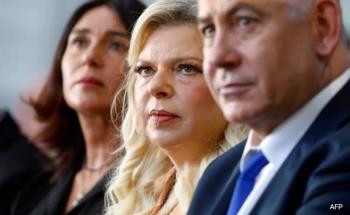













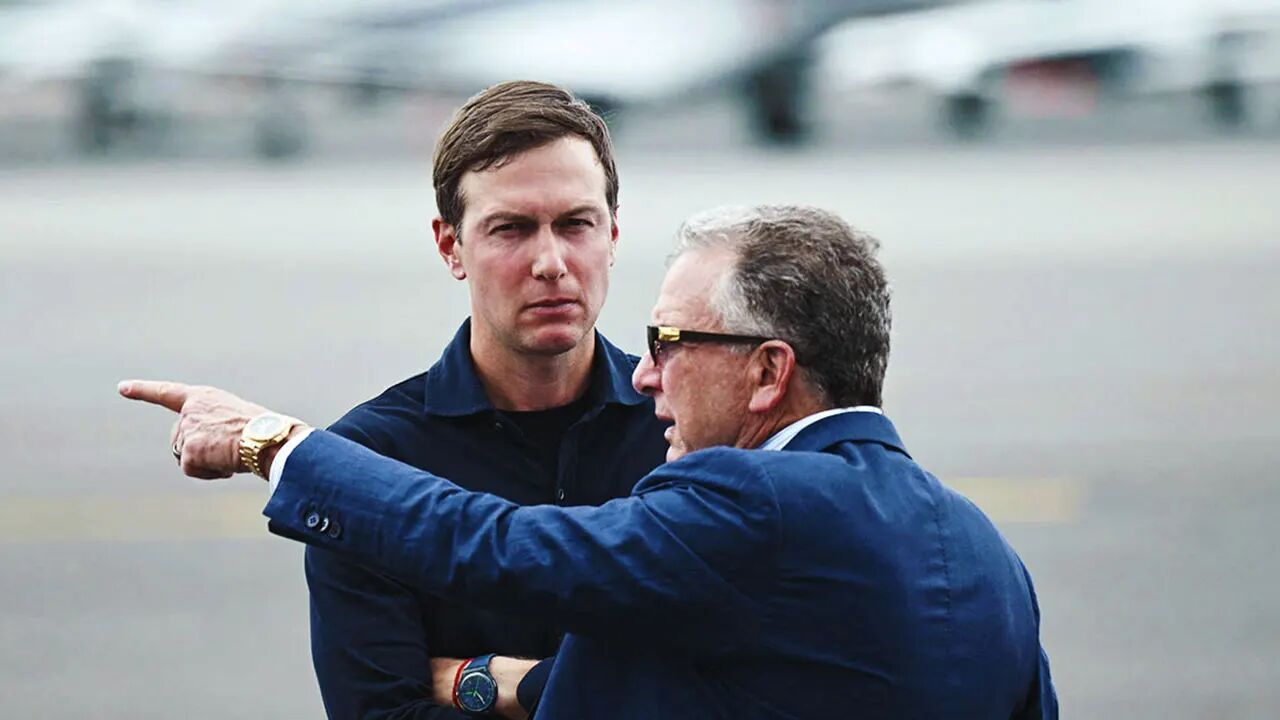


Alwaght- The failure of the Israeli-American camp to realize its war goals has instigated disputes between Trump and his orbit, bringing war to the White House inner circles from West Asia. In this connection, some unofficial Arab resources have reported eruption of a dispute between Trump’s advisor and son-in-law Jared Kushner and Steve Witkoff, Trump’s special envoy to the West Asia.
These sources indicate that the dispute centered around the issue of war with Iran, with Trump believing that Witkoff and Kushner, due to their Jewish identity, prioritized Netanyahu’s interests in dragging the US into a war with Iran over American interests.
The failure to achieve war objectives, such as the overthrow of the Islamic Republic, facilitating the partition of Iran through the introduction of separatist groups, and the destruction of Iran’s defensive capabilities, are among the reasons fueling Trump’s anger towards Kushner and Witkoff. However, the primary factor behind Trump’s frustration appears to be the US failure to secure control over the Strait of Hormuz, with the ongoing closure of this crucial waterway undermining America’s military and political credibility worldwide.
It seems that Witkoff and Kushner assured Trump that Iran’s threats to close the Strait of Hormuz and regionalize the conflict were merely bluffs, and they did not raise any ideas regarding the potential succession of Ayatollah Seyyed Mojtaba Khamenei, the son of the martyred Leader Ayatollah Seyyed Ali Khamenei.
Additionally, claims about the limited scope of Iran’s missile capabilities and the ability to neutralize them within four days to a week were among the misleading information that played a role in persuading Trump to consider war with Iran.
According to these sources, Trump believes that Kushner and Witkoff, rather than representing the US government, acted more as brokers for Netanyahu’s interests within the American administration.
Providing misinformation to Trump, Witkoff and Kushner assured the president that the Islamic Republic political system in Tehran will collapse and surrender with a lightning attack. And now Trump argues that these misinformation are not a product of Kushner and Witkoff probes but we’re supplied to the president by Netanyahu using “third-party technique” in order to boost his analyses and position in meetings with Trump. These sources claim that over the past week, Trump blocked his contact ways with Witkoff and Kushner regarding Iran.
American official resigns over aggression against Iran
Beyond reports from Israeli sources, developments in the US reveal a rift among officials regarding the war with Iran. On Tuesday, news outlets confirmed that Joe Kent, the director of the US National Counterterrorism Center, resigned in response to the Trump administration’s claims that Iran posed a threat, citing US military aggression in coordination with Israel against Iran.
In his resignation letter, Kent stated, “Iran was not a threat to us, and we initiated this war for Israel!”
“After considerable reflection, I have decided to resign from my position as director of the National Counterterrorism Center, and this resignation is effective immediately,” he said.
The American official continued: “I cannot, in good conscience, support the ongoing war in Iran. Iran has not posed any imminent threat to our nation, and it is clear that we started this war due to pressure from Israel and its powerful American lobby.”
In response to Kent’s resignation, Senator Bernie Sanders, of Vermont, said: “Joseph Kent, a senior counterterrorism official in the Trump administration, recently resigned. While Kent and I may not agree on many things, he is right: Iran has not posed an imminent threat to our nation, and it is evident that we initiated this war due to pressure from Israel and its powerful American lobby.”
Why are Trump administration’s officials divided over Iran war?
There are two issues regarding the reason behind the division and dispute inside the White House about the American-Israeli aggression against Iran:
The US goals behind anti-Iranian war unclear: Many experts have stated that Trump’s objectives for the war against Iran remain unclear. John Bolton, former US National Security Advisor, commented on Donald Trump’s failed strategies in the conflict with Iran, saying that he does not know how to extract himself from this situation. Bolton, who served as the National Security Advisor in Trump’s first term, noted that Trump is trapped in the war with Iran and lacks a strategy for resolution. The former official expressed that Trump finds himself in a “vulnerable position” in the conflict and is uncertain about how to navigate his way out. Similar sentiments have been echoed by numerous other experts and former officials in the US regarding the ambiguity surrounding Trump’s military objectives against Iran.
Trump alone in dealing with Strait of Hormuz crisis: Additionally, closure of the Strait of Hormuz and rejection of Trump’s call for others to help reopen this strategic waterway have demonstrated Trump’s unprecedented international isolation in his war against Iran. Anti War news outlet reported in this regard that Trump is begging other countries for helping reopen the Strait Of Hormuz, but the world is saying no to him.
On the other hand, the closure of the Strait of Hormuz due to the US and Israeli aggression against Iran has resulted in the highest diesel prices in four years, with the average price of diesel in the US, a critical artery for transport, agriculture, and construction, surpassing five dollars per gallon for the first time in four years!
Additionally, Mamdouh Salameh, an energy economics expert, warned that the continued closure of the Strait of Hormuz would significantly increase the US budget deficit. He stated that the ongoing closure may lead the federal government to resort to expanding dollar printing to compensate for this deficit, which would not only raise financial inflation but also place significant pressure on the global economy.
Actually, some officials in the Trump administration have described the current war against Iran as aimless and futile, leading to heightened disagreements regarding the approach to the conflict with Iran within Trump’s administration.










