















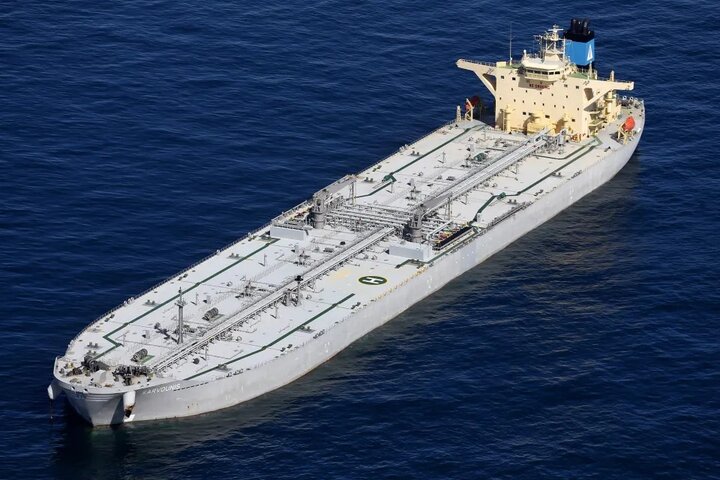


Alwaght- The American-Israeli aggression against Iran has borne economic consequences to the region in addition to security implications. Immediately after halt of global shipping from the strategic Strait of Hormuz in the early hours of war following the Iranian ban, a great shockwave struck the world markets, including the energy market.
The Qatari decision to stop its LPG output and limiting ships navigation has caused the global gas prices to surge all of a sudden. Just a few days after war started, gas prices have doubled, stoking heavy pressure on major gas consumers, especially the European countries.
Bloomberg estimates that should the crisis continue in West Asia and shipping through the Strait of Hormuz remains constrained, gas prices will rally higher, further impacting the already fragile European economies. At the end of March, Europe’s gas reserves are expected to be only between 22 to 27 percent, significantly lower than the five-year average of 41 percent, raising concerns about the security of energy across the continent.
Due to the war in the region, energy transportation prices have also increased staggeringly. According to the latest weekly report from the ship brokerage company Fearnleys, published by “Riviera Maritime Media,” the daily charter rate for LNG carriers with a capacity of 174,000 cubic meters on the Persian Gulf- Europe route in the US has risen to approximately $300,000 per day, which is an increase of about $260,000 compared to last week. Rates on the key Persian Gulf-Asia route in the US, covering Japan, South Korea, Taiwan, and China, have also surged from $42,000 per day on February 25 to $300,000 per day. Additionally, the route from Australia to Asia has increased to about $255,000 per day.
Kristalina Georgieva, the Managing Director of the International Monetary Fund, stated that the resilience of the global economy is once again being tested in the wake of new conflicts in West Asia, and the continuation of this dispute could have widespread consequences for the global economy. If this conflict turns into a long-term crisis, there is clear potential for it to impact global energy prices, market sentiment, economic growth, and inflation across the world.
Rise of oil price
Amid dramatic rise in gas prices, the oil is also surging in the global markets. According to American media, by Thursday, the US oil prices grew 5.6 percent to reach $78.80 per barrel, breaking the previous record. This is the highest one-day oil rise record since January 16, 2025.
Furthermore, the Brent oil added $1.67, or 2.05 percent, to its price to reach $85.07 per barrel.
Higher crude prices means direct impact on the gasoline, which is already at its 11-month highs. In the US, each gallon exceeded $3 to $3.39. The US Energy Secretary has warned that if war continues, higher gasoline prices are highly expected.
According to estimates from Clarkson Research, about 3,200 ships (approximately 4 percent of the global shipping tonnage) are currently stranded in the Persian Gulf. Given that the Strait of Hormuz is responsible for the passage of about one-fifth of the world’s oil, it is anticipated that if disruptions continue, oil prices could rise to $100 per barrel, resulting in an increase in gas and gasoline prices. This surge in prices would place a heavy burden on the economies of Europe and the US, which may not be able to withstand the inflationary pressures caused by such increases.
The Economist has warned about the economic repercussions of a sharp rise in oil prices, stating that reaching around $100 per barrel could subject the global economy to serious pressures. The magazine emphasized that rising oil prices elevate production, transportation, and energy costs, consequently exacerbating inflation in many countries.
Meanwhile, JPMorgan Chase has warned that if disruptions to oil tanker passage through the Strait of Hormuz persist for more than three weeks, oil storage capacity in the Persian Gulf countries will quickly fill up. Analysts from the bank believe that under such circumstances, oil producers may be forced to cut production, which could drive Brent crude prices up to about $120 per barrel.
Furthermore, Deutsche Bank reports that if the Strait of Hormuz is fully closed oil prices could be driven up to $200 per barrel. The bank’s analysts warn that restrictions on the ships in this strategy shipping lane can disrupt major part of oil output and impose a big shock to the energy market.
Countries seeking alternatives to oil and gas
Due to the lack of a clear outlook for the cessation of the war between Iran and the US and the Israeli regime in the near future, some countries are already seeking alternatives to oil and gas to sustain their economies. Amidst the escalating geopolitical crisis in the region and the blockage of the Strait of Hormuz, the world has effectively returned to the era of coal.
Futures prices for coal have surged dramatically, rising by an astonishing 7.2 percent to reach $138 per ton, the highest in over two years. With an unprecedented shortage LNG globally, power companies across Northeast Asia and Europe have been forced to turn to coal-fed power plants.
Tom Price, a senior analyst at Penmor Leberum, stated that without a doubt, the global coal market has not experienced such price pressure since Ukraine war started, and this is the largest shock to the coal market in recent years.”
Italy has announced that it will restart its shuttered coal power plants if the crisis worsens. Likewise, Bangladesh is shifting towards coal to compensate for disruptions in LNG supply. Alex Takra, a senior manager at Argus Media, warned that the continuation of the crisis could push coal prices up to $250 per ton.
The rising price of oil due to the war in the region could be the start of a snowball effect that gradually expands in scale. In addition to the prices of aluminum and fertilizers, the cost of plastics may also face significant increases. In recent days, prices for certain polymers derived from petroleum used in plastic production have shown an upward trend.
Joseph Taif, secretary-general of Last alliance, an organization representing the plastics industry in Europe, commented on the crisis, saying: “Almost all plastic products produced globally are made from a derivative known as naphtha. Therefore, as soon as naphtha becomes scarce or more expensive due to rising oil prices, it automatically impacts the final product. Consequently, industries that use plastics are likely to experience an increase in raw material costs within the next two to three weeks.”
Stock markets free fall
One of the most influential parts of the global economy that has always taken the biggest impacts from regional crises is the stock market. The fluctuations have been noticeable in recent Israeli-American war against Iran.
As the US markets opened, they lost around $1 trillion of their value. S&P 500 fell 1.44 percent, losing $870 billion. NASDAQ fell 1.64 percent, losing $640 billion.
The Dow Jones index fell by 1.69 percent, losing $380 billion in value, while the Russell index also dropped by 2.45 percent, resulting in a loss of $80 billion in value.
In addition to the US stock market, which saw the most significant drop, stock values in other countries also decreased. The UAE stock index fell by 4.86 percent after a two-day closure due to the consequences of the war in the region. Consequently, the UAE market index retreated from around 6,550 points to 6,200 points.
Markets outside the region also experienced notable declines, with the South Korean stock index plummeting by approximately 20 percent in a short period. The Japanese stock market also dropped by 8 percent in just three days.
On the other hand, the conflict in the region affected precious metals prices, leading to an increase. The price of gold for immediate delivery rose by 0.4 percent to reach $5,153.11 per ounce. Meanwhile, the price of gold in U.S. futures trading for April delivery increased by 0.5 percent, reaching $5,161.30 per ounce. Gold, traditionally regarded as a safe-haven asset, has risen by about 20 percent this year and has been breaking consecutive records amidst growing global political and economic uncertainty.
Additionally, with ships stopping and insurance premiums and transport fees rising, the world food provision is seriously experiencing disruption. Meanwhile, big shipping companies like Maersk, MSC, and CME-CGM have stopped navigation in the Persian Gulf and have circumnavigated to alternative routes like Cape of Good Hope, which means longer voyages between 15 to 20 days. Experts warn that these disruptions are not limited to the energy market and threaten food security of the Persian Gulf Arab countries, which meet 85-90 percent of their food needs using maritime transportation.










