















Alwaght- The third week of the American-Israeli war against Iran has gone beyond mere military aspects, entering a new phase in which attacks on the economic and energy infrastructures are on the rise. Having in mind that the Iranian armed forces have warned they will implement eye-for-eye principle in the war, the economic infrastructures of the Arab allies of Washington from which the US attacks originate have become legitimate targets of the Iranians.
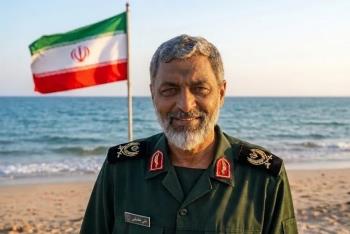
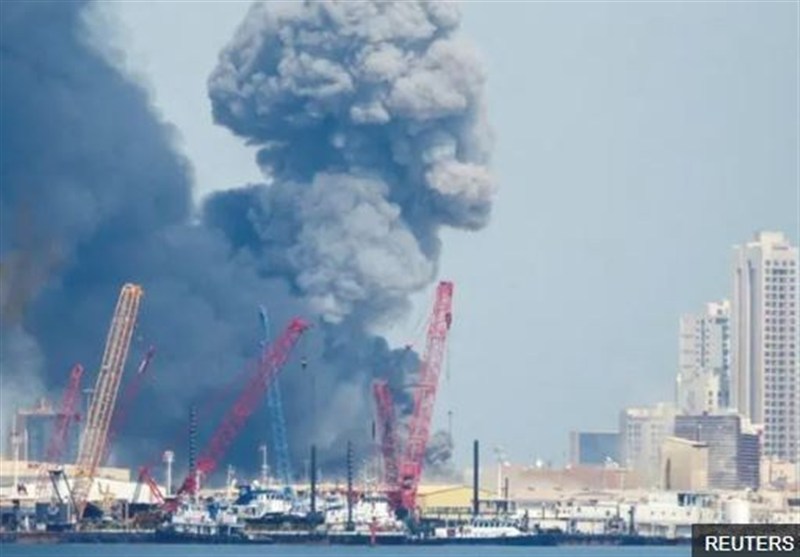
In a statement on Saturday, the spokesperson for the Central Command of Hazrat Khatam Al-Anbiya, Iran’s leading military body at the time of war, said that the US attacked Khark Island and Abu Musa islands in the Persian Gulf after its military bases and shelters in the UAE cities were ruined by Iranian forces.
“We announce to the leaders of the Emirates that Iran, in defense of its national and territorial sovereignty, reserves the legitimate right to attack ports, docks, and hideous of the American military forces in some Emirates cities from which anti-Iranian attacks originate,” the spokesman said.
He added: “We call on the Muslim people of Emirates and population centers to evacuate ports, docks, and hideous of the Americans in the Emirates for safety.”
This warning was issued following recent attacks by the US and the Israeli regime on some of Iran’s economic and energy infrastructure in Tehran and Khark Island. Iranian armed forces have repeatedly warned that if enemies seek to damage vital infrastructure, they will respond in kind.
The UAE is one of the countries that is reportedly providing significant assistance to the Israeli-American aggression against Iran, allowing its territory to be used for attacks. As a result, the UAE is viewed by Iranian armed forces as a part of the campaign against Iran and must bear the consequences.
Over the past sixteen days, Iran has responded to enemy attacks by targeting many of the US military positions in the region and the occupied territories. Since the US and Israel adhere to no rules or regulations, and from the onset of the war have targeted numerous civilian areas and economic infrastructures, the armed forces of Iran are free to impose retaliation on enemies across all fronts.
In Arab countries hosting American forces, there is a wealth of economic and energy infrastructure that Iranian armed forces could target, potentially inflicting irreparable damage on these monarchies.
The Persian Gulf Arab states, which are heavily reliant on oil and gas revenues, have suffered tens of billions of dollars in losses over the past two weeks due to the closure of the Strait of Hormuz. If the war drags on and severely damages the energy infrastructure of these countries, there is no doubt that they will struggle to recover from the long-term repercussions.
Iran’s armed forces have issued a warning that security is either for everyone or for no one. Therefore, the Arab rulers who are enabling the US and the Israeli regime to attack Iran will have to pay the price for their adventurism in the form of the collapse of their infrastructure and economies.
UAE vulnerability
The UAE as the economic hub of the Persian Gulf has developed a modern infrastructure over the past two decades that resembles a “glass box,” vulnerable to the slightest blow. Should this small country endure the heavy strikes of Iranian missiles, its economy undoubtedly teeters on the brink of collapse.
Since the US and Israeli aggression against Iran, the UAE stock market has experienced a significant decline, a troubling trend that persists. Reports indicate that housing prices in the UAE have also dropped by more than 30 percent during this period.
Previously, Dubai, the economic capital of the UAE, was known as a paradise for private bankers and a key destination for wealthy Asians seeking to escape high taxes and living costs in their home countries. However, the ongoing war involving the US and Israel against Iran has called into question the city’s reputation as a stable and secure financial center.
Estimates from the Boston Consulting Group suggest that foreign assets registered in the UAE are set to reach around $700 billion by 2024. In recent years, Dubai has successfully attracted a considerable number of wealthy individuals from countries like India, China, and Indonesia. Nevertheless, recent reports indicate that some investors are starting to transfer portions of their assets elsewhere.
Statistics reveal that approximately one-quarter of the 2,270 established enterprises in the UAE are owned by Asian investors, and analysts believe that reversing this trend could impose significant costs on the UAE’s economy.
On the tourism front, the UAE has been the top destination in the region in recent years, with around 150 million tourists expected to visit by 2025. However, in the past two weeks, 90 percent of flights in and out of the country have been canceled due to closed airspace, leading to considerable financial losses for the government.
Furthermore, this country’s ports serve as its economic lifeline, crucial for oil shipment and goods transportation. With the impact of Iranian missiles and drones, these ports can no longer sustain their profitable trade. If the UAE’s ports are destroyed, oil exports, the country’s primary source of revenue, will be halted, jeopardizing various infrastructure projects.
Furthermore, the UAE is heavily reliant on foreign imports to secure its food supply, sourcing 85 percent of its grains from abroad, all of which are cleared through its ports and docks. Recent images depict a rush of people in the UAE heading to stores, and if port operations are suspended for an extended period, the country could face a food supply crisis.
Overall, developments are now entering their third week, increasingly unfavorable for the US and its allies, with none of the adversaries’ objectives achieved and the initiative resting firmly in Iran’s hands. Given that Arab countries, including the UAE, play a significant role as hosts for the aggressors, the prolonged conflict and attacks on infrastructure will, indeed, come at a high cost for the Persian Gulf monarchies.










