















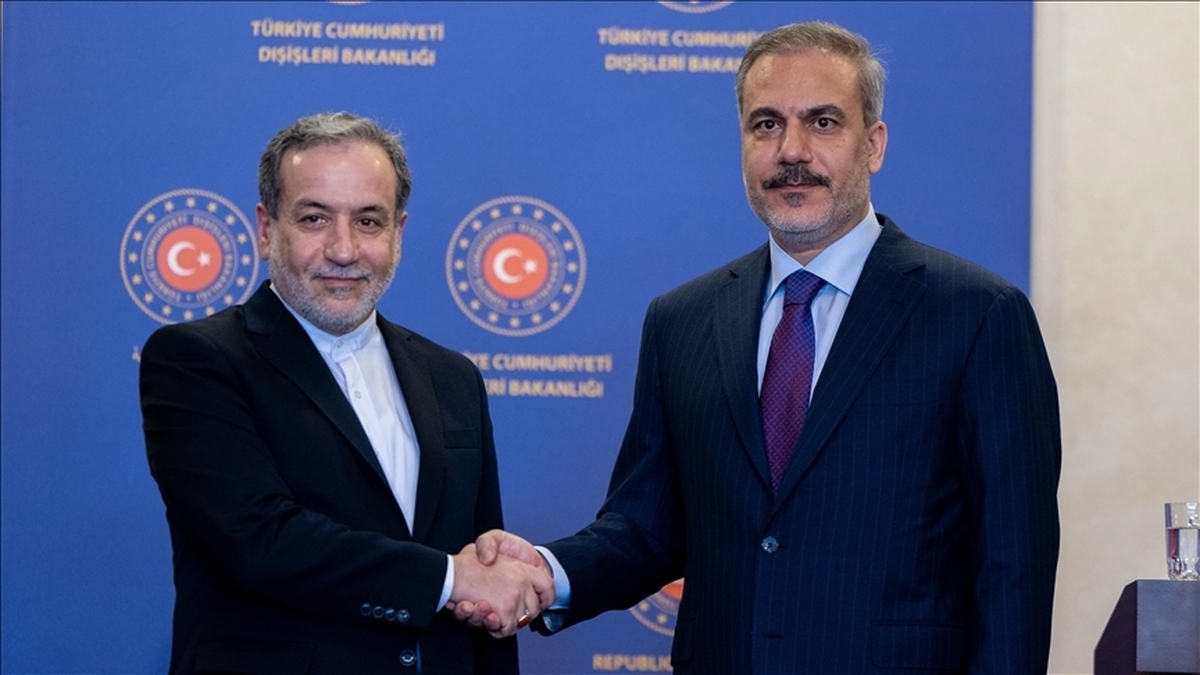


Alwaght- As tensions escalate between the US and Iran in the region, the observers and media outlets have had their eyes on Istanbul where Iran's Foreign Minister Abbas Araghchi was a guest to Turkish counterpart and president. During the visit to Turkey of Iran's top diplomat, Araghchi met his counterpart Hakan Fidan and President Recep Tayyip Erdogan. The two sides, media report, discussed de-escalation and further instability in the region.
Araghchi’s message from Turkey
Iranian Foreign Minister, in an interview with CNN Turk in Istanbul, stated there is currently "no serious grounds for negotiation." He emphasized that "for real and productive talks, the atmosphere of threats and pressure must first be eliminated. Without an agreement on the framework, content, and rules of negotiations, no progress will be made."
"If an attack occurs, our response will be severe and very powerful. We have the capacity to defend ourselves and need no one. Iran's priority remains diplomacy, and we hope rationality and dialogue will prevail," Araghchi further warned.
In his remarks, the top Iranian diplomat also addressed his meetings in Turkey, writing: "Meetings and talks with President Erdogan and Foreign Minister Fidan regarding bilateral Iran-Turkey relations and regional issues of mutual concern have always been beneficial and constructive... In these talks, I reiterated once again that Iran has never sought nuclear weapons and is prepared to enter into a just and fair nuclear agreement that secures the legitimate interests of the Iranian nation; an agreement that includes a guarantee of 'non-proliferation of nuclear weapons' and the effective removal of sanctions. Alongside other neighboring brothers, the Republic of Turkey has also played a constructive role in advancing peace and stability in the region through its goodwill efforts. The Islamic Republic of Iran appreciates and welcomes these endeavors."
Araghchi also stressed that Tehran is always ready to engage and cooperate with regional countries to preserve regional peace and stability and safeguard it from illegal aggressions.
Iran's missile program non-negotiable
On Friday, Iran's FM in a press conference with his Turkish counterpart said that missile and defense programs are an integral part of Iran's national security and Tehran does not negotiate them.
Pointing to Washington’s conditions for a new agreement with Iran, Araghchi said that Iran is ready for fair talks, but it does not see negotiations under threat real and "will not participate in a negotiation its outcome is dictated."
Saying he has no plans for meeting American officials, Araghchi said that Ankara and some others are working on a potential talks framework.
In another part of his comments, he referred to the US's possible military option against Iran, warning that any military aggression will be met with a response outsizibg that given to Israel during 12-day war in June.
He further warned that given possible direct intervention of the US, any clash will have a nature different from its precedents and would bear the potential of transforming into an all-out regional war.
Reflection of Iran's stances from Istanbul
The unequivocal statements by the Iran's FM in Turkey, rejecting any negotiation under threat and pressure, have garnered significant coverage in international media. This firm stance, delivered during his recent visit, underscores Tehran's current diplomatic posture.
The Turkish Anadolu Agency reported that the Iranian FM "emphasized the necessity of close coordination and regular consultations between Turkey and Iran to address regional challenges."
Qatar's Al Jazeera noted that "the remarks by Araghchi in Turkey regarding Iran's position and policy were clear," adding that it is evident "Iran's Supreme National Security Council has defined a list of priorities and a specific framework for all issues."
Axios, in its report, highlighted that "the Iranian Foreign Minister stated Iran is prepared to resume nuclear negotiations with the US," but stressed that "the Trump administration must cease threats of attack against Iran."
Turkey’s Daily Sabah in a report, citing Araghchi, said that diplomacy can succeed only if Washington quits threats and warmongering measures in the region.
The widespread reporting on these points reflects the international focus on Iran's dual-track approach: a steadfast refusal to bend to external pressure, coupled with an openness to regional dialogue and conditional engagement on the nuclear case.










