















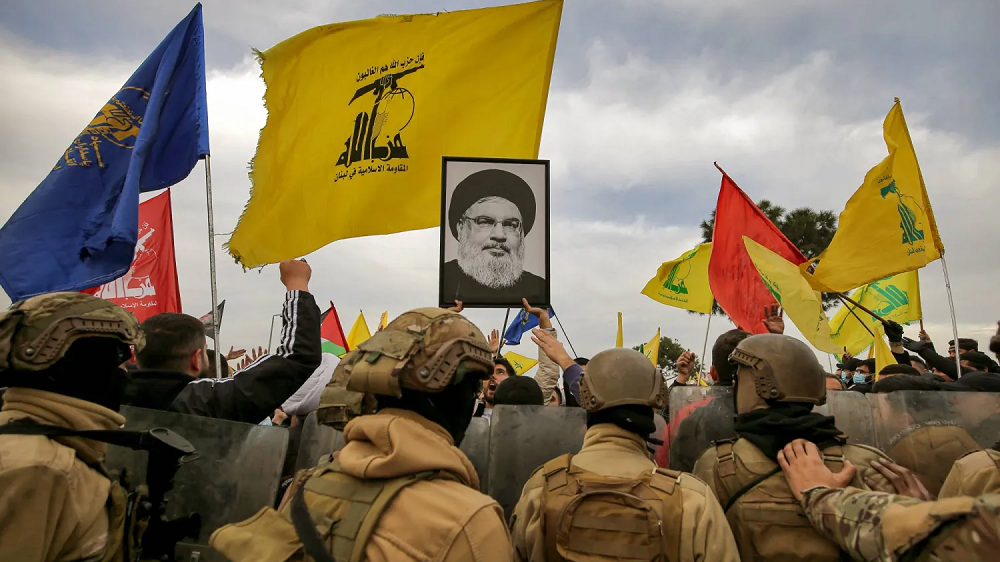


Alwaght- The representatives of the Lebanese government and Israel held a new round of talks about disarming Hezbollah resistance movement. Beirut has recently put disarming top on its agenda and Washington has voiced optimism success of the talks.
Simultaneously, Yedioth Ahronoth on Friday reported, citing a senior Israeli official, that Tel Aviv is highly likely to wage a new war on Lebanon. Despite this threat, the Israeli newspaper said that there are positive signs and the Lebanese army as the party entrusted with following the disarming project is growing stronger.
Negotiations for Israeli interests
Recent negotiations between Beirut and Tel Aviv appear primarily focused on securing Israeli interests. This assessment is reinforced by a US official, who told Al Jazeera he hopes the talks will reach a point where Hezbollah is no longer a threat to Israel. The official conceded, however, that disarming Hezbollah would be a lengthy process.
The talks coincide with reports from Hebrew-language media that the Israeli military has completed preparations for a “wide-scale attack” on Hezbollah positions.
Notably, the Lebanese delegation was led for the second time by former Lebanese ambassador to Washington, Simon Karam, a figure known for his closeness to and alignment with Western capitals. His mandate comes directly from Lebanese President Joseph Aoun. The negotiating table also included US envoy Morgan Ortagus, alongside representatives from Israel, UNIFIL, and France. Conspicuously absent were any representatives from Lebanese political parties.
Prior to the meeting at Ras Naqoura, American and Israeli sources indicated Israel would participate at a high security level. Israel’s Channel 15 reported that Yosi Draznin, deputy head of Israel’s National Security Council, attended the recent session with Lebanon, which also included American officials.
According to Axios, citing an informed source, the meeting was formally centered on economic cooperation, but its true objective was to prevent the strengthening of Hezbollah.
From Ras Naqoura to Paris
The Lebanon talks are coming as diplomatic activities are underway in Paris. France over the past few days hosted a meeting comprising French, American, and Saudi officials discussing support to the Lebanese army against Hezbollah.
In fact, the anti-Hezbollah pressures are these days pursued not only in Tel Aviv but also in Paris and Washington simultaneously to ensure maximum Israeli interests against Hezbollah.
Pressure for Hezbollah’s disarmament is being stepped up while Tel Aviv has violated the ceasefire agreement thousands of times since it took effect, resulting in hundreds of martyrs and casualties in Lebanon. Meanwhile, Beirut officials continue to align with Tel Aviv in pressuring Hezbollah ax the only reliable force defending Lebanon against Israeli aggression, even though five Lebanese hilltops seized during the recent war remain under Israeli occupation.
In other words, the current Lebanese government is banking on promises from Israeli officials. But based on past experience, can we realistically expect Israel to fully withdraw from southern Lebanon and end its occupation? We need to recall that in the late 1990s, when parts of southern Lebanon were occupied, Israeli forces only withdrew under military pressure from Hezbollah. Today, too, there appears to be no prospect of Israel leaving southern Lebanon without continued military pressure and operations from Hezbollah.
Under these circumstances, pressuring Hezbollah to disarm would mean nothing less than cementing Israel’s occupation of southern Lebanon.
Broadening range of aggression
On Saturday, Lebanese security sources reported an Israeli shift in military focus in Lebanon, saying that a large part of air operations and intelligence activities have expanded to include north of Litani River. Source on the know told Eram News that this change includes expansion of range of operations to reach a broader strategic depth including Beqaa Valley in the east and the southern outskirts of Beirut.
According to these sources, expanding military operations into depth of Lebanese territory would allow Tel Aviv to gradually impose its own terms on Lebanon, particularly regarding border control, the disarmament of Hezbollah, and preventing any military activity by the resistance movement across various Lebanese regions.
The attacks are also aimed at building political pressure on the Lebanese government to force it into making further concessions in line with US and Israeli demands. These include accelerating the process of disarming Hezbollah and initiating direct political talks to lay the groundwork for normalization and full diplomatic relations with Tel Aviv.
Eram News also reported that, by intensifying these attacks, the Israelis are seeking to establish a permanent buffer zone in southern Lebanon and permanently occupy strategic high ground in this part of Lebanon. If so, the scenario of occupying southern Lebanon is no longer mere speculation but a reality that Tel Aviv is actively pushing the central government in Beirut to accept. However, Hezbollah remains the primary obstacle to this strategy, and by pressuring Beirut to disarm the group, the Israelis are attempting to advance their desired scenario of neutralizing Lebanese resistance.
It Is also worth noting that the Israelis have intensified their information warfare and psychological pressure tactics against the Lebanese people through airstrikes and cross-border violations such as firing on civilians and bombing symbolic sites to sow fear and destabilize Lebanon from within. They also employ media and information campaigns to undermine Hezbollah’s capabilities, like the January 2025 campaign which falsely promoted the idea of the movement’s imminent collapse.
However, the Israeli experience of multi-front conflict over the past two years has led to vast discontentment in the Israeli regime, especially among the reserve forces serving in Gaza. This may push Tel Aviv to the following of a diplomatic path with Lebanon as it is aware that the army and its personnel families and the civilians are largely against a new war.










