





Alwaght- The west looks into Islamic countries as its backyard. Regarding pivotal geostrategic and geopolitical position of most of these countries, the West is extremely worried as it sees Islamists' rise to power in West Asia and North Africa. As a result, on the one hand, West tries hard to tag any Islamic movement as a terrorist one and restricts any type of Islamist movements or their travel in their countries and on the other hand spares no effort to support oppressive regimes, rolling Islamic groups.
Indeed, the West not only does not react against blatant violation of basic human rights in these countries, but also cooperates with their intelligence services and sells them modern arms to suppress any pro-democratic and reformist movement.
In other words, the West is playing a decisive and central role to protect dictator regimes against any potential popular uprising or revolution. Although the western governments verbally condemn some activities of their oil-reach repressive allies in the West Asian region but they covertly help their allies to maintain their power.
However, it is obvious that any unpopular and illegitimate regime necessarily needs to be supported by some foreign powers to survive for a medium or long period of term. In West Asia and North Africa, US, Britain and France are playing the role of supporter.
As an example, although, the US pretends to be a serious critic of the repressive regimes who suppress opposition movements and even invites some of opposition leaders for some consultations, but, in practice it covertly helps dictators maintain in power because they serve the US' interests in the region in exchange for American officials' support.
The US has lifted an alleged arms embargo on Bahraini regime amid the regime’s continued merciless crackdown on peaceful protesters.
Washington justified its decision by saying that the government of Bahrain has made some meaningful progress on human rights reforms and reconciliation.
Some western countries reportedly cooperate with these regimes; sell them modern weapons and espionage equipments in the name of global war on terrorism. However, it is clear as crystal that this claim is only an alibi for the West help on the one hand its old-allies' intelligence services to crackdown on opposition movements and on the other hand western arm manufacturing companies sell their productions.
A team of hackers breached on July 2015 an Italian spyware manufacturer's systems and leaked 400GB of internal documents, revealing Bahrain, Saudi Arabia, the UAE, Sudan, Morocco, and Oman and have recently purchased spyware from the company.
Information obtained from Hacking Team, revealed that Bahraini regime recently purchased spyware from the company as the latest maintenance of these spyware programs took place during 2015, Bahrain Mirror reported saying that "The documents obtained by hackers from the Italian-based spyware company confirm that Bahrain renewed its contract with the company on May 5,2015".
The hack of the developed spyware company (Hacking Team) wa the second after the Hack of spying company Gamma FinFisher in early 2015, which sold surveillance programs to Al Khalifa Regime helping it to spy on opposition activist and leaders who were both named enemies of the internet."
A team of hackers had hacked into the systems of Gamma, a UK and Germany-based major surveillance technology company in August 2014, and leaked 40GB of its internal data. The obtained documents revealed that the company sold FinFisher and FinSpy software to Bahrain.
One of the Hacking Team's products is Da Vinci which enables the attacker, usually a government entity, to infiltrate and control the device of the target and covert collection of emails, text message, and phone call history and address books.
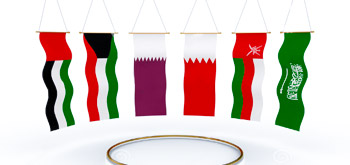
France has also tried to tighten bonds with the Arab states of the Persian Gulf. In May 2015, France’s president, Francois Hollande, was the first western high ranking official who attended the Persian Gulf Cooperation Council summit (PGCC). On the other hand, just in 2015, France and Saudi Arabia sealed an agreement for Riyadh to finance the delivery of 3 billion dollar worth of French weapons to the Lebanese army. In the meantime, France sold Rafale fighter jets to Qatar in a 7 billion dollar deal, and the same type of combat jets to Egypt in a 5 billion dollar contract. All these multi-billion-dollar contracts were facilitated under political and financial supports from the United Arab Emirates.