
- From Sara to Yair: Will Netanyahu’s Family Become his Election Achilles Heel?
- YAF Targets Riyadh Airport and Saudi Military Positions
- Cargo Vessel Carrying 2,500 Containers Sinks After Hitting Mine South of Strait of Hormuz
- Quds Force Chief Reiterates Iran’s Support for Palestine, Calls al-Aqsa Protection a Priority
- Iranian Parliament Speaker Says US Must Face Punishment and Meet Tehran’s Legitimate Demands
- Iranian, Lebanese Officials Hold Talks on Latest Regional Developments
- Bessent’s Prediction Gone Wrong: Economic Resilience in Iran, Collapse Delusion in the US
- Iran Warns It Will Sink US Vessels Approaching the Strait of Hormuz
- Another Oil Tanker Catches Fire in the Strait of Hormuz
- Yemen Warns Civilians to Leave Saudi Aramco Sites, Threatens Retaliation for Attacks on Sana’a
Editor's Choice
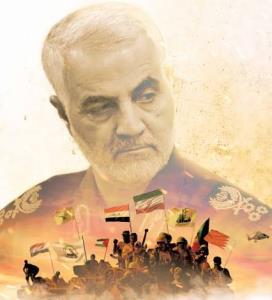
Gen. Solemani, A Living Resistance Legacy General Solemani of Iran caused a transformation to the region that blocked the way of the Israeli and American projects in West Asia.
A Review of Newly Published US National Security Document The US national security document may be an unwanted admission that the US hegemony is diminishing.
US or Venezuela? Who’s the True Oil Thief? Trump says Venezuelan nationalization of its oil was theft of American oil companies’ assets, justifying oil blockade on South American nation.
Why Are Tel Aviv and Washington Stepping Up Pressures against Hezbollah? Israel knows that disarming Hezbollah makes occupation of Lebanon a piece of cake.
Is Yemen on the Verge of Split? The country is sinking in chaos as conflicting forces in the south are going separate ways and Yemenis are less involved in the fate of the south.
News

From Sara to Yair: Will Netanyahu’s Family Become his Election Achilles Heel?
Netanyahu’s family is spent by various scandals, each giving the opponents the instruments to wield against him.YAF Targets Riyadh Airport and Saudi Military Positions The Yemeni Armed Forces launched four ballistic missiles on Wednesday, targeting Riyadh’s King Khalid International Airport
Cargo Vessel Carrying 2,500 Containers Sinks After Hitting Mine South of Strait of Hormuz A container vessel loaded with over 2,500 containers went down south of the Strait of Hormuz after striking a sea mine and subsequently catching fire
Quds Force Chief Reiterates Iran’s Support for Palestine, Calls al-Aqsa Protection a Priority The head of the Islamic Revolution Guards Corps (IRGC) Quds Force has reaffirmed Tehran’s unwavering backing for the Palestinian cause
Iranian Parliament Speaker Says US Must Face Punishment and Meet Tehran’s Legitimate Demands Iranian Parliament Speaker Mohammad Bagher Ghalibaf has called for Washington to be held accountable for its actions against Iran
Iranian, Lebanese Officials Hold Talks on Latest Regional Developments During a meeting in Beirut, Iranian Deputy Foreign Minister Saeed Khatibzadeh and Sheikh Ali al-Khatib exchanged views on recent developments
Iran Warns It Will Sink US Vessels Approaching the Strait of Hormuz IRGC Navy Commander General Ali Ozmaei has cautioned US warships against approaching the Strait of Hormuz, threatening to sink them if they do
Another Oil Tanker Catches Fire in the Strait of Hormuz Iran’s Army Navy said Tuesday that a tanker attempting to pass through the Strait of Hormuz unlawfully caught fire and suffered damage
Yemen Warns Civilians to Leave Saudi Aramco Sites, Threatens Retaliation for Attacks on Sana’a Yemeni Armed Forces has called on civilians and workers to immediately leave areas near Saudi Aramco’s oil installations
IRGC Frees Kidnapped Engineer, Kills Six Terrorists in Southeastern Iran Iran’s Islamic Revolutionary Guard Corps (IRGC) Ground Force has rescued a kidnapped construction engineer and killed six members of a terrorist group
French Protest Turnout Doubles as Demonstrators Call for Macron’s Government to Resign Violent confrontations, detentions, and tear gas erupted in Paris during nationwide demonstrations supported by student groups and trade unions
Iran’s IRGC Navy Reports Another Tanker Incident in Hormuz, Warns US Cooperators The IRGC Navy has warned that it will take firm action against commercial ships and oil tankers operating in the Strait of Hormuz and the Persian Gulf
Iran: Deployment of 39,000 Troops Thwarted Planned Ground Invasion The deployment of more than 51 combat units and the redeployment of 39,000 military personnel during the Ramadan War prevented an enemy ground invasion of Iran
Iran Says Oil Smuggling and Maritime Operations Will Not Avert US Defeat Iranian Armed Forces spokesperson Brigadier General Abolfazl Shekarchi has dismissed US claims of control over the Strait of Hormuz
Saudi Strikes Across Yemen Kill Civilians Saudi air raids and artillery fire have killed and injured civilians, including children, across Taiz, Saada, al-Jawf and Sanaa
Pezeshkian Accuses US of Complicity in Israel’s Genocide in Gaza Iranian President Masoud Pezeshkian has accused the United States of complicity in what he described as Israel’s ongoing genocide against Palestinians
IRGC Warns Ships Disabling Tracking Systems of Decisive Action in Strait of Hormuz Vessels navigating the Strait of Hormuz with their navigation and identification systems switched off would be considered hostile and face decisive action
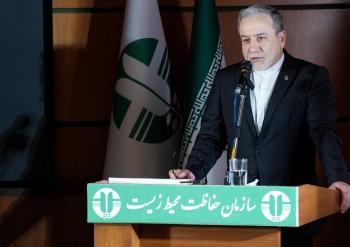
Araghchi Urges Global Accountability for Environmental Destruction During Wars Iranian Foreign Minister Abbas Araghchi has called for stronger international action to protect the environment during armed conflicts
Iran Says Washington Must Clarify Response to Seven Conditions for Ending War Tehran considers Washington’s response to its seven conditions for ending the war and reopening the Strait of Hormuz insufficient
YAF Launch Four Major Operations Targeting Saudi Airports, Aramco Facilities Yemen’s armed forces say they have targeted key Saudi infrastructure and military positions
Most Viewed
YAF Targets Riyadh Airport and Saudi Military Positions
Iranian Parliament Speaker Says US Must Face Punishment and Meet Tehran’s Legitimate Demands
Iranian, Lebanese Officials Hold Talks on Latest Regional Developments
From Sara to Yair: Will Netanyahu’s Family Become his Election Achilles Heel?
Quds Force Chief Reiterates Iran’s Support for Palestine, Calls al-Aqsa Protection a Priority
Cargo Vessel Carrying 2,500 Containers Sinks After Hitting Mine South of Strait of Hormuz
Gaza Reports 10 Deaths, 65 Injuries in 24 Hours as Israeli Attacks Continue
Pezeshkian Urges Iran to Resist Pressure and Advance Scientific and Technological Capabilities
Israeli Navy: From Protecting Coasts to Addressing Threats in Distant Waters
Rezaei Warns Washington of Another Historic Defeat, Citing Iran’s Victory over Rome
Iran Deploys More Than 50 Military Units Along Its Borders, Army Commander Says
Yemen’s Missile Lock on Saudi Airports Deals Blows to Kingdom’s Aviation Industry
Iraq, the Graveyard of American Military Strategy in West Asia
Israel’s Fury at Nobel Choice: Pillay and Gaza Genocide Case
Taliban Investment in Iran’s Chabahar Port: Opportunity or Challenge?
YAF Launch Four Major Operations Targeting Saudi Airports, Aramco Facilities
Iran Says Washington Must Clarify Response to Seven Conditions for Ending War
Araghchi Urges Global Accountability for Environmental Destruction During Wars
IRGC Warns Ships Disabling Tracking Systems of Decisive Action in Strait of Hormuz
Pezeshkian Accuses US of Complicity in Israel’s Genocide in Gaza
Claim of Civilizational War With Iran: Why’s Rubio Distorting History?
New Images Show Extensive Damage to US Base in Kuwait Following Iranian Strikes
UN Report on Minab School War Crime a Nightmare to US
Araghchi: Israeli Lobby Seeks to Tie US Interests to Israel’s Fate
Araghchi Calls on World to Hold US Accountable for ‘War Crimes’ at UNGA
Iran Rules Out Resuming Pre-War Diplomatic Track with US
Ansarullah and Bab-el-Mandeb: Why’s Israel Rattled by New Geopolitical Reality?
Pezeshkian at UNGA: Iran Will Not Give in to US Pressure
Pentagon Acknowledges F-35 Was Struck by Iranian Forces During War
IAEA Resolution Against Iran Draws Criticism Over Its Limited Impact
US Has no Choice but to Accept Iranian Conditions: Iran’s MP
Iran War Bill for the US:$33.4 Billion Just Until Ceasefire
44 Years After Sabra and Shatila, Activists Vow to Continue Resistance
Leader Vows Knowledge, Morality Will Disarm Aggressors
Minab Children’s Paintings Displayed at UN in Geneva
Ghalibaf: 200 Days of Public Mobilization Thwarted Enemy Plots
In Focus

Ansarullah
A Zaidi Shiite movement operating in Yemen. It seeks to establish a democratic government in Yemen.
Shiite
represents the second largest denomination of Islam. Shiites believe Ali (peace be upon him) to be prophet"s successor in the Caliphate.
Resistance
Axis of Resistances refers to countries and movements with common political goal, i.e., resisting against Zionist regime, America and other western powers. Iran, Syria, Hezbollah in Lebanon, and Hamas in Palestine are considered as the Axis of Resistance.
Persian Gulf Cooperation Council
A regional political u n i o n consisting of Arab states of the Persian Gulf, except for Iraq.
Taliban
Taliban is a Sunni fundamentalist movement in Afghanistan. It was founded by Mohammed Omar in 1994.
Wahhabism & Extremism
Wahhabism is an extremist pseudo-Sunni movement, which labels non-Wahhabi Muslims as apostates thus paving the way for their bloodshed.
Kurds
Kurds are an ethnic group in the Middle East, mostly inhabiting a region, which spans adjacent parts of Iran, Iraq, Syria, and Turkey. They are an Iranian people and speak the Kurdish languages, which form a subgroup of the Northwestern Iranian branch of Iranian languages.
NATO
The North Atlantic Treaty Organization is an intergovernmental military alliance based on the North Atlantic Treaty which was signed on 4 April 1949.
Islamic Awakening
Refers to a revival of the Islam throughout the world, that began in 1979 by Iranian Revolution that established an Islamic republic.
Al-Qaeda
A militant Sunni organization founded by Osama bin Laden at some point between 1988 and 1989
New node


Paper
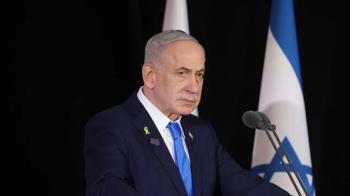
Elections in Land of Crisis: Netanyahu, Opposition, and Architecture of Israeli Future
Thursday 24 September 2026
wars, economic crisis, heightened international pressures, and the dispute over the future of political structure make the elections a sensitive point for determining the future path.
On one side, Benjamin Netanyahu and his allies are leaning on a security-first message and the continuity of right- ...
Interview
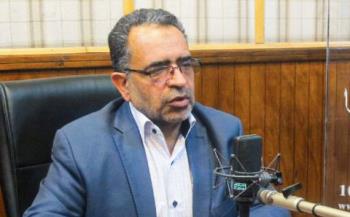
Power of Resistance Forced the US Out of Iraq: Expert
Friday 2 October 2026
،
wars have created challenging conditions to the US military stay in Iraq in terms of costs and security. So, staying further in the region, the American leaders concluded, could foist considerable costs on Washington both at home and internationally.
On the other hand, the American successive failu ...
Interview
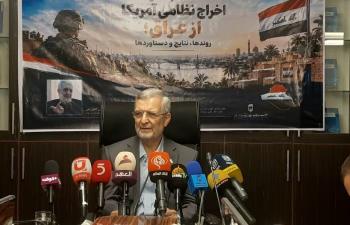
US Ouster from Iraq Prelude to Its Expulsion from the Region: Former Iranian Amb. to Iraq
Monday 5 October 2026
،
wars, combined with its armed forces’ targeting of American military bases, has deepened doubts among Arab leaders about Washington’s ability to guarantee their security. Many countries in the region, he said, have now concluded that hosting US troops does not necessarily bring security. ...
Interview
True Security and Political Independence in Iraq Matters after US Military Pullout: Expert
Tuesday 6 October 2026
،
wars in a century among the observers.
On the other hand, with the US continuing to dominate the Iraqi oil and economy, there are various analyses about type and level of the US influence and interference in Iraqi affairs, triggering many questions about the future of Baghdad political and security ...
Paper
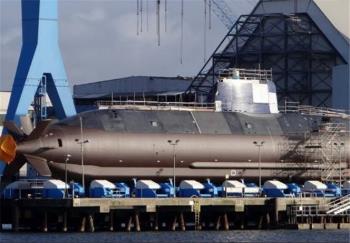
Israeli Navy: From Protecting Coasts to Addressing Threats in Distant Waters
Saturday 10 October 2026
،
wars. In 1948, its navy still lacked meaningful capacity, and no decisive naval battle ever took shape. Yet maritime control by outside powers made it possible to transfer weapons and forces to occupied Palestine, demonstrating that even when the regime's own navy plays only a limited role, mari ...
News
Araghchi Urges Global Accountability for Environmental Destruction During Wars
Sunday 11 October 2026
،
Iranian Foreign Minister Abbas Araghchi has called for stronger international action to protect the environment during armed conflicts ALWAGHT- Iranian Foreign Minister Abbas Araghchi has called for stronger international action to protect the environment during armed conflicts, warning against usin ...
Analysis
Claim of Civilizational War With Iran: Why’s Rubio Distorting History?
Monday 12 October 2026
،
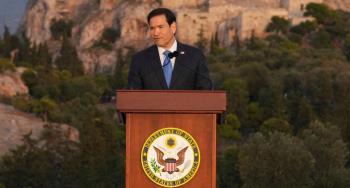
wars, fought some 2,500 years ago, had their own specific historical and political context and cannot be grafted onto today's US-Iran confrontation without explaining the fundamental differences. By invoking Xerxes' destruction of Athens in 480 BC as a cautionary tale of a threat to Western ...
Interview
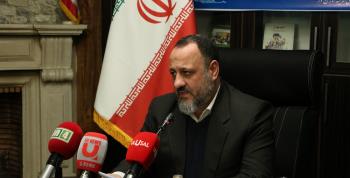
Pakistan, Turkey Unreluctant to Directly Join Yemen War, Syria’s Al-Jolani Risks Sending Forces to Death in Yemen: Expert
Tuesday 13 October 2026
،
wars, while confronting the Yemeni forces, especially in the current conditions, requires different capabilities and methods of warfare.
The second factor is the morale of the Saudi military forces. Naturally, the morale of soldiers in offensive wars differs from that in defensive wars, and usually ...
News
Iran Warns It Will Sink US Vessels Approaching the Strait of Hormuz
Wednesday 14 October 2026
،
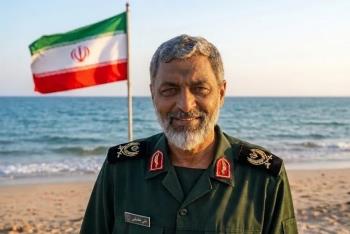
warships against approaching the Strait of Hormuz, threatening to sink them if they do ALWAGHT- IRGC Navy Commander General Ali Ozmaei has cautioned US warships against approaching the Strait of Hormuz, threatening to sink them if they do.
IRGC Navy Commander General Ali Ozmaei said the United Stat ...
News
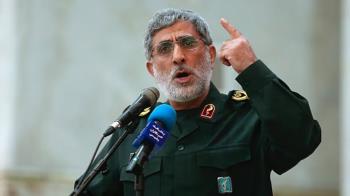
Quds Force Chief Reiterates Iran’s Support for Palestine, Calls al-Aqsa Protection a Priority
Thursday 15 October 2026
،
wars and mounting external pressure. He reiterated Tehran’s position in support of Palestinian liberation from Israeli occupation and aggression.
The Quds Force commander also thanked the institution for expressing solidarity with Iran during what he described as unprovoked American-Israeli a ...








