



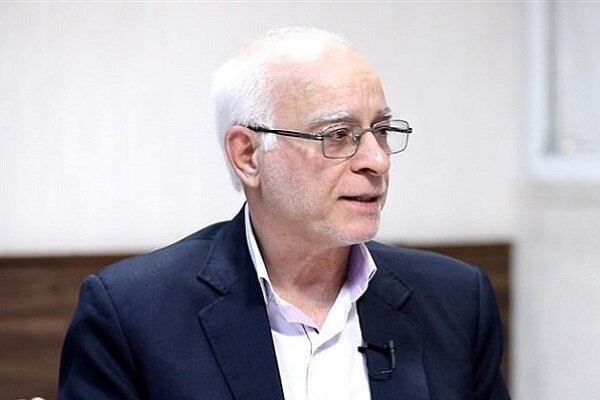


Alwaght- While after Russia-Ukraine meeting in Abu Dhabi the war was expected to scale down, the battleground developments moved in the opposite direction. Ukraine in multiple times targeted the bridge linking Crimea to Russia and for the first time attacked the Russian warships in Libyan coasts. These developments suggest expansion of the geography of war and entry to a new stage in the closing days of the fifth year of war. In this connection, Alwaght talked to Hassan Beheshtipour, Eurasia affairs expert, asking him about the dimensions and consequences of these conflict dynamics.
Alwaght: Despite the US push to resume Ukraine talks, Ukraine has recently stepped up its anti-Russian attacks, expanding them to Libyan coasts. Given the reports about presence of Ukrainian experts in Libya's west, what are Russian interests in this North African country that are driving Kiev to broaden its operations to this region and the Mediterranean?
Beheshtipour: Russia is in Libya mainly pursuing the preservation of military access in the Mediterranean, the establishment of a transit hub for expanding influence into Africa, and the exertion of pressure on NATO's southern flank. Russia's core interests in Libya consist of finding a replacement for the Tartus port in Syria, which is all but lost to Russia, and maintaining a Mediterranean presence through its presence in Libya, establishing a logistics hub for operations along North Africa's northern coast, exerting pressure on NATO's southern flank and Europe, strengthening ties with Khalifa Haftar, the leader of Libya's militias, and gaining access to Libya's oil and gas resources. A presence in Libya therefore allows Russia to simultaneously pursue its military, logistical, and political objectives in the Mediterranean and North Africa.
Ukraine, in turn, is targeting these centers in Libya in an effort to disrupt Russia's supply lines and pathways for expanding influence, and to drag the war deep into Moscow's vital interests beyond Russia's borders.
Alwaght: Does Ukraine alone decide and act on its operations against Russia in Libya or there is European military and intelligence assistance? At what level are the European country involved in the attacks on the Russian naval ships?
Beheshtipour: Ukrainian President Volodymyr Zelensky has stated outright that operations against Russian ships in Libya were carried out without prior coordination with European allies. He confirmed this in a phone call with Italian Prime Minister Giorgia Meloni, and Italian officials have likewise denied any coordination. Still, it seems unlikely that Ukraine would have taken such action without some form of intelligence coordination with European countries and the United States. Britain also maintains military bases in Cyprus, and there has been speculation about the possible use of these bases' capabilities.
The EU's Operation Irini has been monitoring the Libyan arms embargo since 2020, using naval, aerial, and satellite assets. Accordingly, the possibility has been raised that intelligence gathered under this operation was passed to Kiev, though no direct evidence of a link between the Irini mission and the Ukrainian attacks has been published to date.
Alwaght: With regard to different views of Washington and European capitals on Ukraine war and French President Emmanuel Macron's emphasis on backing Kiev to protect European security, why are European countries supporting lingered crisis and are walking a path different from that of the US?
Beheshtipour: In recent months, Europe has taken a different path from the US in the Ukraine crisis, not because it sees "prolonging the crisis" as desirable, but because it views halting support for Ukraine as more dangerous than continuing the war. From Europe's perspective, a peace shaped without a strategic defeat of Russia and without security guarantees for Ukraine would only mark the start of the next period of instability in Europe. The US-Europe rift is in fact the difference in perspective between a global power that wants to move past this crisis and, on the other side, a regional power that feels it has no way out.
At the same time, European countries do not hold a unified position on the Ukraine war, and their positions vary according to the kind of relations they have with Moscow. Hungary's position, for example, is completely different from Poland's despite the two being neighbors, while countries closer to Northern Europe, such as the Baltic republics, Finland, and Sweden, feel more threatened and therefore seek an end to the war sooner, yet they do not accept the partition of Ukraine because they fear this would become a legal precedent.
Alwaght: What consequences does Ukraine's expansion of operations to the Mediterranean and Norta Africa bring to European security? Does it yield a direct confrontation between Russia and European countries? How does prolonged war impact the prospect of peace talks and a final agreement to end the war?
Beheshtipour: Broadening Ukraine's operations into North Africa is a double-edged sword for Kiev. On one hand, by widening the war's geographic scope and targeting Russian interests in more distant regions, Ukraine raises the risk of a direct and unintended confrontation between Russia and NATO and also threatens the stability of Europe's peripheral regions.
On the other hand, Zelensky can use these actions as a tool to boost Ukraine's bargaining power and pressure Moscow into agreeing to an acceptable and face-saving agreement. Kiev is thus trying to strengthen its position in any potential negotiations by widening the scope of pressure on Russia.
However, heightening the tensions can further weaken the diplomatic space and make the path to an agreement more difficult. It seems that as long as neither side feels it has reached a complete dead end on the battlefield, and as long as the gap over what "sustainable peace" means— namely security guarantees for Ukraine versus territorial concessions—remains unfilled, the prospect of a comprehensive and sustainable agreement will remain very far out of reach.