










Alwaght- Despite its historic significance and the extensive propaganda orchestrated by the White House, the trilateral summit between Donald Trump, Xi Jinping and Vladimir Putin in the Chinese city of Shenzhen produced no breakthrough agreement on the most pressing international issues. Iran war, the conflict in Ukraine, trade tensions between Washington and Beijing, and efforts to limit nuclear weapons all remained unresolved.
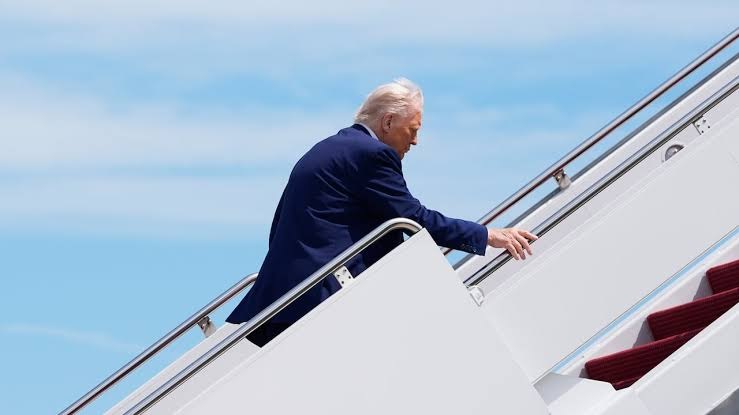
Images of Xi welcoming Trump, Putin standing alongside the two presidents, and the elaborate ceremony surrounding the summit drew widespread media attention. But restrictions on journalists’ access and the absence of a joint news conference only deepened uncertainty over what, if anything, the leaders had achieved. A review of assessments by American think tanks and media outlets suggests that many analysts viewed China and Russia as the summit’s symbolic winners, while concluding that Trump had secured no strategic gains.
What do American think tanks' assessments say?
1. Council on Foreign Affairs (CFA)
Michael Froman, the council's president, called the meeting "much ado about almost nothing." In his view, Putin reaped the greatest symbolic benefit, and the talks produced no concrete progress on the wars in Iran and Ukraine.
2. Center for Strategic and International Studies (CSIS)
Experts at the center, including Thomas Christensen, stressed that the joint statement contained no major agreements. In their view, China refused to commit to any practical limits on its nuclear arsenal.
3. Atlantic Council
Melanie Hart, the council's senior director for China, described the meeting as "all image and no substance." Daniel Fried argued that Trump squandered an opportunity to strengthen the US standing and that of its allies.
4. German Marshall Fund of the United States (GMF)
Managing Director of GMF's Indo-Pacific program Bonnie Glaser stressed that the Shenzhen meeting should not be compared to the historic Yalta agreement. According to her, the final statement lacked clear goals, timelines, and enforcement mechanisms.
5. Chicago Council on Global Affairs
Paul Heer, an American foreign policy expert, rated the meeting's results as big talk and little substance. He pointed to unresolved disputes between Washington and Beijing over trade, rare earth minerals, and technology.
6. Stimson Center
Yun Sun, director of the center's China program, argued that Beijing emerged the ceremonial winner without making any significant concessions. Christopher Preble stressed that diplomatic photo ops do not necessarily translate into political success.
7. CNA Institute for Security Studies
Elizabeth Wishnick, an expert on China-Russia relations, called Putin the meeting's biggest political winner. In her view, the Russian president managed to stand alongside the American and Chinese leaders after years of Western pressure.
8. Arms Control Association
Daryl Kimball, the association's executive director, called the agreement on the need to prevent nuclear war positive but insufficient. He stressed that without a practical plan and a clear timeline, such statements have little effect on arms reduction.
9. American Enterprise Institute (AEI)
Kyle Balzer, a national security researcher at the institute, warned of the political fallout from Trump's appearance alongside Washington's two rivals. In his view, such a meeting could heighten allies' concerns about the direction of American foreign policy.
10. Brookings Institution
Patricia Kim argued that Washington no longer holds the central position it once did in great-power diplomacy. She cited strategic cooperation between China and Russia and Trump's transaction-minded policy toward allies as factors eroding the US standing.
11. Carnegie Endowment for International Peace
Experts at the endowment, including Sheena Chestnut Greitens and Oriana Mastro, had assessed expectations for the summit as limited. In their view, agreement on nuclear arms control and military competition is impossible without practical changes in the two countries' policies.
12. The Washington Post
The newspaper held that Xi and Putin, standing beside a Trump beset by domestic and foreign troubles, managed to command the global diplomatic stage. The Post also noted the absence of transparent information about the talks' results.
13. Los Angeles Times
The newspaper described the summit as Trump retreating before the US rivals. John Bolton, Trump's former national security adviser, said the meeting sent the wrong message to US allies and produced no lasting result for Washington.
14. AP
AP wrote that the trilateral meeting on nuclear risks produced no decisive agreement. The news agency noted the removal of the Iran and Ukraine wars from the final statement and the strengthening of China's diplomatic position.
15. CBS News
The network reported that the three presidents failed to reach any concrete agreement on the world's major crises. CBS also stressed that Putin did not back away from his positions on the Ukraine war after the meeting.
16. CNN
In its assessment, CNN wrote that the summit resembled a show of power and personal chemistry among leaders more than a strategic negotiation. In the network's view, conversation became an end in itself, without resolving fundamental disputes.
17. Axios
Axios stressed that the three countries' joint statement lacked a clear plan for reducing nuclear weapons or ending the wars in Iran and Ukraine. The outlet also reported allies' concerns about Trump's closeness to the Russian and Chinese leaders.
18. Foreign Policy
The think tank wrote that the summit's main significance lay in its political symbolism, not in real agreements. In its analysts' view, China managed to bolster its image as the center of great-power diplomacy without making any significant concessions.
19. Reuters
In its analysis, Reuters stressed that Trump's personal diplomacy failed to translate into strategic gains. Unresolved trade disputes, the absence of a nuclear agreement, and the lack of progress on Iran and Ukraine were among the main threads of its assessment.
20. Radio Free Europe/Radio Liberty
Reviewing the views of American experts, the mefia outlet wrote that the summit was historic but produced no major achievement. The analysts it cited named Putin a winner for emerging from diplomatic isolation and Beijing a winner for strengthening its international position.