






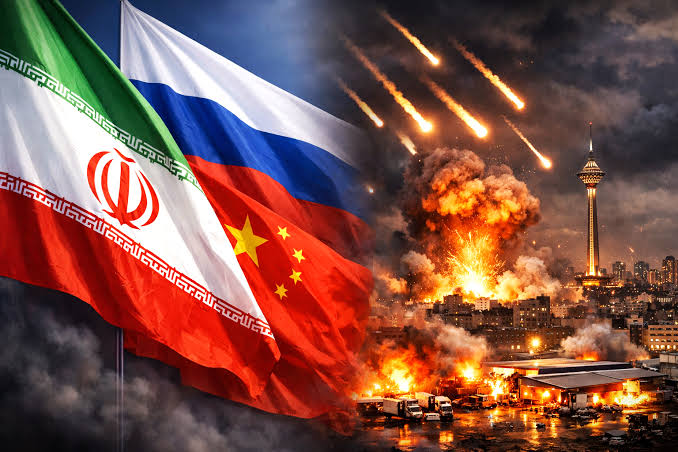


Alwaght- Many political observers in the West expected that when Iran’s confrontation with Israeli regime began, Tehran would rush to Russia and China to restore military balance. But events have shown otherwise. Based on its stated positions and available intelligence, Iran neither requested direct military intervention from either power nor sought to tie its own deterrence to their military footprint. This should be seen as one of the clearest signs of maturity in the Islamic Republic’s defense doctrine, a doctrine built over the past two decades on the principle of “self-reliance in deterrence.”
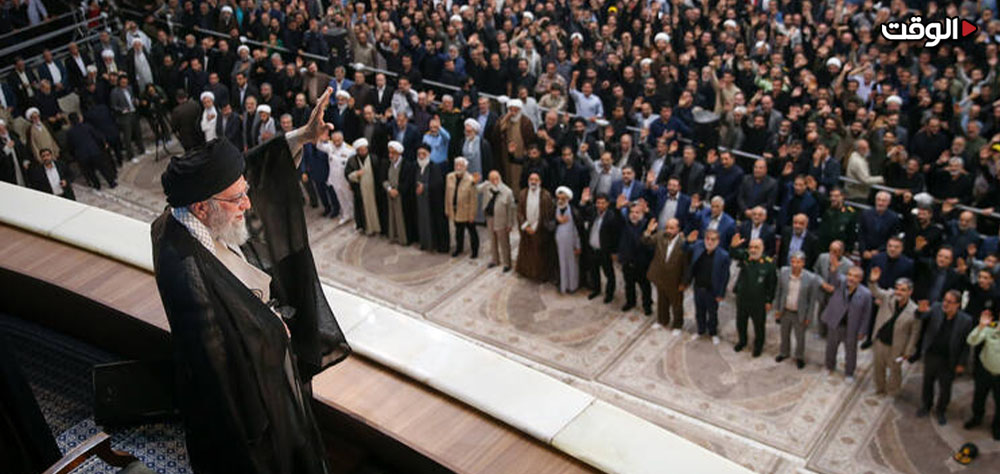
This should not be considered as a tactical or fleeting choice. Rather, it reflects deeper shifts in Iran’s security thinking. The wars of recent decades, from Iraq and Afghanistan to Libya, Syria and Ukraine, have demonstrated that countries that outsource their security to great powers effectively surrender a measure of their strategic autonomy. That is precisely why Tehran, following orders from the martyred Supreme Leader Ayatollah Sayyed Ali Khamenei spent years building a deterrence structure rooted in domestic capabilities, indigenous defense industries and independent decision-making.
For much of the past two decades, the dominant narrative in Western media and security circles held that the Islamic Republic could not maintain a balance against the US and Israeli regime without Russian and Chinese backing. That narrative served a dual purpose: it justified the policy of containment, and it signaled to US regional allies that tightening the noose on Moscow and Beijing would also weaken Tehran’s deterrent power. Recent developments have seriously upended that assumption.
Iran’s resistance, resilience, its battlefield gains and its ability to hold its ground without relying on allies have sent a clear message: its strategic relationships with Moscow and Beijing are not substitutes for indigenous defense capacity, but complements to its foreign policy. In other words, Tehran has sought to demonstrate that its national security is not hostage to the will of outside powers.
This stance also carried an important signal for Washington and Israel. For years, a core US strategy has been to drive a wedge between Iran, Russia and China, on the theory that if Iran’s deterrence depended on direct support from those two, pressure on them would degrade Tehran’s capabilities. But by showing that its military response is built on domestic assets, Iran has largely neutralized that lever, forcing its adversaries to recalculate the costs of confrontation.
But this is just one side of the story. The more important question is why Moscow and Beijing not got involved.
The answer should be sought in the security doctrine of these two countries. Just contrary to common assumptions, the strategic relationship between countries does do not necessarily mean a commitment for military involvement in each other's wars.
Unlike NATO, Russia and China have never regulated ties with Iran within a collective defense treaty. Their partnership with Tehran is based on political, security, economic, energy, and geopolitical common interests, not a commitment for automatic intervention in a war in favor of one another.
Russia remains heavily involved in Ukraine, militarily, economically and politically, and has little appetite for opening a second front in West Asia. China, as the world’s largest energy importer, views stability in the Persian Gulf as integral to its own economic security and prefers the role of mediator and economic player to that of direct combatant.
That said, the absence of Russian and Chinese military boots on the ground should not be mistaken for a diminished importance in their relations with Iran. It is, rather, entirely consistent with their broader foreign policy doctrines. What we have witnessed in recent events is, in effect, a division of labor among strategic partners. Iran assumed responsibility for direct defense and deterrence, while Russia and China worked through diplomatic, political, economic and legal channels to contain the crisis and ward off mounting international pressure. This pattern resembles less a classic military alliance than what might be called a “strategic partnership.”
Recent battlefield developments should be read through that same lens. Greater strike precision, smarter targeting, the penetration of air-defense layers, disruption of enemy decision-making cycles and the escalating economic and psychological costs of war, these are not merely technological advances. They are components of a new deterrence doctrine built on decision-making independence and self-sufficient execution.
These developments carry a message for the region as well. For decades, most Arab governments have defined their security through the American umbrella. Iran is now offering a different model, one that locates the legitimacy of deterrence not in the presence of foreign troops but in the cultivation of indigenous capacity. That distinction may gradually reshape the security calculus of regional states.
Finally, it is worth underscoring that the real significance of recent events was not simply a successful military operation or the breach of defensive layers. It was the consolidation of a crucial insight: strategic independence and strategic partnership are two distinct but complementary concepts. Iran has sought to ground its security and deterrence in domestic capabilities while simultaneously expanding its strategic ties with Russia and China across political, economic, technological and diplomatic domains, without allowing those relationships to morph into military dependency.
If this pattern is consolidated in the years to come, one of the most important Western narratives about Iran's security dependence on China and Russia will be seriously questioned. In such conditions, Iran's deterrence rests not on foreign powers' help but on locally-developed technology, independence of decision-making, and the capability to foist costs on the enemy. This pattern can be one of the defining features of the new security order in West Asia.