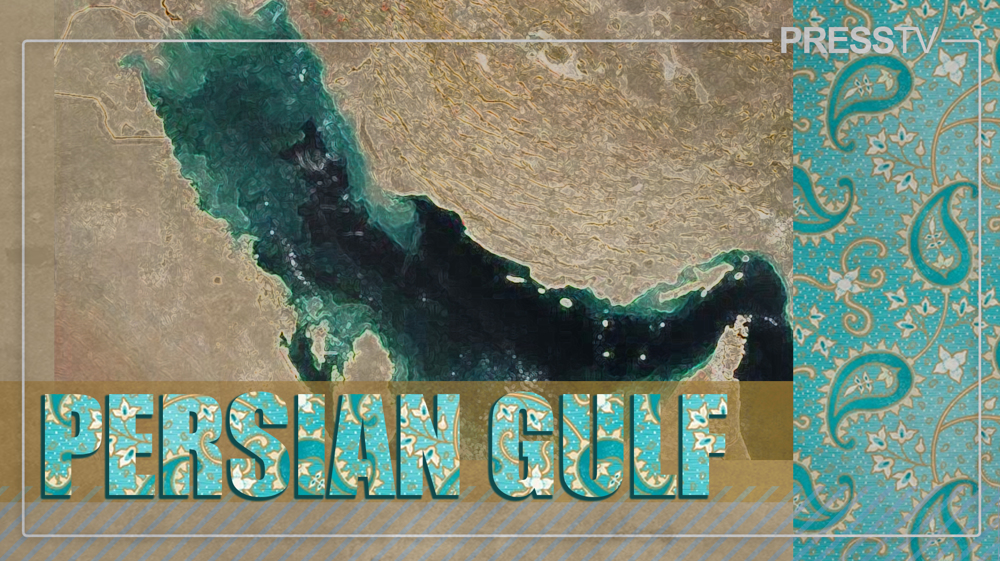











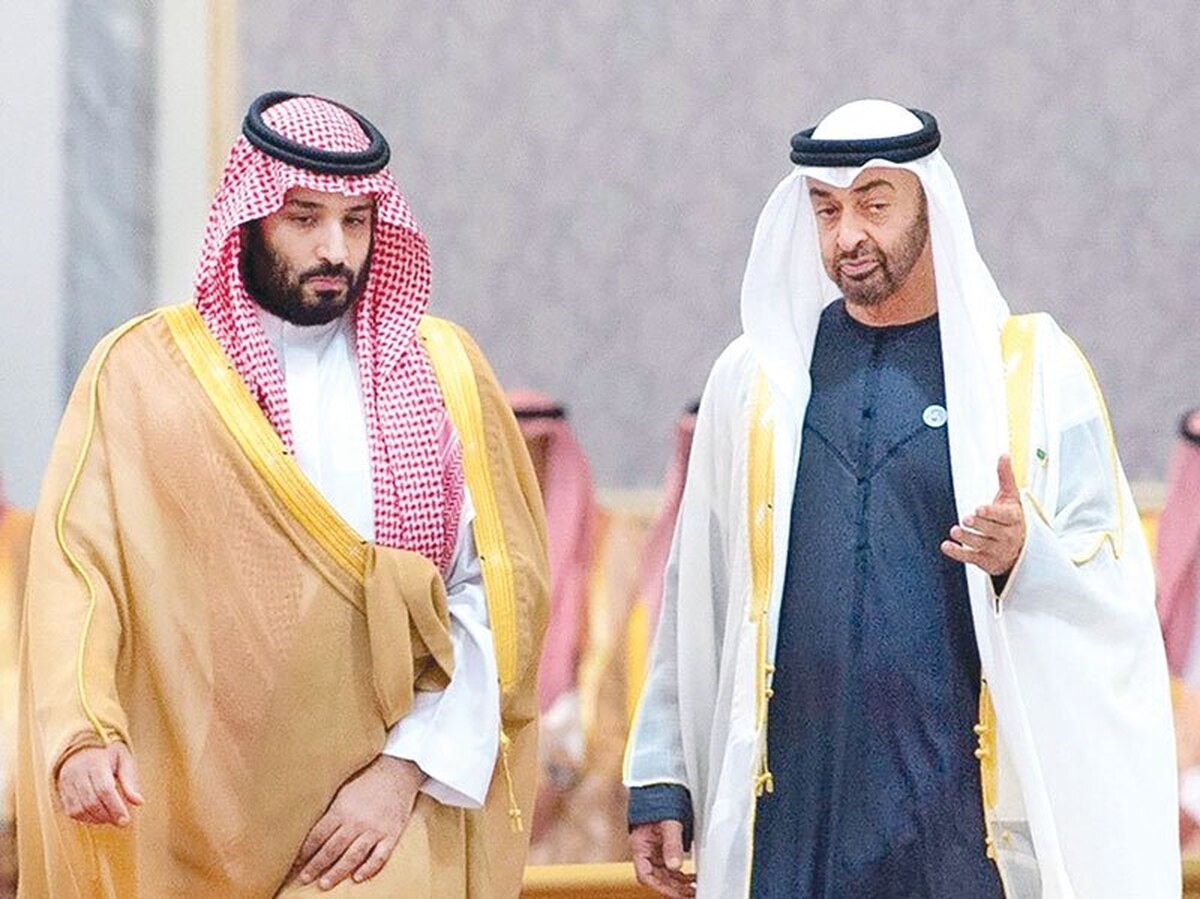


Alwaght- Re-eruption of military tensions between Saudi Arabia and Yemen's Ansarullah resistance movement after a three-year relative peace does not mean just failure of the diplomacy between Riyadh and Sana'a but rise of a new balance of power among the Persian Gulf Arab states, disclosing more than any other time the gap of interests between the former allies.
Thinking that the geopolitical tumult in the region has opened a new window to transform the equations in Yemen, Riyadh has once again embarked on military option, expecting other Persian Gulf states to join its belligerent policy against Sana'a. However, the UAE, which once was the main pillar of the Saudi-led Arab coalition against Yemen, has chosen to stay out of direct intervention to avoid costs of a rejuvenated confrontation.
Yemen developments in UAE's favor
The UAE’s calculated silence on the latest round of Yemen’s war is less a sign of neutrality than a reflection of deep strategic rifts with Saudi Arabia over the political and security future of southern Yemen, rifts that have become one of the most consequential fault lines between the two former allies in recent years.
The ceasefire process and talks between Riyadh and Ansarullah, while raising the prospect of a Saudi exit from the war, also threatened to cement Riyadh’s influence over Yemen’s political future and further erode the Emirates’ foothold in the south, a scenario Abu Dhabi never found acceptable.
That is precisely why the Abu Dhabi is quietly pleased to see clashes between Riyadh and Sana'a resume. A renewed escalation bolsters its southern proxies, while blocking any deal that would elevate Saudi Arabia’s role in shaping Yemen’s post-war order.
Over the past several years, the UAE invested heavily in military and economic assets to entrench its influence across the south. But a few months ago, under political and on-the-ground pressure from Saudi Arabia, forces tied to separatist Southern Transitional Council (STC) were forced to cede parts of their strongholds in Hadhramaut to the Riyadh-backed government, a retreat that amounted to a major setback for Abu Dhabi’s flagship regional project.
So neither the UAE nor the STC have any appetite to join the current fight, whose main outcome would be strengthening Saudi Arabia’s hand. The dissolved council’s leadership knows full well that the more Riyadh is bogged down in battle with Ansarullah, the less political, military, and financial bandwidth it will have to contain separatist ambitions in the south. Thus, the southern forces’ neutrality should not be mistaken for passivity. It is, rather, a form of strategic patience, a calculated wait for Saudi power to erode and for Yemen’s internal balance to gradually shift in favor of Emirati-aligned factions, potentially paving the way for Abu Dhabi to regain influence in the south if the war drags on.
Competition in energy
The quiet rivalry between Riyadh and Abu Dhabi in the energy sector offers another clear lens into the UAE’s cautious stance on the new Yemen war. In recent years, the two countries' relationship within OPEC has shifted from coordination to competition.
Disputes over production quotas and the UAE’s push to expand its export capacity have made one thing plain: Abu Dhabi is no longer willing to define its economic and petroleum interests in the shadow of Saudi policy. Two months ago, the Emirates formally withdrew from OPEC, announcing its intention to ramp up crude output to 5 million barrels per day.
The exit was a bid to break free from the production constraints favored by Riyadh, secure greater leeway in setting its own output, supply, and export levels, and, not incidentally, to deal a blow to OPEC’s standing and Saudi leadership within it. In that context, anything that constrains Riyadh’s room to maneuver in global energy markets looks to Abu Dhabi like an opportunity.
Concern about Saudi transformation into an economic hub
One of Abu Dhabi’s main concerns is driven by Saudi Arabia striving to become a top regional economic and trade hub and attract the investment of international companies. Since start of war between Iran and the US, Emirates witnessed, to some degree, foreign capital flight and relocation of some companies do eastern and safer markets, dealing a blow to its place as the Persian Gulf's trade hub.
The push to attract foreign capital and host knowledge enterprises and tech companies is a key pillar of Crown Prince Mohammed bin Salman’s Vision 2030 to transform Saudi Arabia into the region’s economic hub. Now, with heightened security risks in the Persian Gulf and capital fleeing the UAE, Riyadh sees an opening, one it could exploit by leaning on its relative stability to accelerate investment inflows and cement its position as West Asia's premier economic destination.
Yet the return to costly Yemeni battlefields, and the prospect of being mired in a protracted, open-ended conflict, carries consequences far beyond the military theater. Rising insecurity and instability would not only strain Riyadh’s security credibility but also disrupt the very investment climate and megaproject rollout that Vision 2030 depends on.
Moreover, the UAE’s posture toward Yemen cannot be understood in isolation from the quiet rivalry and strategic disagreements between Abu Dhabi and Riyadh. After the Strait of Hormuz was choked off and regional export routes constricted, Saudi Arabia managed to preserve a portion of its oil exports, up to 5 million barrels per day, to Asian and European markets via its East-West pipeline and Red Sea ports. That advantage had bolstered Riyadh’s position in Eastern markets, particularly India and other Asian economies, at a time when some rivals saw their export capacity curtailed or eliminated. But now, the blockade imposed on Riyadh from Bab-el-Mandeb Strait is putting that geopolitical edge under serious strain.
So, for the Emiratis, limitation on the Saudi export capability from the Red Sea provides an obstacle to growing economic and oil influence of its main rival. From this lens, the new developments in Yemen not only do not represent a security crisis, but also are part of a broader competition of the two monarchies to secure a better place in the future of the Persian Gulf.
In the final analysis, the UAE's silence on Yemen's upheaval is neither indifference nor retreat. It is a strategic calculation according to which Abu Dhabi is choosing to profit from the grinding erosion of Saudi-Ansarullah rivalry without paying a direct military cost.
The longer this situation drags on, the more Riyadh as the Emirates' foremost regional rival, gets bogged down in security and economic swamps. And if the balance of power continues to shift in that direction, the UAE may well emerge as the hidden winner of this new Yemen war, not from the battlefield, but from the sidelines, quietly steering events to its own advantage.