














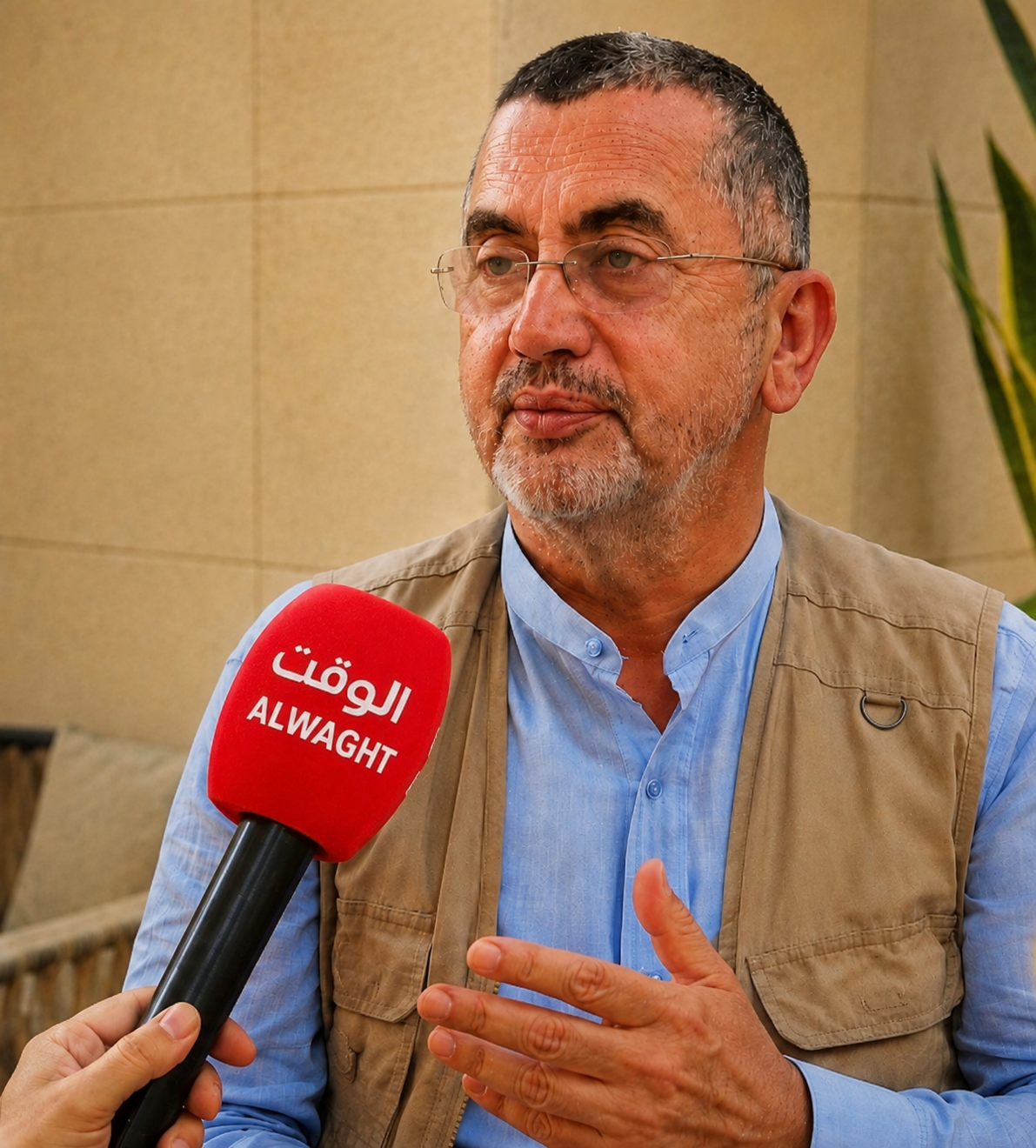


Alwaght- The presence of journalist and author Shoghi Awadha in Iran for attending the funeral of the martyred leader of Iran Ayatollah Sayyed Ali Khamenei gave Alwaght an opportunity to talk to this prominent Arab author.
In this interview, Awadha discussed the messages of public massive turnout in the funeral, impacts and position of the martyred leader in the Muslim world, and the role of the Islamic Republic in supporting Palestine, Lebanon, and Yemen, as well as the prospects for the Axis of Resistance.
Alwaght: What brings you to Iran for the funeral?
Awadha: This ceremony is not just a funeral, but it is a renewal of the allegiance to the path of Imam Hussein, Imam Khomeini as the founder of the Islamic Revolution of Iran, and the path of dignity and resistance the Islamic Revolution set up since its victory later in the 1970s.
The funeral ceremony of the martyred leader is a ceremony of loyalty and a renewal of allegiance to many other martyrs of the resistance, including the esteemed martyr Sayyed Hassan Nasrallah, Sayyed Hashem Safieddine, as well as a renewal of the pledge of allegiance to Ayatollah Sayyed Mojtaba Khamenei, the new leader of the Islamic Revolution. For this reason, our minimum duty in Lebanon was to attend this ceremony and participate in the funeral of the martyr leader, who was regarded as a great sage and mentor.
The martyred leader was not only the leader of the Islamic Republic of Iran, but also the leader of all free and honorable people of the world, from Palestine and Lebanon to Syria, Iraq, Yemen, and all freedom-seeking people. Our presence at this ceremony was a tribute and expression of gratitude to a leader who rendered great services to the Palestinian cause, the resistance in Lebanon, and to Hezbollah.
Alwaght: What impact do you think the martyred leader left on the Islamic world?
Awadha: The personality of Ayatollah Sayyed Ali Khamenei left deep and massive influence. He was nurtured in the school of Prophet Muhammad and Imam Ali; the same imam to whom the world meant not even a shoelace and despite his capability to enjoy the best worldly benefits, he lived a life of asceticism.
Ayatollah Khamenei rose from the same school and same discipline. He could have worldly wealth and power if he wanted to, but he was never deceived by the worldly life. He was as strong as mountain in his standings and neither the US threats nor plots of some Arab rulers nor threats of Israeli regime could shake his will.
He was a divine man, a sage with deep-rooted faith. I believe that my words fall short of describing him and whoever wants to talk about him should be his level or even higher. This is impossible for me.
Alwaght: What message did this turnout by millions in his funeral send to the world?
Awadha: This ceremony was not merely a funeral; it was a day of renewing allegiance to the friends of God, and it conveyed multiple messages to the world.
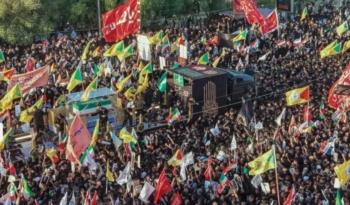
The first message was directed at Donald Trump, who presumed that he could overthrow the Islamic Revolution and the system of the Islamic Republic of Iran. The response to this claim was the presence of millions of people in the streets of Tehran and other Iranian cities, as well as at the funeral ceremony in Iraq, a turnout that, in my view, displayed the greatest manifestation of true democracy.
This massive turnout demonstrated that the Iranian nation, despite all pressures, still stands firm against the US and the Israeli regime and will never surrender. The banner of resistance will not fall to the ground through terrorist operations, threats, or external pressure.
In my opinion, the Islamic Republic, relying on the unity of the people, the armed forces, and the Islamic Revolutionary Guard Corps (IRGC), managed to thwart the enemy's primary objective—the overthrow of the system, and even turned this confrontation into an opportunity to strengthen its own position.
Additionally, this ceremony conveyed to the world that the people of Iran are united and are moving behind the new leadership, and that the Islamic Republic defends not only itself but also the entire Islamic ummah and the free peoples of the world against the US-Israeli project of domination.
In my view, in this struggle, the Islamic Republic defended the entire region and even humanity itself against the "Greater Israel" project and the American domination plan, an issue that today has rattled Trump administration. From my perspective, there is no difference between Republicans and Democrats in the US; both pursue the same policy, albeit through different methods.
Alwaght: How do you assess the role of the martyred leader in supporting Palestinian cause, Lebanon, and Yemen?
Awadha: Since the victory of the Islamic Revolution in the 1979, the Islamic Republic has paid a heavy price for supporting the Palestinian cause and the resistance. From the very first days of the Revolution, due to Imam Khomeini's historic slogan, which was "Today Iran [was freed] tomorrow Palestine [will be freed] ", all kinds of conspiracies, sanctions, and political, economic, and military pressures were launched against Iran.
Despite these pressures, the Islamic Republic managed to turn sanctions into an opportunity for progress and demonstrated its economic, industrial, and defensive capabilities to the world.
Had it not been for the Islamic Revolution of Iran, after Egypt's move toward normalizing relations with the Israeli regime, the Arab world and the Palestinian cause would have experienced a great void. The Islamic Republic filled that void, raised the banner of support for Palestine, and backed the Palestinian resistance, the Palestinian people, and the Islamic resistance in Lebanon.
I think, the victories of the Lebanese Hezbollah resistance in 1985, 2000, the wars of 1993 and 1996, and also the 2006 war would not have been possible without the support of the Islamic Republic of Iran.
With all the sacrifices made by the resistance and its supporters, the resistance remains steadfast, and I attribute this to the involvement of the Islamic Republic of Iran and the leadership of Ayatollah Khamenei, who held a strategic and forward-looking vision regarding the battle against the Zionist regime.
Even during the recent aggression by the US and the Israeli regime against Iran, the Islamic Republic was able to act successfully, outline a new defensive strategy for the Persian Gulf, and alter the region's security equations.
I also believe that Iran's action against American bases in the Persian Gulf was part of a strategy to expel American forces from West Asia, and these developments have also affected the security of the Persian Gulf littoral states.
Alwaght: What are your final words for the Alwaght's readers?
Awadha: Although we have lost a great leader as a commander in chief, a thinker, and an inspiring figure, on the other hand we have secured a lasting school, one the future generations' push for liberation of the occupied Palestinian territories and confrontation of the Greater Israel project will rely on.
The fight against the Israeli regime, in our view, is not a battle of borders, it is a battle for existence and identity and this path will continue.










