












Alwaght- While the US President Donald Trump has repeatedly claimed that the American sea blockade on the Iranian ports has paralyzed Iranian economy, new reports by Western media say otherwise, showing that despite the restrictions, Iran continues to do maritime business and to bypass the sanctions.
In this connection, Reuters reported on Thursday that Iran, by a ghost network of over 5,000 military and financial institutions, since at least January 2025 has imported worth of $2 billion in equipment, explosives, and heavy trucks needed for its missile and drone programs through circumventing the American sanctions regime. The report adds that these equipment have arrived to Iran through land, sea, and air even during the war, with their registered origins being China, Russia, and Germany.
The network operates through intermediaries and foreign shell companies. Intermediaries referred to in the documents as "trustees", who use revenue from clandestine oil sales to purchase goods needed by the Islamic Republic.
Earlier, shipping intelligence data (Kepler) and statements from maritime security experts had also reported that Iran, despite a naval blockade, had managed to export quantities of liquid gas and jet fuel since July. Sources active in maritime security told Reuters in mid-October that most of these shipments were transferred to the area known as the "outer limits of East Port" in Malaysia for further ship-to-ship transfers, likely ultimately reaching China.
Washington’s claims proven false
These reports must be set alongside the other lies peddled by Trump and his secretaries of war and treasury. Trump has claimed many times that Iran lost its nuclear capability during the war, that its air and naval forces were destroyed, and that control of the Strait of Hormuz had fallen to the US Navy, yet developments on the ground show that reality is a far cry from what the White House claims.
Trump recently asserted that under US military control, more oil is now being exported through the Strait of Hormuz than before the war, but the upward trajectory of oil prices shows that global oil supply has shrunk, because if Trump's claims were true, oil prices should have plunged below $100 rather than continuing to set new records.
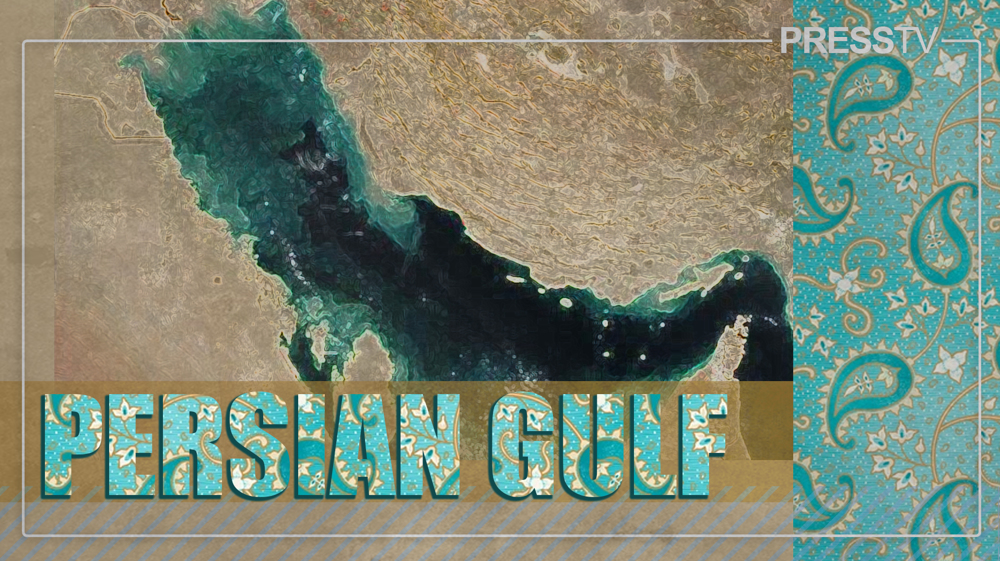
Now even Trump has more or less acknowledged in his speeches that Iran has preserved its nuclear program and that two rounds of US and Israeli regime attacks failed to eliminate this indigenous capability. In the Strait of Hormuz, too, Iran, by retaining its ability to restrict maritime traffic, has shown that it still plays a decisive role in controlling this strategic waterway, a fact reflected in recent developments in the energy market and rising oil prices. On the other hand, the damage inflicted on violating tankers and the retreat of US warships to hundreds of kilometers from the area show that Washington's claims of dominating the Strait of Hormuz and the effectiveness of the naval blockade do not square with the facts on the ground.
Iran's weaponry production stronger than before
While the American officials, including the Secretary of War Pete Hegseth, claim that American attacks have degraded Iran's missile and drone power and disrupted its arms production, and even Trump has recently alleged that power shortage in Iran poses a serious obstacle to Iran's drone industry, nobody believes these false remarks. Tehran asserts that not only it has not stopped its arms production, but also its missile and drone production has grown faster than before.
Under such circumstances, Reuters' report on billions of dollars' worth of military equipment entering Iran, in the midst of a naval blockade, no less, shows that Tehran, contrary to Washington's claims, has managed to keep its military supply lines open and that outside pressure has not halted this flow.
Moreover, the destructive power of Iran's missiles has increased in recent months, a fact laid bare in the attacks on US bases in Jordan that even forced Washington officials and Western analysts to concede. Taken together, these developments show that, contrary to what White House officials claim, Iran's missile and drone production cycle is continuing at full tilt, and that any new military adventure could exact a heavy cost on the other side.
Iran's economic resistance efficient
On the economic front, too, Iran, despite the constraints imposed by the blockade, continues to export goods and meet its needs. Its use of an extensive network of intermediary companies to circumvent sanctions and move export revenues is among the methods that have allowed Iran to keep its trade channels open.
All this comes as experts had warned, at the time the naval blockade was imposed, that such a strategy had been tried against Iran over the past four decades without achieving its architects' objectives, and Reuters' report on the continuity of Iran's exports and imports shows that the experts' prediction of this policy's failure was not unfounded.
Meanwhile, US Treasury Secretary Scott Bessent claimed that Washington had managed to seal off all of Iran's financial loopholes, including cryptocurrency-related channels, but the latest reporting points to the failure of American pressure strategy on this front.
Over the past four decades, Tehran has built extensive networks of financial channels and various mechanisms to evade sanctions, and disabling them is no simple matter. These financial networks appear to have not only avoided being curtailed over the past year but to have expanded beyond their previous reach, a problem that has apparently left the Trump administration facing a serious challenge in reining in Iran's financial flows.
The US Treasury secretary claims that Iran's economy is just two weeks from collapse, but more than two months after the imposition of "Economic D-Day" sanctions, the consequences of this policy appear to be more visible inside the US than in Iran, with rising inflation and economic pressure on American citizens intensifying public discontent with the war.
Polls also show that roughly two-thirds of Americans believe the war will influence their decision on how to vote in congressional elections, as most US citizens believe the war with Iran was unnecessary and serves Israeli regime objectives more than it does the US national interest.
Iran's veto right in Strait of Hormuz
The recent admission of former US President Barack Obama about thousands of the US troops being injured during Iranian attacks, depletion of air defense missile reserves, and that Iran now has veto right over the oil flow in the Strait of Hormuz show the consequences of this "unnecessary war" for Washington.
These war costs for the Americans make clear that Iran remains the decisive power in the Strait of Hormuz, and it has repeatedly warned that even if the naval blockade is lifted, the legal and management arrangements governing the strait will not revert to their pre-war status.
Given the reports of Iran's sanctions circumvention and the ineffectiveness of the US naval blockade, one can say that the lie machine run by Trump and his secretaries is, under these circumstances, operating solely to fool public opinion on the eve of the midterms, to persuade more citizens to vote Republican.