















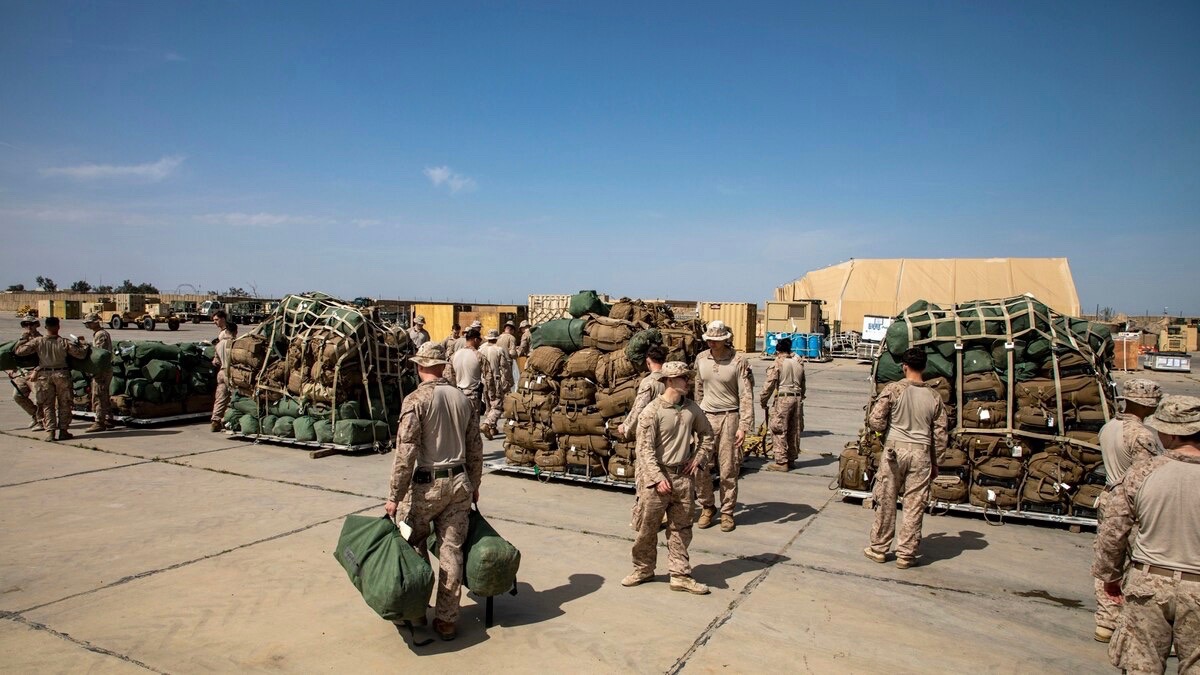


Alwaght- Full US withdrawal from Iraq on September 30 marked an end to two decades of a failed American strategy in one of West Asia's most important countries. The failure in Iraq was not a tactical incident but a collapse of a full-scale military model.
In 2003, the US invaded Iraq under the ruse of weapons of mass destruction, but at strategic level, it neither managed to establish a stable political structure nor did it succeed in turning the Iraqi government into a fully independent actor or one aligned with Washington. At the same time, the US failed to check the role and position of Iran and Islamic resistance in Iraq.
The cost of this adventure exceeded $2 trillion, thousands of American troops were killed and wounded, and hundreds of thousands of Iraqi civilians lost their lives. But the final outcome was neither dominance over Baghdad nor cementing an American-aligned order. On the contrary, it was the Islamic resistance in Iraq that won and transformed the power equations totally after two decades.
In this strategic defeat for the US in West Asia, the resistance factions, the will of the Iraqi people, and the Islamic Republic of Iran's strategy within the Axis of Resistance all played decisive roles. Washington believed it could force the resistance into retreat through military pressure and economic costs, but over the past two decades, Islamic resistance in Iraq, with its precise strategies ranging from drone and missile strikes on bases to targeting logistics lines and economic interests, pushed the US into a position where continued military presence became intolerable, all while sacrificing a vast number of martyrs to the resistance front.
In the months leading up to the withdrawal, and especially during the US-Israeli war on Iran, hundreds of attacks were launched on American positions, including with fiber-optic drones and guided missiles, by the Iraqi resistance, cementing the reality that the resistance is not a peripheral threat but a decisive actor on the battlefield.
The role of Iran and the resistance groups in this equation was decisive and historic. Tehran's strategic support for the Axis of Resistance, which is an anti-imperialist alliance, alongside the sacrifices of commanders like Iran's Qasem Soleimani and his Iraqi Abu Mahdi al-Muhandis, transformed the Iraqi resistance from scattered reactions into a coherent strategy.
What ultimately forced the Americans to withdraw was neither negotiation nor the Iraqi government's request; it was the Islamic resistance, which by targeting American interests pushed the cost of presence to an unacceptable level. As resistance leaders have emphasized, if not for the resistance, American forces would never have left Iraq. This victory is the fulfillment of the promise made in the blood of the resistance's martyrs and a turning point in the region's history.
The fallout of this exit goes well beyond Iraqi borders. A discourse has begun to circulate among the regional public opinion that sees the American superpower image with capability to determine the fate of the region using force sustaining extreme damage. Actually, what have the region nations learned now is that no matter how powerful a country is militarily, it cannot determine the fate of a region in opposition to the will of nations and popular resistance.
American pullout of Iraq marks a stark defeat of an imperialist project and start of a new era in which free nations of the region and Axis of Resistance with their resistance and sacrifices of their martyrs determine their fate. Indeed, it is an era in which the will of the opprsseed nations beats the war machine of overbearing and arrogant powers and flag of Resistance camp remains aloft from Baghdad to Gaza and from Yemen to Lebanon, symbolizing the independence and dignity of the nations.










