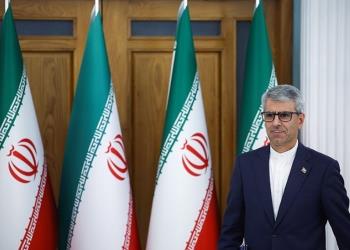





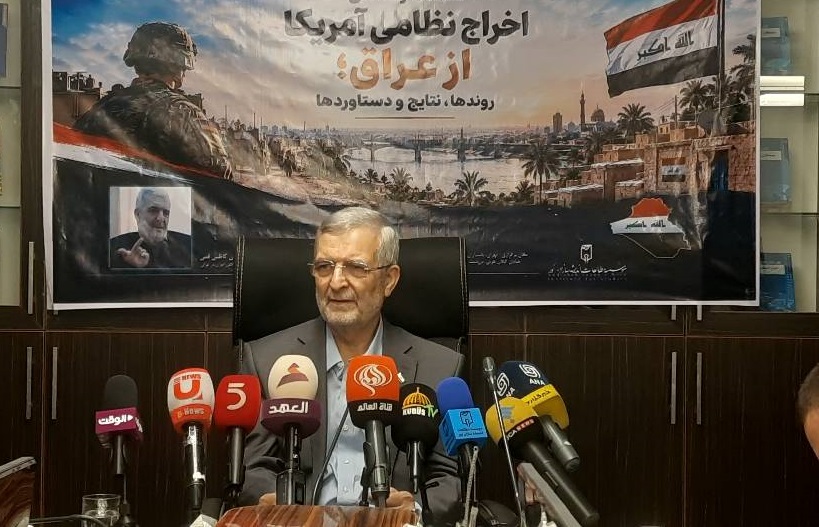


Alwaght- In a press meeting on the US withdrawal from Iraq, former Iranian ambassador to Iraq Hassan Kazemi Qomi commented on various aspects of US military presence in this country over the past two decades, saying that this relocation of forces to Jordan must be called "expulsion" of the American forces. He added that the September 30 exit marks a strategic defeat the US suffered not only in Iraq but also across the region and in foreign policy.
US ouster, a result of Iraqi people's resistance
The Iraqi affairs expert held that the expulsion of the American military from Iraq was yielded by unified resistance of the Iraqis, adding that resistance groups that were formed to help shape Iraqi political system, counter occupation and fight foreign-backed terrorism played an unmatched role in this accomplishment.
All of Iraqis, Kazemi Qomi said, were against occupation and this expulsion was a fruit of a social demand of the whole Iraqi people and it is not just about a specific group or faction.
Additionally, he maintained that to get a picture of the issue, we should look at the performance of the Americans. They never consider interests of other nations and solely pursue their own.
US pullout of the region to pick up the pace
Iran’s former ambassador to Iraq said the ouster of US forces from Iraq could accelerate American broader withdrawal from the region, arguing that Iran’s resistance to US and Israeli wars, combined with its armed forces’ targeting of American military bases, has deepened doubts among Arab leaders about Washington’s ability to guarantee their security. Many countries in the region, he said, have now concluded that hosting US troops does not necessarily bring security.
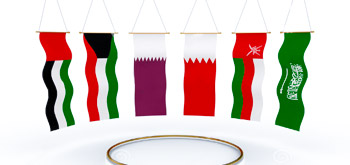
Kazemi Qomi, speaking on regional developments, noted that Saudi Arabia is pursuing various forms of engagement with US forces while simultaneously entering a new security pact known as the Mecca Pact, a development he called meaningful.
He continued that the martyred Supreme Leader of Iran Ayatollah Sayyed Ali Khamenei predicted that if another war broke out, it would be a regionalized one, and that is exactly what happened. Midway through the war, Arab countries in the region were calling Iran, asking how they could escape this quagmire.
He went on that the martyred leader’s message was that we must extend a hand of brotherhood to regional countries. Our main enemy is the US and the Israeli regime, and we must form a security coalition together.
Resistance in the region strengthened
Pointing to Palestinian and regional developments, Kazemi Qomi said that the Iranian nation rose and the armed forces acted very well, and meanwhile protest movements by the Palestinians and other nations in the region are in the making against the US imperialism.
He held that the American ouster from Iraq certainly influences the status of the Iran-led Axis of Resistance, as the anti-American sentiments are running high in the region.
He maintained further that despite all of the threats and heavy attacks on the people of Gaza, Yemen, and Lebanon, the resistance, unity of fronts, and anti-occupation struggles are witnessing a boost.
Weapons discipline instead of disarming
Kazemi Qomi then turned to a new vocabulary emerging around resistance groups, saying a shift is underway in Yemen, Iraq and Lebanon. Where the talk once centered on "disarmament", he said, the language of the resistance now features the phrase "weapons discipline."
In Iraq, he added, the debate is now focused on what will happen to the weapons of the resistance after US forces leave, and today the discussion is framed around weapons discipline.
Posing the question of what the philosophy of the resistance actually is, the Iraq affairs expert said the resistance emerged in response to the terrorism spawned by the US and serves the interests of the Iraqi people. The same dynamic, he said, applies in Lebanon and Yemen.
The Iraqi government is responsible for security
Turning to the argument that weapons must be placed under the control of the central government, Kazemi Qomi said the Islamic Republic of Iran has championed that position from the start.
Referring to past Iran-US talks over Iraq, he said that when Iraq was under American occupation and Washington had no intention of leaving, the Americans, mired in a security quagmire, raised the idea of negotiating with Iran.
The former Iranian ambassador to Iraq continued that the Iraqi government brought the matter to Iran, and Tehran stressed that the Iraqi government is responsible for the security case and that any negotiations must be conducted with the Iraqi government as a party. The Americans did not want this, but Iran refused, and ultimately the talks took on a trilateral format.
Iranian opposition to US security promises
Kazemi Qomi also addressed the strategic security agreement Washington had drafted for Iraq, saying the Americans wanted Iraq and its parliament to approve a document containing several critical provisions.
He identified the first as capitulation under which US soldiers would have been immune from prosecution for any crime committed in Iraq, mirroring what the Americans had once sought in Iran.
The second provision, the Iraq affairs expert added, was that Washington would serve as the guarantor of security and would itself determine what constituted a threat, and what threatened Iraq.
The Islamic Republic, he said, advised Iraqi leaders to reject any such arrangement. The Americans pursued the same playbook in Afghanistan, pressuring Hamid Karzai to sign the document, he noted. Karzai refused, but the next government, under Ashraf Ghani, signed it almost immediately.
Kazemi Qomi added that Ghani ultimately fled Kabul with opposing forces at the capital’s gates. The Americans, he concluded, were seeking to keep Iraq’s security file in their own hands as well.
US bases, the weak spot of Washington
Pointing to the impact of the recent developments on the American strategy and relocation of the American soldiers from Iraq to Jordan, Kazemi Qomi said that the American strategic loss in Resistance camp case primarily necessitates the US military exit from the region.
He added that the US is not the country it claims to be and this can be seen clearly from Iran's 15-month resistance and resilience, as well as the ouster of the US from Iraq.
He said strikes on the American bases are a fruit of resistance, saying that concentration of the forces in naval ships and Jordan military bases increases the threats to and vulnerability of them.
In operations in which these bases were struck in Jordan, the American casualties are high and this is driven by concentration of forces.
End of military presence not end of influence
Kazemi Qomi stressed that expelling the US does not mean an end to American interference there. The Americans had objectives behind their military presence, he said, and with this withdrawal, Iraqi sovereignty has taken a step toward completion, but that sovereignty, and the political primacy of the Iraqi state, is still not fully realized.
Iraq has moved a step forward on security, but the Americans now have other tools at their disposal and have taken Iraq’s economy hostage.
Turning to the history of American presence in the region, he said that after the Iran-Iraq war, the Ba'athist army and Saddam Hussein devised a new plan to invade Kuwait, an attack carried out with a green light from Washington, he asserted. There are documents for this, he held.
The former Iranian diplomat in Iraq continued that Imam Khomeini had also predicted that Saddam would turn on the Arabs after the war with Iran. He insisted that Saddam could not be trusted and advised the Arabs not to side with the Iraqi dictator against Iran, warning that Saddam would come after them too, and that is exactly what happened.
What did the US want fron Iraq war?
Kazemi Qomi, turning to the US invasions of Afghanistan and Iraq, said that after the collapse of the Soviet Union, Washington pursued global hegemony, and toward that end, sought to bring West Asia under its control.
The attacks on Afghanistan and Iraq, he added, fit within a new order the Americans were pursuing. After Afghanistan, he noted, the Americans floated extensive discussion about Iran and branded it part of an “axis of evil.”
The Iraq affairs expert said the conclusion reached by US officials was that they had to go into Iraq first, and that after Iraq, an attack on Iran would be easier, because Iran’s east and west would then be in American hands.
Kazemi Qomi added that Iran’s experience of eight years of war with Iraq, which is called "Sacred Defense" in Iran, also deterred the US from moving into Iran after Afghanistan, and that war became a deterrent lever preventing any American military entry into Iran.
Four US military aims in Iraq
Describing the occupation of Iraq as the first step in “New Middle East” project, Kazemi Qomi said the Americans pursued four objectives there: first, shaping Iraq’s political system on an American model; second, making the US military presence permanent; third, fully Americanizing Iraq’s armed forces; and fourth, managing Iraq’s foreign relations.
Had those objectives been realized in Iraq, he added, the groundwork would have been laid for easier American intervention in other countries across the region.
Kazemi Qomi, referring to the political climate at the outset of the occupation, said the Americans were intoxicated by an early victory after Iraq. But Saddam’s swift fall was not the product of American military might, he argued, it was the result of a rotten regime, and many Iraqi commanders cooperated with the Americans very quickly.
Failure of the American plan in Iraq
The US did not ask for the UN Security Council authorization for occupation of Iraq in 2003, to signal that things in the international order have changed and Washington is the top decision-maker.
He added that once the US became bogged down in Iraq, the martyred Leader’s prediction about the dangers of the American project in Iraq came true, at a time when the entire world was intimidated by the US, and no one dared oppose Washington.
Kazemi Qomi said France and Germany did not cooperate with the Americans in Iraq, and Washington in turn barred them from any role in Iraq’s political trajectory. Under those conditions, the Islamic Republic of Iran was the only country able to pursue its influence in Iraq.
He stressed that Iran’s most astute policy for freeing Iraq from the occupier and defeating the American plan was helping to form an independent government. Iraq’s state capacity was substantial, he said, and the emergence of resistance groups was likewise an effective policy.
He added that the Americans had no intention of leaving Iraq, but because their interests diverged from those of the Iraqi people, they were forced out, and the will of the Iraqi people and government ultimately settled on an American withdrawal.
Just how many defeats does this exit make for Washington?
Kazemi Qomi, saying the US has failed in every action it has taken against the Resistance camp in recent years, argued that the US exit from Iraq is not Washington’s first strategic defeat, it ranks as one more in a series. In 2006 in Lebanon, 2010 in Gaza, 2011 with the Islamic Awakening and the attack on Syria, 2011 with the creation of ISIS, 2015 with the 30-nation coalition attacking Yemen, and after that the 51-day war against Gaza, and in all of these, he said, the United States and its allies failed to achieve their aims and lost on every front. But, he cautioned, that is not the end of the story.
The Americans, he added, have been defeated in their confrontation with the Iranian people to this day, but this is not the end, and we must remain vigilant.
The US left Iraq, but it would not abandon its objectives
Asked whether the expulsion of US troops means an end to Washington’s interference in Iraq, the Iraq affairs expert said that absolutely not. The same thing happened in Afghanistan, he noted, and wherever else we look, the US has not abandoned its objectives.
Kazemi Qomi added that the US will not let go of Iraq, and after shedding its military uniform, it will pursue interference in Iraq through other channels.
He said that when Saddam mobilized to overthrow the Islamic Republic and failed, the Americans sought to create a balance of power against Iran. So they will not abandon their objectives in Iraq, he said, and Iraq must complete its sovereignty across every domain.
Iraq’s economy: US’s main lever
Iran’s former ambassador to Iraq identified the economy as one of US's principal tools against Iraq, saying Iraq’s economy is today held hostage by the US, and the Iraqi people are seeking to break free from an American-imposed economic order.
The next step for the Iraqi people, he stressed, must be liberation from that situation.
Pointing to continued US-Iraq security cooperation, also said Washington has announced that security cooperation with the Iraqi government will continue under new agreements, a red flag for Iraq’s sovereignty and independence.
ISIS threat not over yet
Referring to the possibility of insecurity continuing in Iraq, Kazemi Qomi said that the fact that the American president is complaining about our Kurdish friends shows that Washington may continue to use its instrument of destabilizing and this seriously runs counter to the Iraqi sovereignty.
He said that threat posed by ISIS terrorist organization is yet to fully end and the sleeper cells are remaining and their terrorist actions in Iraq are not unlikely.
Echoing the developments of 2011, the Iranian diplomat said that odds are the US unleashes to Iraq a new wave of insecurity to Iraq and this cannot be ruled out.
Iraq still facing multiple threats
Pointing to the threats still facing Iraq, Kazemi Qomi said Turkish troops remain present in northern Iraq, and parts of Iraqi territory serve as a base for groups opposed to Turkey.
Remnants of the Ba'athist regime, he added, are still seeking a return to power, and so threats persist inside Iraq. Iraqis also face threats from Persian Gulf Arab monarchies.
Kazemi Qomi said the Iraqi government acknowledges these threats and that the country’s entire border must be under the control of the central government.
Referring to the debate over “weapons discipline,” he stressed that both the Iraqi government and resistance groups are pursuing the issue, and it must not be allowed to a challenging point.
Five US threats to Iran
Kazemi Qomi in another part of his comments said that the Americans have had no gains in military area against Iran, but they pose five types of threats to Iran. These threats are economic, propagandastic, cultural, cognitive warfare, diplomatic, and military.
US outraged by the US pressures
Referring to restrictions imposed on flights, Kazemi Qomi said Iraq has seen airports shut down and the Americans made a major noise about Iraqi compliance with anti-Iranian embargo, but the majority of Iraqis, along with religious authorities, clerics and state officials, took a stand and refused to submit to an American dictate.
It was announced that Najaf airport would reopen and that all airports would follow, he added, but Iraqi anger over the current situation runs deep.
He held that the US is at war with the Iranian people and, in pursuing its illegitimate aims, pays no heed to the harm inflicted on others. The air blockade hurts the Iraqi people, he said, yet Washington ignores that, and one reason for American failures is precisely this disregard for others’ interests.
Many countries, he added, refused to comply with the blockade, and the capacity and pride of the Iraqi people show that Iraqis, too, will get past this stage.
Optimistic about future of Iran-Iraq ties
Wrapping up with an optimistic note on Iran-Iraq relations, he said that we have weathered far harder conditions and have seen far tougher positions from Iraqi governments.
Iran, he added, helped shape Iraq’s political system, and wherever Iran has stepped in, it has done so to offer advice, not to interfere. Tehran also rushes to people’s aid when they face threats.
The former Iranian ambassador to Iraq continued that they have seen positions from previous Iraqi government like this one's, but the Islamic Republic does not seek a rapid, tit-for-tat response. Previous Iraqi governments also took positions that were gradually tempered, because they saw the realities and came to understand Iran’s standing and the Tehran's brotherhood.
The US, according to Kazemi Qomi, has given up on trying to disrupt Iran-Iraq relations, and the Iraqi people understand this, so patience is required.
Referring to some differing stances from Iraqi officials over the recent restrictions, he said there is dissent inside Iraq over certain positions as well. The prime minister has said he issued no such order, the transport minister said he was in the hospital, and the Najaf governor denied giving the instruction for the move.
The Iraq affairs expert added that the heads of Iraq’s three branches of power have also taken a position and held the airport company responsible. Even Iraqi officials themselves have disavowed the move, he said, calling it a sell-off of Iraqi sovereignty.
He stressed that Iran is focused on resolving the issue, and that Iraq’s parliament, despite American pressure, has grown stronger in terms of the scope of the resistance and its Islamic character.
Iraqis seeking freedom from economic dependence on the US
Finally, Kazemi Qomi said, the reality is that the US has economic levers and uses them against the Iraqi government, something the people of Iraq and officials do not tolerate.
For the Iraqi government to get rid of the dependence in favor of its interests, this intolerance should continue and this will happen. Tehran will respond in a well-intentioned manner.
He maintained that if the airports do not reopen and flights do not resume, it is not unlikely that the people of Iraq will decide not to allow other flights. Actually, these restrictions do not serve Iraqi people's interests.