













Alwaght- Israeli war on Lebanon’s Hezbollah resistance movement has just entered a sensitive stage as Tel Aviv ups its attacks on Lebanon. On the other side, the northern Israeli borders with Lebanon are under Hezbollah’s drone and rocket fire. Remarks and analyses published by senior Israeli analysts and officials show that Israel is facing a serious crisis on its northern front since the so-called ceasefire deal has become a fatal and daily war of attrition.
Nahom Barnea, a prominent Israeli political analyst and strategic Israeli journalist, in a op-ed published by Yedioth Ahronoth describes this reality as the broadening defeat to the Israeli regime. Commenting on the erosion of the deterrence, Barnea says that "no matter how big the Israeli army furry is, no matter how big is its roaring, the defeat is destructive. Without an alternative plan, Israel will struggle in an endless three, or perhaps, four-front war. We are controlling lands that do not belong to us, with soldiers that do not belong to us, in a bloody war, against enemies we do not know how to deter."
This admission shows the depth of the strategic crisis, since the Israeli war machine has not managed to secure a true victory.
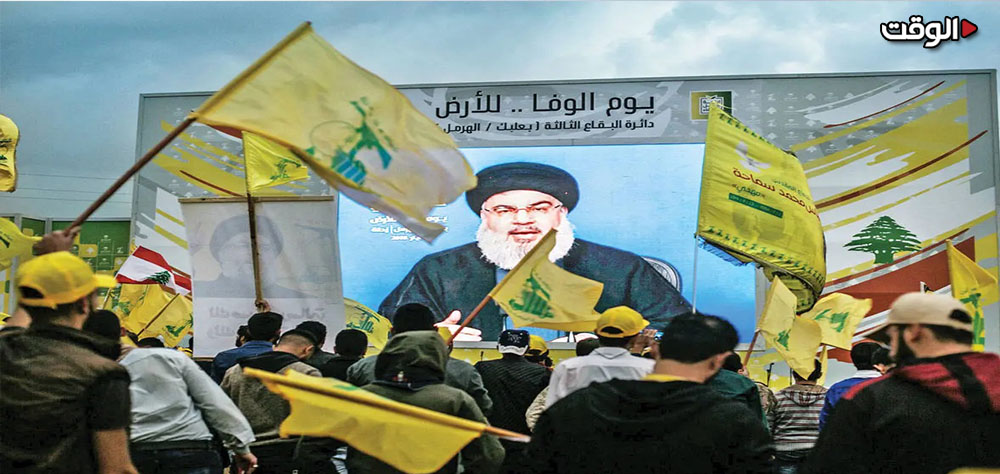
New Hezbollah equation
As Israeli attacks intensify in southern Lebanon, Hezbollah has imposed a qualitative deterrence equation by making intensive use of its attack drones, fundamentally reshaping battlefield tactics.
In a report by Elisha Ben Kimon, military correspondent for Yedioth Ahronoth, he explains how Hezbollah’s drone threat has evolved from a mere tactical nuisance into an existential danger, disrupting troop movements deep in southern Lebanon and along the border.
“If in the past the drone threat was seen by Hezbollah’s fighters as a tactical threat, the sequence of these attacks means that Hezbollah’s drone strikes have become a strategic threat,” he writes. “Hezbollah is steadily improving its use of explosive drones and waging intense combat against army forces.”
Meanwhile, Yaron Avraham, a political analyst for Israel’s Channel 12, published a candid admission from a senior Israeli official who took part in restricted security consultations. Describing the helplessness in the face of these drone attacks, the official said: “We are now up against a deadly reality, like playing a real game of roulette... The truth is, our hands are tied, and this situation must change now.”
Differences among political and military leaders in Tel Aviv
Meanwhile, Al Jazeera has reported on the internal differences between the military and political officials of Israeli regime, saying that the army feels its hands tied while it wants to expand the operations in Lebanon and bomb Beirut to restore deterrence, while Netanyahu is uncertain about the fallout, as it has just canceled a planned heavy bombardment campaign in southern Beirut.
Yoav Limor, military analyst for Israel Hayom, writes about the disconnect between military and political leadership in Tel Aviv over the Lebanon front: “The Israeli army has been saying for weeks that the situation in Lebanon is unbearable and impossible... There is no way, nor will there be, to fight with our hands tied: either we fight or we don’t. What the army is doing now is essentially inaction, because it is forced to wait for Netanyahu’s green light from Washington.”
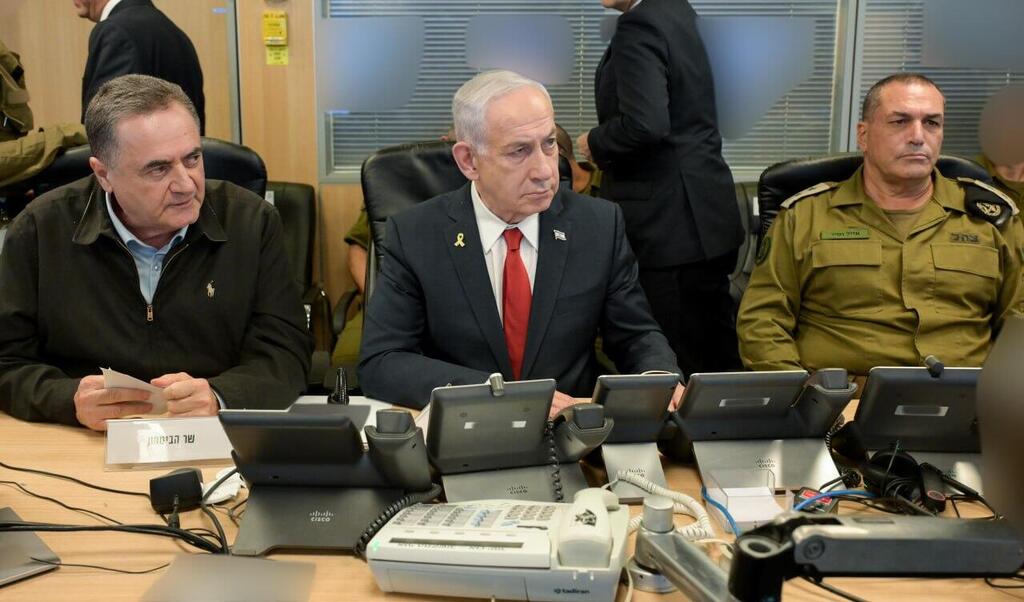
These divisions, it is said, have even spilled over into internal cabinet meetings. According to a report by Yaron Avraham on Channel 12, Army Chief of Staff Eyal Zamir has openly called for an end to small-scale operations and is pushing for a major military offensive in Lebanon. But so far, Netanyahu has blocked a large-scale operation in Lebanon, fearing the consequences, because Trump has asked Netanyahu to call off bombing raids on southern Beirut. Washington is worried that bombing Beirut could provoke Iran and break the ceasefire with Tehran, especially after Iran warned that if tensions escalate in Lebanon, the ceasefire would become pointless. So Netanyahu has not gotten Trump’s approval for massive bombing of Beirut, while the Israeli military is simultaneously pressuring him to order large-scale strikes on southern Beirut.
Why are army commanders insisting on major offensive?
The push by the military leaders for a massive invasion and bombing of Beirut’s south is driven by pressure of the displaced northern front settlers who want to see war expanded for restoration of security of the northern settlements. Avi Ashkenazi, a military analyst and author, in an article published by Ma'ariv on May 25 says that Netanyahu limited the powers of the army chief and prevents power projection by the army as eyed by the army generals. But the reality is that the Israeli soldiers have become easy targets and the settlers living in settlements on the contact line are being targeted. This is while the military commanders are insisting on a major offensive.
Haaretz has reported that the popular pressure in the northern, along with rising casualties of the soldiers and settlers, has left the political leadership in from of two bitter choices. Either accept the Hezbollah-imposed war of attrition equation or flee forward by starting a full-scale war to destabilize the whole Lebanon.
That said, escalating Israel’s war in Lebanon still carries the risk of strategic defeat for Tel Aviv. The occupiers have no effective answers to Lebanon's resistance drones, which could turn any large-scale adventure into an even deeper, more comprehensive failure.
On top of that, the Israelis are yet to find a solution to counter Hezbollah's drones. If operations expand in Lebanon, Israeli military casualties from Hezbollah drone strikes could multiply.
In current conditions, the Israeli army is trapped in a quagmire in which the longer it stays, the harder and costlier the exit becomes.