














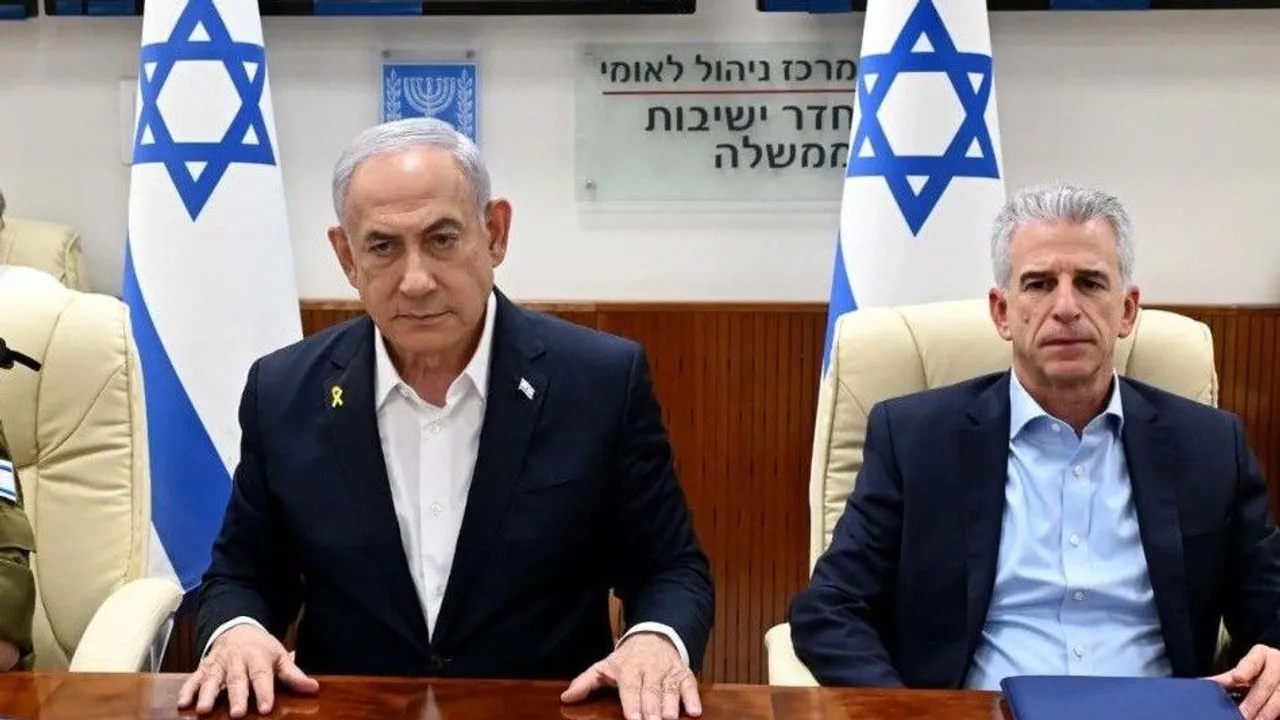


Alwaght- Amid the joint American-Israeli aggression against Iran, reports in Israel suggest that deep gaps over the Iran war agenda exist in Israel. According to Israel Hayom, while the Israeli army finds removal of enriched uranium from Iran as the ultimate goal of war and is solely following this aim, Mossad believes that the ultimate goal should be regime change in Iran.
On the other hand, the Israeli outlet reported that the senior army officials in Tel Aviv are deeply disillusioned with the US decision to quit the idea of seizing the Iranian uranium through a military operation, with assessments suggesting that the 38-day war compared to the 12-day war of June last year has been left unfinished roughly without any achievement.
Mossad argues that if the Islamic Republic remains ruling in Iran and several tones of 30-percent enriched uranium stay in Iran, Tehran will be a few years from a nuclear bomb and in practice no strategic change has taken place after war. Mossad experts also claim that an unsanctioned Islamic Republic will be wealthier and more dangerous and more eager to annihilate the Israeli regime and it is only the regime change in Iran that can stop the plans of Tehran to destroy Israel.
Israel Hayom reports that Mossad backs destruction of Iranian refineries and power plants, and is looking forward to see Iran in power blackout to accelerate what it calls potential rebellion against the Islamic Republic .
Mossad's plans fail in Iran war
Israeli media outlets, including the Jewish News Syndicate (JNS), have revealed Mossad’s ambitious, and indeed impossible, schemes during the war against Iran. According to the Israeli outlet, one Mossad plan involved sending thousands of armed Kurdish militants from western Iran into other regions. But the operation failed after President Recep Tayyip Erdogan of Turkey called his US counterpart, voicing strong opposition to arming Kurds for incursions into Iran, calling it a threat to Turkey’s national security. As a result, Mossad’s plan to deploy armed Kurdish rebels into Iran hit a dead end.
Another failed Mossad plot during the anti-Iran aggression targeted Iran’s energy and power infrastructure. Mossad believed the strikes would pave the way for toppling the regime, but a call from Qatar’s emir to Trump derailed that scheme as well. The emir, worried about Iranian retaliation, pressed Washington to halt the attacks on Iran’s infrastructure.
So far, none of Mossad’s plans for regime change in Iran have borne fruit, as these operations have consistently failed to secure the necessary backing from Washington.
Long-lasting differences between Mossad and army
This is not the first time Mossad and the Israeli military have butted heads over operations. Many experts say that throughout Israel’s short history, the army, especially since the 1973 war with Arab armies, has grown highly cautcious, consistently pushing for more restrained approaches to target selection. That is because military commanders quickly find themselves in the crosshairs of media criticism.
Mossad, by contrast, tends to be far bolder. Given the nature of its mission, largely operating outside occupied territories, running espionage and sabotage missions across the region, the spying agency habitually proposes more aggressive plans than the military does.
But these rifts also run deeper, rooted in domestic politics and turf wars between Tel Aviv’s security establishments. The military is keen to prevent agencies like Mossad from fully dominating Tel Aviv’s fateful decisions. As a result, army commanders often push back against Mossad’s proposals or come up with alternative plans of their own. Mossad does the same thing، too. When the military digs in on a particular operation, the spy agency takes its own plan straight to the prime minister’s office, trying to sideline the military’s blueprint and replace it with its own. Actually, this dispute between the army and Mossad has been on over power in Tel Aviv for a long time, each seeking to land a blow to the opposite side's plans proposed to the prime minister. This explains their current deep difference over the objectives of Iran war, differences that disclose the gap in Tel Aviv among the Israelis even at the highest levels of power and amid war against Iran.










