
















Alwaght- The US-Israeli war on Iran has not been a simple military confrontation. This war has taken place against the backdrop of a global competition over trade and energy corridors becoming the key geopolitical battlegrounds. Now in a post-war condition, the main question is: How will this war influence Iran's position in the strategic energy and transit corridors at an international level?
Before this war, perhaps one of the most important geopolitical issue in the world, especially West Asia region, was the "war of corridors."
Corridors are actually an economic-geopolitical concept that include routes, railways, energy transit routes, and communication ways across the globe. Control, creation, or change of these routes has become the core of geopolitical issues in recent years.
Corridors within scope of Axis of Resistance-controlled waterways
One of the most important regional corridors is the Bab-el-Mandeb Strait. This corridor is one of the core routes of energy and goods transit from Asia to Europ. Last year’s escalating tensions and the Yemeni Ansarullah Movement’s increased control over the strait have led to a sharp rise in risks and transit costs, particularly driving up insurance premiums. This situation has the West on high alert, deeply concerned about the “Axis of Resistance” potentially dominating this vital strategic passage. Consequently, Western powers are actively exploring alternative routes. Egypt’s recent efforts to expand and deepen the Suez Canal can be seen as a direct response to these strategic shifts.
A similar dynamic is unfolding at the Strait of Hormuz. Recent conflicts have underscored Iran’s actual control over this crucial waterway. The combined dominance over both the Bab-el-Mandeb and Hormuz straits is seen as a significant potential threat to Western interests, a threat that has prompted previous Western strategic planning. In this context, the development of alternative corridors has gained paramount importance.
One such initiative is the India-Middle East-Europe Economic Corridor (IMEC). This multi-modal project integrates sea, rail, and energy routes, aiming to connect India, via the UAE and Saudi Arabia, to the Mediterranean and Europe.
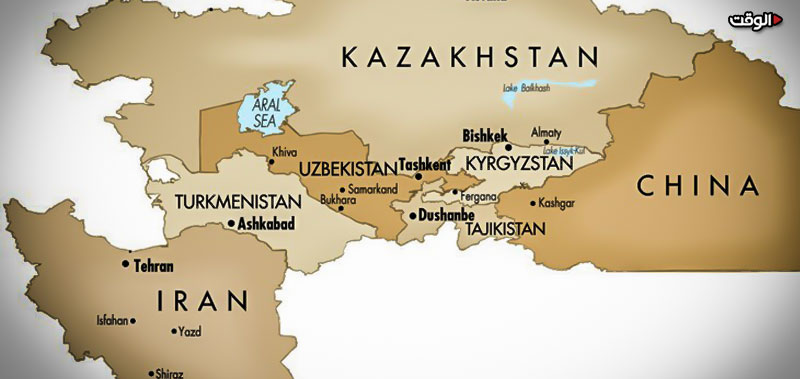
Another significant project is the International North-South Transport Corridor (INSTC). This network of diverse routes potentially begins in India, traverses Iran, the Caucasus, and Russia, ultimately reaching Europe. The development of the Port of Chabahar and joint investments between Iran and India fall under the umbrella of this corridor.
The “Middle Corridor,” also known as the “Eurasian Bridge,” positions itself as another vital link, with Turkey playing a pivotal role. This route originates in China, passes through Central Asia and the Caucasus, and then extends to Turkey and onward to Europe.
Another ambitious project is China's Belt and Road Initiative (BRI), representing a vast network of land and maritime routes designed to connect China with Europe, Africa, and other global regions.
Recent war and failure of plan for Iran corridor isolation
Corridors have a dual nature. On the one hand, they critically require multilateral cooperation and establishment of common infrastructures and on the other hand due to their future strategic significance to the world economy, the countries seek to take a center stage in them, or block presence of rival or hostile sides in them. An instance of this competition is India and Pakistan that are vying to be central to the RBI megaproject.
Iran was in a similar status ahead of the war. Despite its pivotal geopolitical position in numerous proposed corridor projects, Western and Israeli efforts have been strong to sideline or minimize its involvement. This raises a crucial question: How will the recent conflict impact Iran’s standing in this evolving landscape?
For forty days, Iran demonstrated a remarkable capacity to defend itself against the US and Israeli aggression. This complex defense, according to many analysts, positions Iran as a victor in this confrontation. A paramount factor in the viability of corridor projects is sustained security. These corridors demand massive investments and function as the vital arteries of the global economy. Any disruption, even temporary, or the threat of damage to these infrastructures can have far-reaching consequences.
Iran has already secured a significant stake in the corridor equation. Its geopolitical location and mastery over the Strait of Hormuz inherently make it a key player. However, Iran must now focus on mitigating the shadow of war, a strategy evident in its recent actions. Through extensive resistance and efforts to weaken the military and security infrastructure of the U.S. and Israel, Tehran has taken a crucial step in averting direct conflict on its territory.
Furthermore, the Islamic Republic’s active role in striking US allies in the region signals its potential as a reliable trade partner. It has proven itself capable of defending the interests of its economic partners, even under the most dire circumstances, such as wartime.
So, the recent war must be regarded as marking a turning point in the geopolitical equations of corridors. Though the US and Israel aimed to weaken Iran's regional standing and hit its role in large-scale transit initiatives, the practical outcome can be a backfiring, leading to regional and international actors to develop an understanding of Iran's geopolitical might.
In a world the rivalry over energy and goods transit routes runs higher day by day, the country that can both ensure security of the corridors and at the same time utilize its position as an East-West link can rise as a determining player, a position that post-war Iran can move to consolidate more than ever.










