


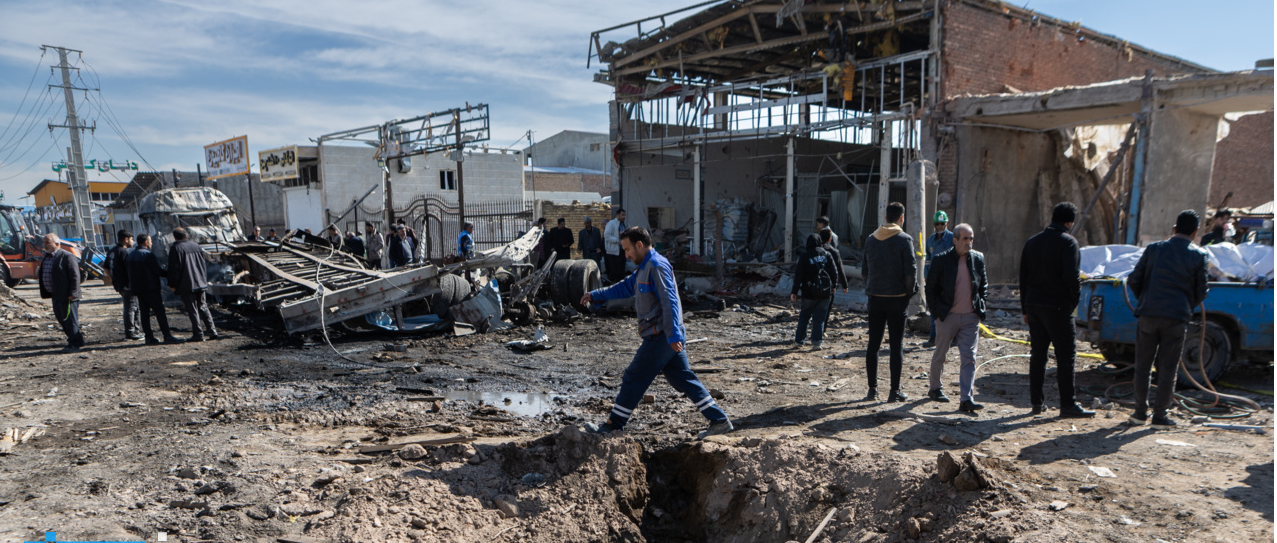


Alwaght- While the international laws ban any attacks on civilians targets and labels ignoring this principle as the impairment of one of the most essential principles of the international legal order, the American-Israeli aggression against Iran has shown that Washington and Tel Aviv in their attacks are increasingly blurring the lines between military and civilian targets.
More than once, Trump alleged that the attacks are meant to destroy Tehran's military power, but since the early hours of the aggression, the US forces proved they know no humanitarian red lines, and that destroying Iran and what Trump calls returning Iran to the "Stone Age" is their top priority.
A ruthless attack on Minab Elementary School in southern Iran on the first day of war that killed 170 innocent students bore witness to the fact that the enemies have violated the humanitarian laws and principles. Crimes of this kind did not stop even despite global condemnation began to pour and the Americans and Israelis have kept committing similar criminal actions, defying the international laws.
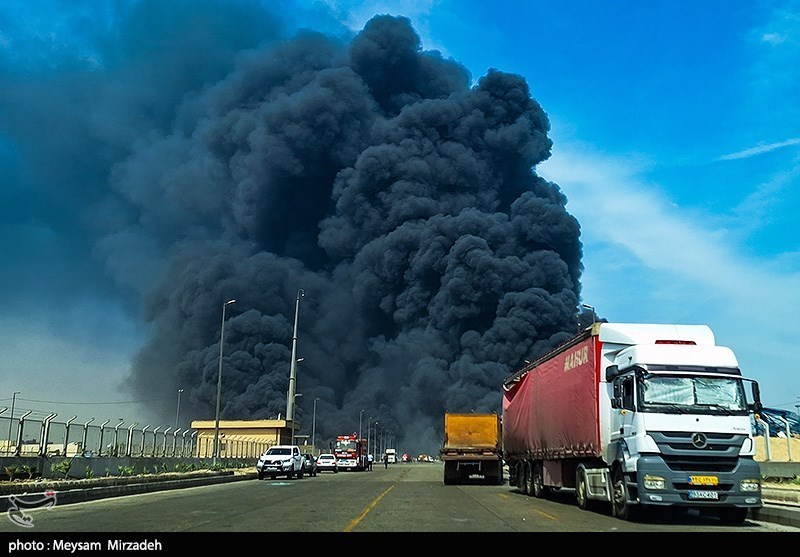
In the 36 days since the war began, civilian centers have been hit more frequently than military objectives, forcing thousands from their homes.
The Red Crescent Society of Iran issued a stark report on Thursday, detailing the devastating toll of the war. The announcement revealed that a staggering 115,193 civilian units have suffered severe damage or outright destruction. This includes 91,498 residential units and 22,580 commercial properties. A significant portion of these damages is concentrated in Tehran province, underscoring the widespread impact on civilian infrastructure.
Furthermore, 763 schools and educational centers, along with 18 Red Crescent facilities, have sustained critical damage and are no longer operational.
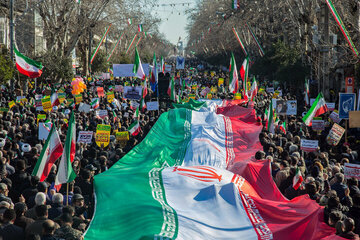
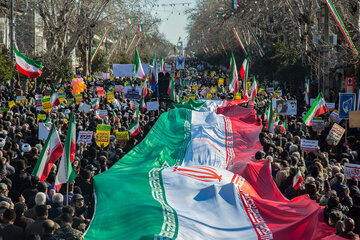
These large-scale criminal attacks against ccivilian sites points to objectives extending beyond the military. This deliberate strategy appears aimed at eroding public resilience and inciting dissent against the Islamic Republic by striking residential areas and causing civilian casualties. However, this tactic has backfired, as public demonstrations on the streets have demonstrated the Iranian people’s unwavering resolve against the aggressions of the US and the Israeli regime.
The assault on residential and civilian areas is more than just a military act; it carries profound human, economic, and social consequences. Disruptions to transportation system, damage to educational institutions, and strain on public services ultimately increase the vulnerability of the civilian population, a situation in direct conflict with the spirit and philosophy of humanitarian law.
Health and medical centers major targets of aggressors
Though according to the laws of conflict health centers should be immune to attacks, no day of war has gone without Israelis and Americans not bombing these centers. Attacks on hospitals, rescue teams, and emergency services in some cities are telling examples of crimes Washington and Tel Aviv are committing.
According to the deputy health minister of Iran, so far 350 health and medical centers have inflicted damage as a result of the attacks, 30 of them hospitals.
He continued that as a result of a missile attack on Tofigh Daru on Thursday, a pharmaceutical company, production lines and R&D part of the company were totally destroyed.
"Since the start of war, 24 pharmaceutical units have sustained serious damage as a result of bombing. However, production and supply of drugs and vital material continue unabated.
The enemy’s barbarism reached a new peak with attacks targeting medical centers, most notably the Iranian Pasteur Institute, which has been struck three times. According to the head of the Pasteur Institute, sections such as the Cell Bank, Malaria Research, Clinical Research, and Biotechnology departments have sustained significant damage, with parts of the buildings also destroyed.
Despite the intensity of these attacks, the institute continues its vital operations, providing vaccination services, offering diagnostic services through national reference laboratories, and distributing diagnostic kits across the health laboratory network. The Pasteur Institute, one of the region’s oldest medical centers, was established in 1920.
The scale of attacks on medical facilities has drawn international condemnation, prompting the World Health Organization to voice grave concern. The WHO director-general has warned that these assaults on Iran’s health and treatment infrastructure place the lives of patients and medical staff at serious risk.
Attacking science and education center
Like civilian centers, Iran's scientific and academic centers came under attacks since the day one of war. Industrial University of Isfahan was the first academic site to suffer bombing over the past two weeks. Actually, it came under two attacks, sustaining damage in some of its parts.
Tehran University for Science and Industry also was among the targets of Israeli and American bombing, with some its research departments sustaining serious damage. Shahid Beheshti University in Tehran was also attacked on Friday twice. Explosions hit its School of Laser, causing fire to the building.
Kermanshah School of Dentistry is among the facilities that have been hit, with reports indicating that parts of the building and its infrastructure sustained damage during these attacks.
Several other scientific centers have also been struck by enemy projectiles, drawing a wave of domestic and international condemnation. This hostile act not only targets the security of academics and the nation’s scientific environment but is also a direct assault on intellect, research, and freedom of thought.
While Western powers and Israelis annually host ceremonies and award prizes to elite scientists and professors, projecting an image of valuing knowledge and science, they paradoxically attack scientific and academic centers in Iran.
Having failed to achieve their initial objectives, the adversaries have now turned their focus on the universities and scientific centers to upend their defeats, while these institutions and universities are symbols of development, progress, and the training of specialized human capital.
The American-Israeli attacks have revealed the enemy's profound grudge towards Iran and its scientific progress that is a fruit of it standing on its feet through decades of sanctions, departing from a dark period under the pro-Western Pahlavi dictatorship whose defining feature is its scientific backwardness and reliance on the West. This reality has its precedents in the American and Israeli criminal attacks on various countries and nations over the part 70 years from Vietnam to Gaza.