















Alwaght- As tensions between the US and Iran escalate and risks of a direct confrontation grow higher, the eyes of international observers are set on West Asia region. Amid American military amassment in the region, a question presents itself: Is Washington’s air defense power efficient enough to counter Iran’s missile power?
American officials have said that in case of orders by President Donald Trump, the military would be able to launch limited airstrikes against Iran, but any large-scale campaign Trump is seeking to prepare for will very likely draw Iran’s reciprocal response. So, the US needs a strong air defense system to protect the American forces and allies in the region.
That stands as a drive to the US deploying further anti-missile batteries for better protection of the Israeli regime, Arab allies in the Persian Gulf, and the US forces against Iranian retaliation and so prepare for a protracted conflict.
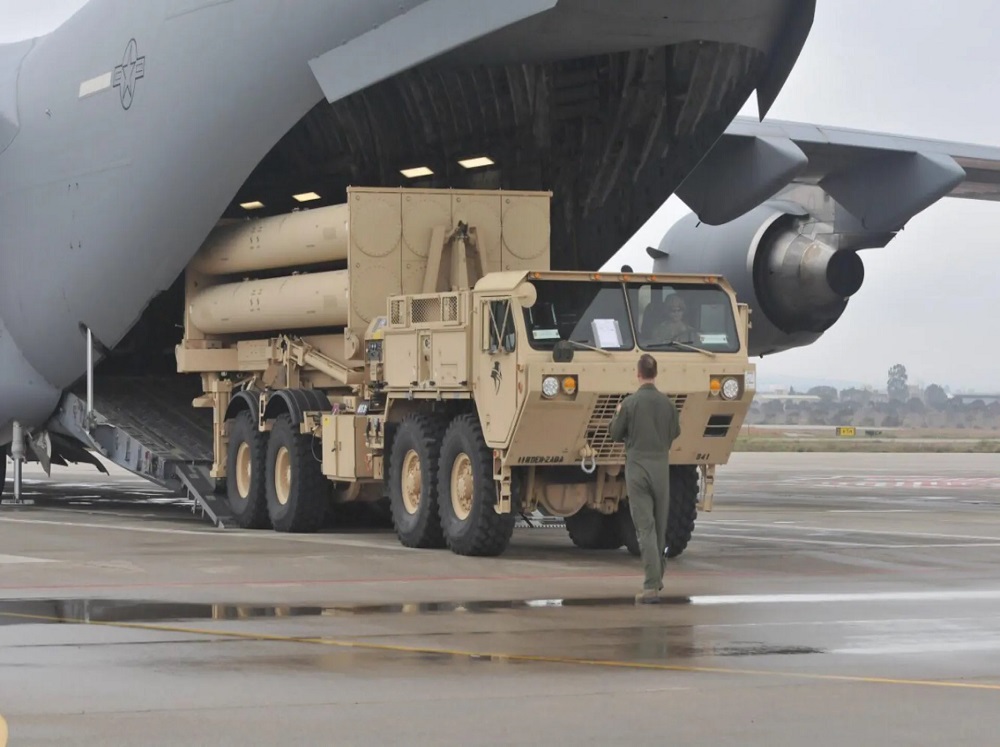
While the US military already maintains some air defenses in the region, the Pentagon is now deploying additional THAAD and Patriot interceptors, according to defense officials. Flight tracking data and satellite imagery show the systems are heading to bases hosting American troops across West Asia region, including in Jordan, Kuwait, Bahrain, Saudi Arabia, and Qatar.
The THAAD system is designed to intercept ballistic missiles in space, while the Patriots counter lower-altitude, shorter-range projectiles.
This deployment follows the recent positioning of the aircraft carrier USS Abraham Lincoln in the northern Indian Ocean. Its carrier strike group includes three guided-missile destroyers, the USS Frank E. Petersen Jr., USS Spruance, and USS Michael Murphy, all operating near the Lincoln.
Separately, the US Navy has positioned two destroyers, the USS McFaul and USS Mitscher, in the Persian Gulf.
In the Red Sea, it has deployed the guided-missile destroyer USS Delbert D. Black. Reuters reported that with its arrival, the total number of US destroyers in West Asia has risen to six.
Meanwhile, the Navy has stationed the USS Bulkeley and the USS Roosevelt in the eastern Mediterranean Sea, near the occupied Palestinian territories.
Iran’s target bank broad enough
The heavy deployment of the air defenses to the regions signals Washington’s concern about Iranian resolute response to any aggression. Mobilizing all of their defense and air defense capacities, the American officials are pushing to prevent strikes to their forces and interests in the region. Still, military experts warn that even deployment of further air defenses does not shield the American military bases and naval assets against Iranian strikes.
Iran and its allies under Axis of Resistance already gold a broad list of potential targets that includes naval fleets, military bases, intelligence, political, and spying posts across the region and particularly on Israeli regime, as well as oil tankers in the Persian Gulf and the Sea of Oman, and even the oil platforms of allied countries like Bahrain, the UAE, Saudi Arabia, Qatar, Jordan, and Kuwait within Iran’s fire range of ballistic mid and long-range missiles. This is what complicates Washington’s defense calculus.
Iranian officials have repeatedly warned that in case of an American strike, the aspects of response will be wade-ranging and regional. This diversity of targets poses a serious challenge to the US and its allies and requires concentration and precise planning to counter saturation attacks by Iran.
This means that solely deploying air defense systems without taking into consideration the vast range of threats does not ensure security of the American forces and allies in the region.
US short of THAAD systems
Despite the US military’s heavy reliance on THAAD systems to counter potential Iranian missile attacks, mounting evidence indicates these batteries face critical munition shortages. Their operational readiness may be severely compromised in a worst-case scenario, raising doubts about their ability to sustain an effective defense.
A National Interest report several months ago sounded the alarm, saying that during the 12-day conflict between Israel and Iran, over 150 THAAD interceptors were fired to counter Iran’s more advanced ballistic missiles. This figure is more than triple the US Army’s average annual procurement of just 40 interceptors since 2010. At a cost of $15.5 million per interceptor, this trajectory is unsustainable for the armed forces. Even if the Pentagon’s future orders exceed the mere 12 interceptors currently budgeted for 2025, it would still take three years from contract to delivery to replenish stocks.
Euronews reported that analysis indicates approximately one-quarter of the THAAD interceptor inventory was expended in that 12-day battle in June. A significant portion of this stockpile has been depleted, and given the current production rate, a full rebuild could take between 3 to 8 years.
So we can suggest that over the past seven months, Washington has taken no effective action to replace the spent THAAD reserves. This is particularly alarming considering that Iran fired only a tiny fraction of its vast missile arsenal during the 12-day exchange. In an apocalyptic conflict, thousands of missiles would rain down on targets, overwhelming current defenses.
Unofficial reports suggest the US inventory of Patriot interceptors has dwindled to just 25 percent of the levels required by the Pentagon’s own defense plans.
This weakness in interceptor stocks means that in any potential conflict, the US missile defense shield would be severely challenged in the face of massive, sustained missile barrages.
Iran’s diverse capabilities
The considerable point that draws distinction between possible US war on Iran and the 12-day war is the meaningful proximity of the US airbases in the Persian Gulf to the Iranian borders.
In the June war Israel waged, the Iranian missiles had to travel around 1,100 kilometers before highly precisely striking their targets in the Israeli regime. But in a potential new war, the American military bases in the Arab countries, as well as naval fleets and other strategic targets, are way closer to Iran. This shorter distance grants Iran the advantage of more precise, more powerful, and shorter flight times in missile strikes. At the same time, the US will suffer from limited time of response.
The sheer volume of potential short-range, medium-range, and cruise missile salvos from Iran would itself overwhelm Washington’s regional air defenses, drastically diminishing their ability to achieve full interception.
Compounding this challenge is Iran’s arsenal of thousands of combat and loitering munition drones. Their widespread deployment could inflict severe damage on critical U.S. facilities across the Middle East. Mass drone attacks not only swamp and saturate expensive THAAD and Patriot systems but also, due to their low production cost and high destructive potential, represent a highly efficient and cost-effective asymmetric tool for Tehran. This capability allows Iran to wage a modern, attritional warfare campaign, optimally employing drones to exhaust an adversary’s defenses.
Furthermore, unlike during the 12-day conflict, Iran now possesses the ability to leverage its naval fleet for land-attack missions from the sea, adding another complex vector to the threat matrix. This diversification of attack platforms severely constrains an adversary’s response options and complicates the defensive calculus.
Adding another layer of complexity for US military planners is the daunting task of establishing a viable air defense umbrella over a wide spectrum of potential Iranian targets scattered across the region. This challenge is further intensified by the unpredictable, spoiling actions of Iran-aligned resistance groups in Lebanon, Iraq, and Yemen, which could open simultaneous, chaotic fronts, stretching US and allied defenses beyond their limits.
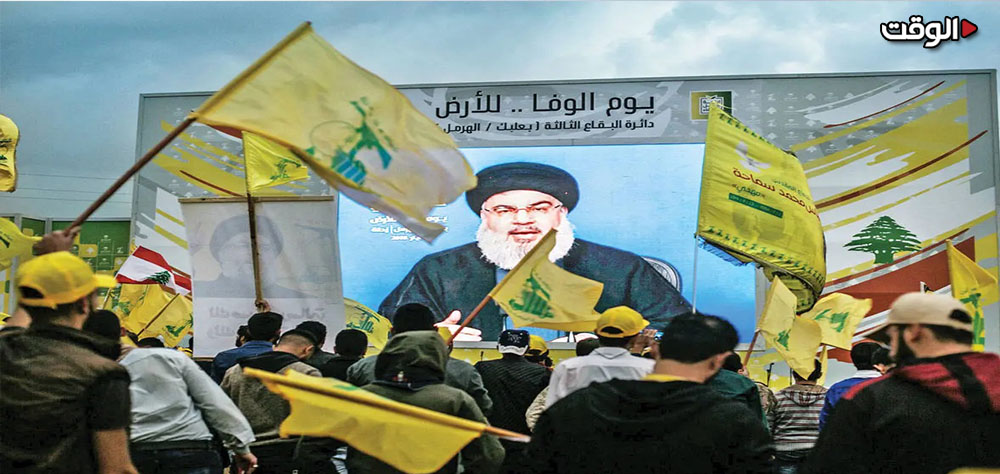
In recent days, these resistance groups have warned that should war against Iran begin, they will attack American positions and interests across the region, adding that neutrality makes no sense at this historic juncture.
The outcome will be dramatic military damages to the US military assets and interests in the region. That may be the reason why in recent days American officials have cast doubt on the rate of success of potential operations against Tehran. Suzanne Maloney, a former Iran affairs advisor to the State Department under Bush and Obama, said: “The air defense question is key—the extent to which we have sufficient materiel to ensure that our troops and assets in the region are going to be secure against a kind of Iranian retaliation.”
Maloney and some of other American officials believe that if Washington launches a massive air campaign, Tehran will mobilize all of fire mobilize maximum firepower using short-range and mid-range missiles against the American and Israeli positions. So, if the US lacks sufficient air defense coverage, it will suffer heavy damage.
Lack of an integrated air defense network
The US failure to establish a massive, networked air defense shield against Iran’s missile upper hand should not be solely seen from the lens of current conditions and the technical and logistical difficulties of deploying these military assets. Rather, experience has shown that this scenario is essentially failed.
Under President Joe Biden, the US was to set up an integrated air defense network covering the Arab allies and Israeli regime to counter Iranian missiles and drones in case of a regional war, but the plan remained unfinished, hit by high costs and technical difficulties. Added problem was the awareness of ineffectiveness of such idea against growing Iranian missile power. So, Trump’s administration cannot rely on already failed military mechanisms to counter Iran at the shortest possible time.
Part of the US air defense limits was exposed when Iranian forces in June struck Al-Udaid air base in Qatar, the largest US military asset in the region. Responding to the US attacks to its nuclear sites, Iran fired 14 missiles at the base, with Patriots failing to intercept all of the missiles. While the US claimed only 1 missile landed in the base, Iranian officials were firm to say the recorded 6 effective landings. Despite the US censorship, later reports by American media outlets confirmed the scale of damage and also knocking out a strategic radar system operating in the base.