














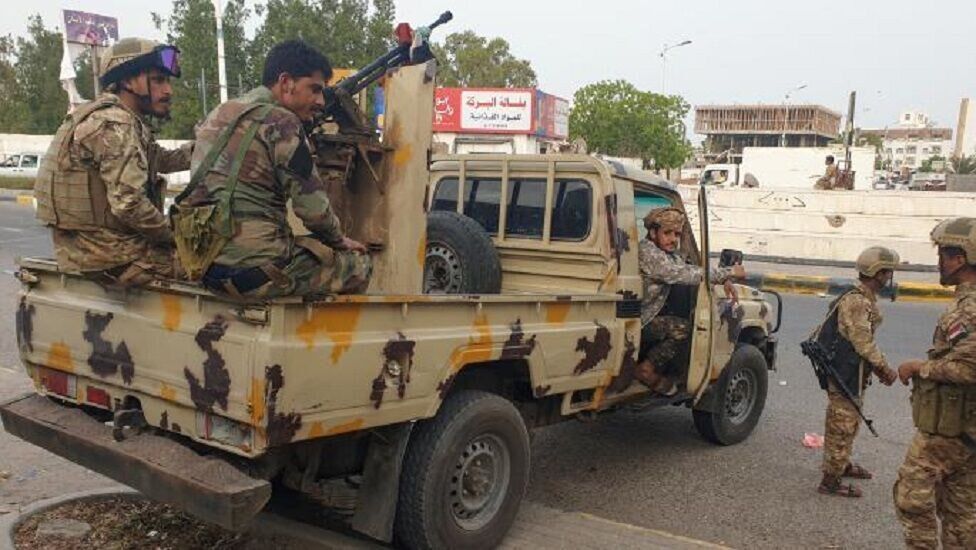


Alwaght- After the recent fast-moving developments in southern Yemen and trade of some regions between the Saudi and Emirati-backed warring sides, now new developments are taking place politically that are slated to boost the position of Riyadh and its local allies.
In this connection, the Southern Transitional Council (STC) has recently issued a statement saying that the separatist bloc has failed to realize its agenda and so its members have decided to dissolve it. Abdulrahman Jalal al-Subaihi, the STC secretary-general, said that the move signifies the bloc’s preparation to participate the intra-Yemeni dialogue conference set to be held soon in Saudi Arabia.
Members of the council have called on influential figures and leaders to join the talks.
Suggesting that they did not make decisions on the military operations in Hadhramaut and Al-Mahrah provinces, the council said that the fighting in the two provinces have harmed the southern cause. They further hoped that Riyadh conference will work out solutions for southern Yemen crisis.
Saudi Arabian Defense Minister Prince Khaled bin Salman hailed the dissolution decision as a “courageous move” and a step important to the future of Yemen. The Saudi ambassador to Yemen met a group from the STC and discussed there recent fights in the south.
Meanwhile, the Presidential Leadership Council (PLC), a body backed by Riyadh in Aden, has announced a decision for forming a “supreme military committee” under the command of the Saudi-led Arab coalition. Rashad al-Alimi said that this decision is a response to the southern calls and the conference would allow for a “comprehensive” southern dialogue. His advisor said that the Supreme Military Committee will issue orders to the military forces and that the PLC chief’s stance on the issue is clear.
The dissolution of the STC followed the flight of its head Aidarus al-Zubaidi out of the country and a dismissal of a number of its leaders. Also, the defense minister of the STC was arrested by the Saudis after his visit to Riyadh.
The dissolution decision comes as three weeks ago, its forces, backed by the UAE, seized parts of the Hadhramaut and Al-Mahrah provinces in eastern Yemen in a bid to complete their unfinished plans. However, after strong warnings by Riyadh and upon strikes by the Arab kingdom, the page was turned and all the Emirati and the separatist officers left the newly seized regions and the Saudi-supported National Shield militias replaced them.
The STC was founded in 2017 by a branch of the southern separatist movement, but its failure to realize its goals, especially recently, gave motivated its leaders to make a decisive decision.
STC dissolution a tactical decision
Though the STC seemingly eyes a solution out of the current crisis with the Saudi help, given the equivocal stances of some of its leaders in the past few weeks that show they are uninterested in distribution of power, such decisions of the bloc cannot give a reason for optimism.
Some observers suggest that the STC, which was under the UAE support for 8 years but failed to meet its aims for the split from Yemen, now is leaning to the Saudis to gain minimum privileges in parts of the south as it sees the Saudis have the last word. With the UAE moving out of Yemen, now the STC leaders are trying to secure roles in the new sovereignty structure by joining the Saudi initiatives.
Though it is unclear what the Riyadh conference will yield, everything depends on its outcomes and what decision the participants will make for the security and political administration of the south.
Tensions may escalate
Though the Emiratis have withdrawn from Yemen and the STC announced its decision to self-dissolve, the course of developments have one thing to suggest: The confrontation between Riyadh and Abu Dhabi as former allies will continue in a way or another. In 2019, they agreed to settle their disputes in Yemen, but this temporary agreement was too fragile to sustain and their mercenaries since then have clashed several times for further seizures of lands.
So, perhaps the UAE’s exit from Socotra, Mayoun, and some others is a tactical move. The Emiratis over the past years had their eyes on their uncharted and strategic regions and even have made large investments there, and that they have left the scene to the Saudis with a Riyadh push looks a bit weird.
Since the STC had a big role in facilitating the Emirati occupation of these strategic Yemeni regions, with the exit of Abu Dhabi, the members of the dissolved council will push for control of the Aden ports and islands. The STC has been defiant to the PLC over the part years and even forced it out of Aden in 2023. So, it specially counts on popular backing to advance its agenda.
Field moves in the south showed that challenges cannot be settled this easily as al-Zubaidi’s loyalists called on people to take to the streets in his support. Earlier, al-Zubaidi had announced start of a two-year transition period that will culminate in separation and independence of the south. He said that after end of the transition period, the south would conduct a referendum on independence.
So, if the dissolved council fails to secure its goals, it is not unlikely it puts its older scenarios on the table. In recent years, this council was hopeful with the UAE help it can separate the south and form an independent state. But if the PLC wants to monopolize power and isolate the STC leaders, things will change and clashes may re-erupt.
While eyeing dominance on the south and its oil and strategic islands, Saudi Arabia is against separation of the south, and so if its conference fails, tensions with the STC will escalate and the UAE may afresh back its allies.










