







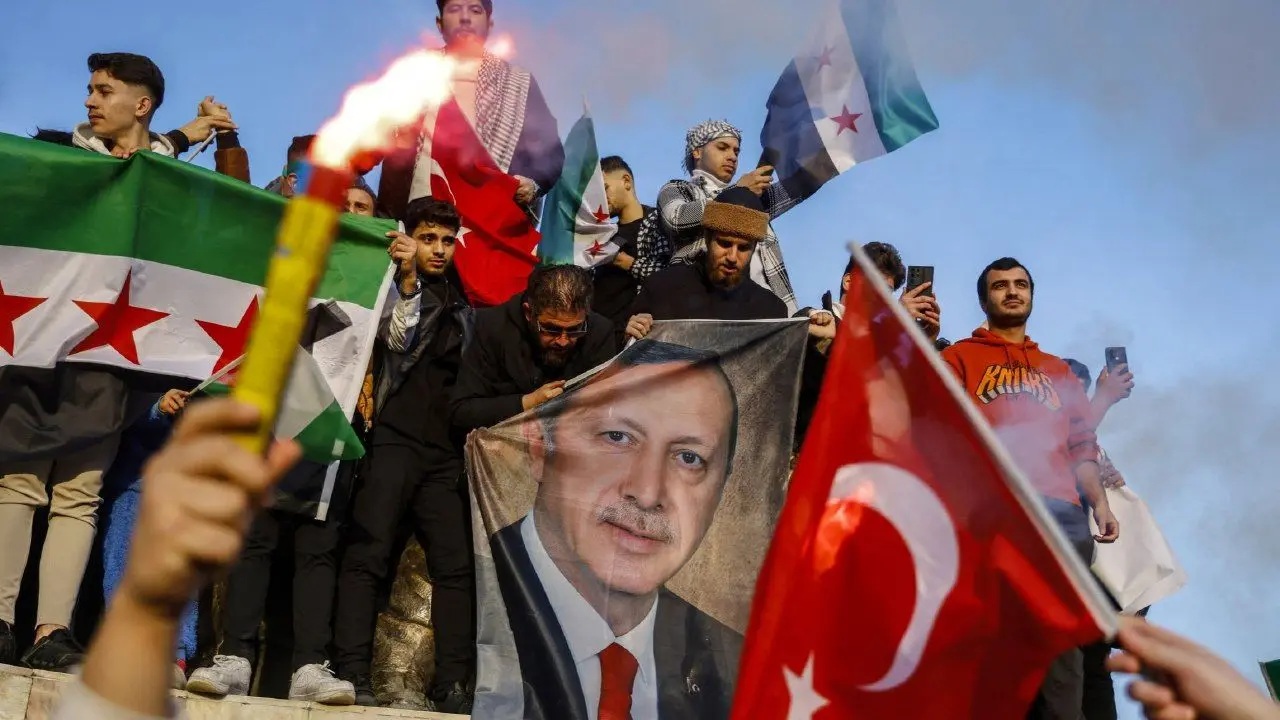


Alwaght- Many were thinking that the biggest gainer from Bashar al-Assad’s fall in Syria would be Turkey and President Recep Tayyip Erdogan himself. Over a decade of Turkish push to destabilize neighboring Syria for a regime change finally came to fruition with Ahmad al-Sharaa, better known for his nom de guerre Abu Mohammad al-Jolani, seizing the power later last December. After al-Assad’s fall, Ankara could feel comfortable about its southern borders forever and make Syria a platform for projecting its new regional power in West Asia.
This is why last year at this time, Erdogan and his Foreign Minister Hakan Fidan were overjoyed by what they imagined was a strategic victory in the Levant. But the future many envisioned is now entangled with serious challenges. Today's Syria is ripe with developments and changes that could, first and foremost, ensnare Turkey itself, transforming it from an unqualified winner, even in the best case, into a major loser.
It must be understood that such shifts in relations between these two neighbors are not without precedent. In the 1990s, during the presidency of Hafez al-Assad, Turkey-Syria relations were intensely fraught. Hafez al-Assad repeatedly threatened Turkey by bolstering and supporting the PKK terrorists. In turn, Turkey mobilized all its efforts toward toppling the Assad government. These hostile relations escalated in 1998 to the brink of war and a Turkish military incursion into Syria, ultimately halted only by the expulsion of Kurdish leader Abdullah Öcalan from Syria.
A decade later, with Bashar al-Assad and Erdogan in power, relations between the two countries changed dramatically. Joint economic and political cooperation took shape and expanded, and Ankara-Damascus relations were revived to an unprecedented degree. The relationship even transcended the diplomatic level, with the Turkish president and his Syrian counterpart developing an extensive personal friendship, so much so that in 2009, the two men and their families chose Bodrum, Turkey, for a joint holiday and leisure trip.
But in 2011, with the arrival of the Arab awakening represented by uprisings against despetic rules, which affected Syria too, this trend reversed once again. Erdogan, seeing al-Assad's position as precarious, quickly distanced himself from him and gravitated toward opposition groups, including Hay'at Tahrir al-Sham and other jihadist factions. Simultaneously, he established an entity called the Syrian National Council that same year in Istanbul, aimed at gathering al-Assad's opponents. Turkey's direct threat, alongside Western and Arab countries, against the Syrian political system escalated into a full-blown crisis and a devastating proxy war with catastrophic human costs. Syria ultimately managed to largely contain this crisis with the support of Iran and Russia, while the Kurdish People's Defense Units (YPG), backed by the US and the international coalition, expanded their control over vast areas of northern Syria.
Seeing the YPG as a terrorist threat because of its affiliation with the PKK, Erdogan was extremely worried about rise of a powerful Kurdish force and its consequences on the southern Turkish borders. That was why in 2017, Turkey gathered Syrian opposition forces under the banner of Syrian National Army, a militia whose leading duty was protecting the Turkish bases and outposts in northern Syria and involving in fighting against the anti-Kurdish campaigns. Furthermore, Turkey secretly provided weaponry and logistical support to Hay'at Tahrir al-Sham, a practice that continued until the militant group's dissolution on January 29, 2025.
Following al-Assad's fall, Turkey rapidly dispatched a high-level delegation to Syria, FM Fidan and Ibrahim Kalin, head of the intelligence service. At the conclusion of these meetings, al-Sharaa declared that he would never allow Syria to become a playground for forces hostile to Turkey and pledged to hinder Kurdish movements. Erdogan, meanwhile, sought to portray the new Syrian regime as a tolerant and moderate government to win the backing of Western leaders. Within this framework, Ankara, in pursuit of its regional influence, has provided military and training assistance while simultaneously pursuing commercial contracts for Syria's reconstruction. Additionally, the two sides are on the verge of signing a joint defense pact which, if realized, could lead to the establishment of new Turkish airbases in central Syria and the training of Syria's newly formed army.
However, the future of Syria-Turkey relations must be analyzed within the context of a set of volatile factors and Syria's unstable situation. This environment, while creating an attractive arena for various powers to exert influence, is not limited to Turkey. The US and the Israeli regime also consider themselves stakeholders in al-Assad's downfall and are not inclined to easily share this gain with Erdogan.
In general, it can be said Ankara has three primary concerns regarding Syria: the Kurdish issue, concerns related to the Israeli regime, and finally, the matter of refugees. In the short term, the Kurdish issue constitutes Turkey's foremost security concern. The Syrian National Army composed of Arab and Turkmen groups loyal to Turkey, has played an active role in attacks against Kurdish forces, particularly the SDF. Erdogan views these developments as the fulfillment of a long-standing plan, and Hakan Fidan has stressed that Syria's territorial integrity is non-negotiable.
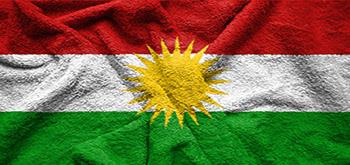
However, on the other side, Washington has given out no sign it withdrew its support to the Kurdish-majority Syrian Democratic Forces (SDF) and the new government in Damascus is not very much interested in an all-out clash with the Kurds, especially that it, under diplomatic support of Erdogan, promotes itself as a moderate government. Meanwhile, the Syrian government has two difficult choices: Peace with SDF and thus preventing future clashes that can arouse the ire of Ankara, or accepting Turkish demands that that bolster the possibility of a full-scale confrontation with the Kurds and also fraying of relations with the Americans. This comes while Turkey does not give a green light to any initiative like formation of autonomous Kurdish region similar to northern Iraq Kurdish region in Syria.
The second concern relates to the position of the Israeli regime. The gains from the political earthquake in Syria, which had long acted as a bulwark against the Israeli regime, did not land in Erdogan's lap. Instead, they unleashed the energy of Israel and Benjamin Netanyahu to reshape the region. From the perspective of this regime, the Iran-Resistance Axis, which previously held extensive influence in Syria, has now been replaced by Sunni forces dominated by salafi-takfiri elements. The Israeli regime is apprehensive about Turkey's growing power and its close relations with al-Sharaa, viewing Ankara's supportive actions as part of a broader Turkish strategy to strengthen a Sunni axis, advance Erdogan's neo-Ottoman and Muslim Brotherhood agenda, and turn the Syrian army into an instrument for its own goals. Accordingly, the Israeli regime is gradually becoming a backstage patron of the Kurds and one of the primary obstacles to forming lasting stability in Syria, sending a clear message to Turkey that Israel will not permit Ankara's free rein in the Levant.
This regime is closely monitoring developments and believes the new Syrian army is being trained and equipped entirely under Turkish influence. Efforts to deploy HISAR air defense systems and even the potential deployment of S-400s are seen as direct threats to the Israeli regime's freedom of aerial action. From Tel Aviv's perspective, Turkish aid to Syria is not merely technical but a geopolitical move to shape a new Sunni-Islamist axis.
The issue of Syrian refugees has also become a serious domestic political challenge for Erdogan. He strongly emphasizes repatriating Syrians, even speaking of the return of all three million Syrian migrants—a claim that appears unrealistic. However, the Turkish opposition has placed significant focus on this issue, leveraging the refugees case for political pressure and attacks against the Erdogan government.
There are major obdclses in the way of return of Syrian refugees home. First, after over a decade, a large number of refugees are uninterested to return home as they are absorbed in the Turkish market and have formed families and living in this country. Second, the largely devastated Turkish economy and job market are incapable of accommodating such a influx of refugees returning home. However, the most important thing for Erdogan is Syria stability and security as the main preconditions for return of refugees.
The combination of these three factors transforms Syria into a Pandora's box for Turkey, the consequences of which are difficult to predict. A hardline confrontation with the Kurds could intensify Syria's internal conflicts, squander the opportunity for cooperation with the new regime, and simultaneously eliminate any possibility of repatriating refugees. Conversely, retreating on the Kurdish issue could strike at Turkey's most vital security concern and pave the way for Kurdish groups, this time with the backing of the Israeli regime, to reactivate along Turkey's southern borders. Striking a balance among such conflicting factors may be the toughest mission ahead of Erdogan. After all, current Syrian situation is ripe with various scenarios, from risk of squandering a decade of financial and political investment and handover of gains to the US and Israel to entering into an official and comprehensive confrontation with Tel Aviv that further sinks Syria into deeper conflicts.