
















Alwaght- After military deployment and closure of Venezuelan airspace, the US has now seized a tanker, taking a new step to direct confrontation with Caracas.
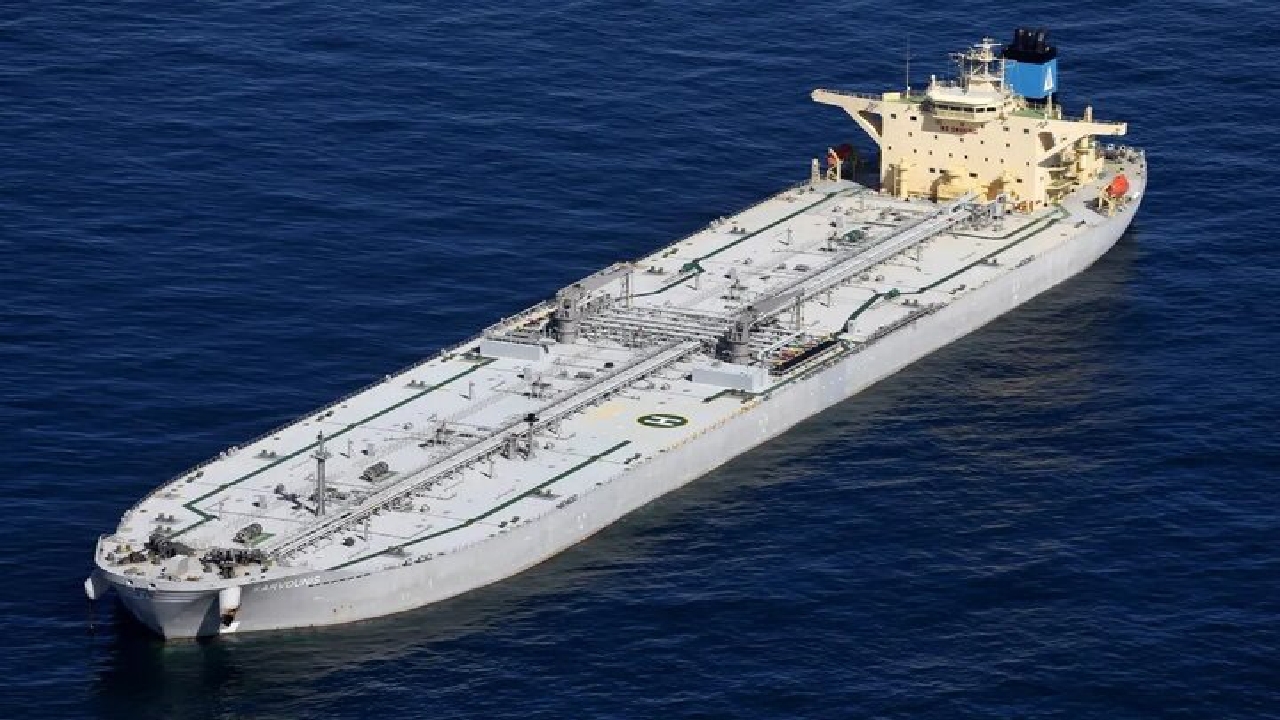
The US President Donald Trump on Wednesday announced Washington seized a tanker off Venezuela coast.
"We've just seized a tanker on the coast of Venezuela, large tanker, very large, largest one ever, actually, and other things are happening," he said. Trump implicitly said that the US could confiscate the ship.
The spokesperson to the White House also announced the seizure of the oil cargo, claiming the tanker was under sanctions and used for "black market" oil transport. The White House asserted Washington will not remain silent regarding oil whose revenues finance global drug trafficking and terrorism by what he called "illicit regimes."
US Attorney General Pam Bondy stated: "The FBI, Homeland Security Investigations, and the US Coast Guard, with support from the Department of War, executed a seizure warrant for a crude oil tanker used to transport sanctioned oil from Venezuela and Iran."
Released footage shows US commandos fast-roping onto the tanker's deck, seizing full control, and steering the vessel and its crew toward US shores.
The tanker Skipper was sanctioned by the U.S. Treasury in 2022 over alleged links to Iran's Islamic Revolutionary Guard Corps and Lebanese Hezbollah. However, the seizure of this Venezuelan tanker must be viewed within the context of US's long-standing policy to control Venezuela's energy resources.
In response, Venezuelan President Nicolás Maduro has repeatedly stressed that Washington's true aim is not fighting drugs nor defending democracy and human rights, but rather seizing his nation's oil and gas. A strongly-worded statement from Caracas declared this action "rips the mask off America" and exposes its real objectives.
War possibility grows
The seizure of the oil tanker comes as Trump in recent weeks has stepped up his hawkish tone against Caracas and did not rule out invasion of the Latin American nation. These developments show that Washington has returned to the military adventures, an approach that over the past decades has brought nothing to Latin America but instability, economic pressure, and seizure of natural and energy resources.
While long-standing disputes over sanctions and oil exports have strained bilateral relations, the seizure of an oil tanker signals a dangerous escalation in this confrontation. On-the-ground realities indicate that Washington has moved beyond mere threats and is seriously preparing the groundwork for military action.
Amassment of the US naval forces in the Caribbean Sea, including the USS Gerald R. Ford, the world's largest aircraft carrier, coupled with intensified joint operations by the Coast Guard, Navy, and FBI, paints a clear picture of an emerging military pressure ring encircling Venezuela.
In response, the Venezuelan government has placed its armed forces on full alert, warning it will respond decisively to any hostile act.
The US claims its actions are based on international law and within the framework of sanctions designed to pressure the Venezuelan government. These measures have created a tense and uncertain atmosphere in the Caribbean, a region historically vulnerable to conflict due to its geopolitical sensitivities and crucial trade routes.
As reported by Devdiscourse, some analysts believe this move has stoked fear and instability in global energy markets and increased US incentives to detain other tankers. Since Caracas views this as a blatant violation of its national sovereignty and energy resources, it may trigger more severe reactions in the future. Consequently, even the smallest miscalculation could lead to a military confrontation between the two sides.
AP and Reuters have also reported that the tanker seizure is part of a broader Washington effort to cut off Caracas's oil revenue, a move critics say is inflaming geopolitical tensions.
Therefore, as this situation unfolds, the potential for escalated tensions remains high. This tanker incident has now become a symbol of the wider political and economic struggles in the region. Without the initiation of effective dialogue and diplomacy, the consequences could severely threaten the security and stability of the Caribbean Sea, a concern echoed by Latin American leaders warning of the potential fallout.
A state piracy
The seizure of a Venezuelan oil tanker has once again thrust the issue of "modern maritime piracy" into the global spotlight. Venezuelan officials have condemned the act as a clear violation of international law regarding freedom of navigation and maritime commerce, stressing that such behavior contravenes globally accepted norms.
Venezuela’s Ministry of Foreign Affairs stated that the United States is forcibly plundering the vital resources of sovereign nations, attempting to legitimize these actions with baseless justifications. In unequivocal terms, Nicolás Maduro described the seizure as the beginning of a "new era of criminal maritime piracy" and warned that imperialism is bent on seizing Venezuela’s oil and gas, but that Caracas will not yield to pressure. This stance demonstrates Venezuela’s firm resolve to defend its economic sovereignty and natural resources.
A look at the history of US maritime operations reveals a long precedent of tanker seizures. In recent years, Washington has sanctioned or seized numerous vessels allegedly used to transport sanctioned oil from Venezuela and Iran through informal networks.
For example, in May 2020, Washington claimed to have seized 1.1 million barrels of Iranian oil en route to Venezuela. The US has also imposed sweeping sanctions against dozens of tankers accused of carrying sanctioned oil from Iran, Venezuela, or Russia, leaving these ships vulnerable to seizure or further penalties.
These actions have frequently been carried out without United Nations approval and contrary to the rules of free international trade, leading many nations to deem them illegal and inconsistent with the global order. Analysts believe the US pattern of seizing tankers is primarily aimed at exerting economic pressure and appropriating oil shipments, a process viewed by the targeted countries as a form of "organized plunder."
As tensions rise in the Caribbean, this incident could become emblematic of broader challenges related to economic sovereignty, the legitimacy of sanctions, and great-power competition for control of global resources. The outcome of this confrontation carries vital implications not only for Venezuela but also for regional stability and the security of critical energy transit routes.
Bolivarian resistance to Washington
Despite recurrent threats by Trump and other American officials about possibility of a lightning attack to overthrow Maduro, decades-long experience has shown that Caracas does not yield to Washington's economic pressures and military threats. The temporary history of this country is full of examples of the American pushes for direct intervention for regime change, including the 2002 failed coup, massive sanctions, and economic pressures, all failing to break the Venezuelan political cohesion and national will.
Maduro and Venezuelan security officials have repeatedly warned that any encroachment on the nation's borders or energy resources will be met with a swift and coordinated response. This includes bolstering coastal defenses, placing military forces on high alert, and enhancing coordination among maritime units to protect vital oil export routes.
Ministry of defense has also clearly stated that no foreign force or vessel will be allowed to enter the country's territory unchallenged, and that all hostile actions will face an immediate reaction. Analysts further note that the relative internal political stability in recent months, coupled with significant public support for the government, minimizes the likelihood of success for any external attempts to force a change in power.
Venezuela carries the rich legacy of heroes such as Simón Bolívar, who once liberated Latin America from European colonial domination. This proud history continues to live on as a source of national inspiration in the spirit and will of the Venezuelan people, and today, it can reignite that same spirit of resistance against American imperialism.
So, Venezuelan resistance to the US hostility will act like a slap on the face of this imperial power and show the world that national will, public support to the government, and strong leadership can block the foreign dominance of the country.










