






Alwaght-Two years after the failed Geneva II conference on Syria, relevant sides of Syrian crisis have held a comprehensive conference on Friday, October 30, that was significantly different from the previous conferences. What makes the fresh conference distinct is the Iranian unconditional presence and the Russia-Iran's consistent stances on the political future of Syria.
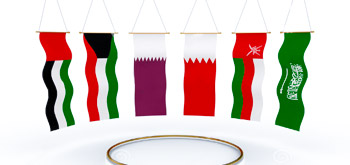
The one-day Vienna II meeting was attended by the foreign ministers of Russia, the US, Britain, Germany, France and China as world players on the one hand, and the regional players including Iran, Turkey, Saudi Arabia, Egypt, Iraq, the UAE, Qatar, Jordan, Oman and Lebanon on the other hand. Also the EU and the UN representatives were present at the talks. The arrangement of the seats of the foreign ministers was not made in alphabetical order, but based on their seniority. The foreign ministers with a longer time in post were seated in upper part of the table, but those with little time in office were put in a lower position, and the Saudi inexperienced Foreign Minister, Adel al-Jabir, was the last one in the row, the media reports suggested. AFP has reported that the tensions between Iran and Saudi Arabia on Syria have cast shadow over the international conference. “No progress was made in the negotiations due to the deep divides between the sides of the talks”, the Iraqi Foreign Minister, Ibrahim al-Jaafari, noted, following the meeting. Meanwhile, the reports said that next round of the Vienna talks would be held next week with the presence of delegations from the Syrian government as well as the opposition groups. The Austrian Foreign Ministery also said that preparations for holding another round of Syria peace talks in mid next week were underway. On the other side, the Russian Ministry of Foreign Affairs has asserted that the Vienna II Syria talks would be a lengthy and complicated process.
Distinct meeting
What makes the Vienna II conference different is Tehran’s attendance. Before the fresh peace talks, two rounds of international talks, dubbed Geneva I and Geneva II, were held, which were unsuccessful. Many analysts believe Tehran’s absence has been the main reason leading to the failure of the previous talks, specifically the Geneva II conference. In Geneva II talks the US and Saudi Arabia set the precondition asking Iran to accept the Geneva I statement, but rejecting the precondition, Iran announced that it would not agree with any precondition. Therefore, under Washington and Riyadh’s pressure, the UN Secretary-General Ban Ki-Moon, disinvited Iran from attending Syria peace conference less than 24 hours after officially inviting Tehran to join the talks, and as it was predicted the Geneva II talks without Iran ended in failure.
Iran accepts invitation unconditionally
After the fresh field developments in Syria and after the Russian fighter jets’ air campaign and the Resistance forces’ ground attacks against the terrorist groups, the balance of power on the ground has been tipped in favor of the Syrian government’s forces. Along with their military campaign in the country, the Russians have started an active diplomacy in a bid to find a settlement to the crisis in Syria. Moscow has played a key role in holding the Vienna II conference, and the Russian Foreign Minister
Sergey Lavrov has repeatedly highlighted that it was impossible to come up with a result over the Syrian crisis without Iran’s presence.
Iran’s regional power and its pivotal role in field developments of fighting against terrorism in Syria have made the US and Saudi Arabia retreat from their preconditions for Iran, admitting that without Tehran it was unlikely to solve the regional crises, including the Syrian conflict. Washington had to negotiate with Iran to find a practical and sustainable political solution for the crisis in Syria, and these negotiations were a big opportunity for Iran to play a more constructive role as a regional power, the spokesman for the US Department of State, John Kirby, said on Thursday. As the US President and Secretary of State had emphasized, the US came up with the conclusion that to secure a sustainable and practical political solution for Syria the US needed to talk to Iran, Kirby added. However, retreating from his position, the Saudi FM described Iran’s attendance in the conference as a “test of Iran and Russia intentions”, to examine the seriousness of the two countries in reaching a political settlement for th conflict. “If they (Iran and Russia) are serious, we will know and if they are not serious we will know it too, and we will stop wasting time with them", al-Jubeir said.
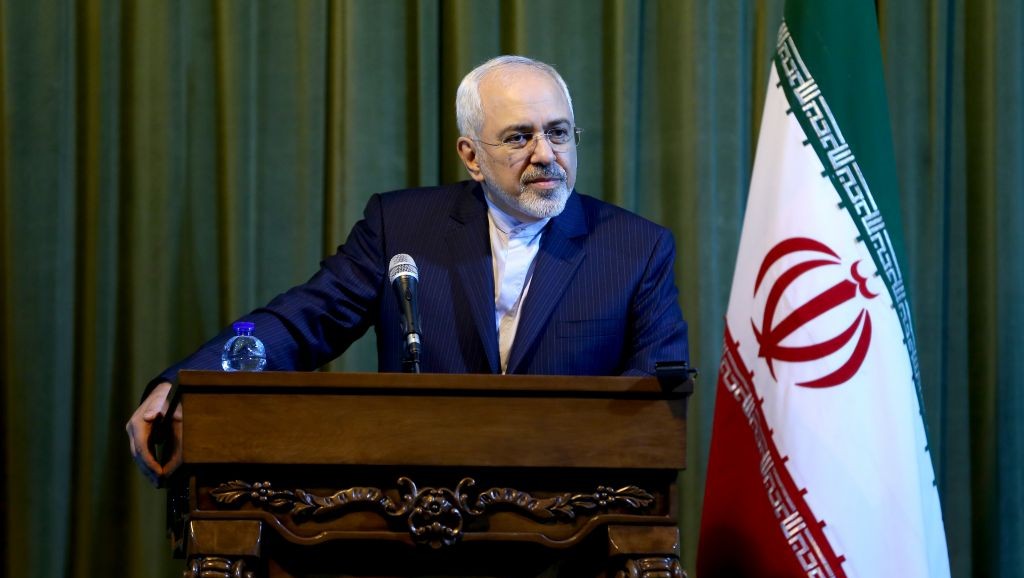
Upon arriving in Vienna, the Iranian Foreign Minister, Mohammad Javad Zarif, has highlighted Iran’s key role in settling Syria’s crisis. Talking to the journalists, Zarif said that those who were taking part in efforts to find solution for the Syrian crisis had come up with the result that without Iran’s participation there would be no logical and reasonable solution for Syria. “Iran is a country with power of stabilization of the region and no conditions could be laid down for its presence”, the Iranian FM said, answering a question about Iran’s conditions for attending the conference. Zarif added that no precondition was set for Iran’s participation, and Iran would not have accepted if there were any conditions.
Cohesive standings
President Bashar al-Assad’s fate is still the most significant sticking point of the countries engaged in the Syrian crisis. The US and its allies insist on the necessity for Bashar al-Assad's removal. The Saudi FM has noted that Iran must accept al-Assad's ouster. Adel al-Jubeir added that there must be a certain timeframe for al-Assad to go and not a vague one. On the other hand, the French Foreign Minister Lauran Fabius said that al-Assad should be removed from power in the transitional period. But Damascus’ backers insist that the priority must be fighting against terrorism, and any attempt to undermine the Syrian government would help the terrorists to ramp up their power, emphasizing that it is the Syrians who should decide on their political future. Russia made it clear on Friday that the Vienna conference was not for considering President Bashar al-Assad’s future. Meanwhile, Hussein Amir Abdullahian, the Iranian Deputy Foreign Minister for Arab and African Affairs, strongly denied some Western media reports that Tehran had agreed that al-Assad would leave power within the upcoming six months.