- Netanyahu’s Transition from Ben-Gurion Doctrine to His Own
- Iranian Security Chief Vows No Enriched Uranium Will Leave the Country
- Iran Warns of Threat to Hormuz Undersea Cables in Event of Infrastructure Attacks
- Israel’s Latest Gaza Attacks Kill At least Four Palestinians Amid Genocide Allegations
- France Tightens Curbs and Threatens Large-Scale Police Deployment Ahead of Demonstrations
- Macron and France Bearing the Fallout of Iran War and Consequent Energy Crisis
- Egypt’s Yemen War Dilemma: Balancing Political Reservations and Strategic Interests
- Iran’s Diplomacy amid War: Muslim World and Palestinian Question
- Completion of Iraq Cabinet and Redrawing Balance of Power
- Iranian Military Chief Vows Armed Forces Will Defend Nation in All Circumstances
Editor's Choice
Gen. Solemani, A Living Resistance Legacy General Solemani of Iran caused a transformation to the region that blocked the way of the Israeli and American projects in West Asia.
A Review of Newly Published US National Security Document The US national security document may be an unwanted admission that the US hegemony is diminishing.
US or Venezuela? Who’s the True Oil Thief? Trump says Venezuelan nationalization of its oil was theft of American oil companies’ assets, justifying oil blockade on South American nation.
Why Are Tel Aviv and Washington Stepping Up Pressures against Hezbollah? Israel knows that disarming Hezbollah makes occupation of Lebanon a piece of cake.
Is Yemen on the Verge of Split? The country is sinking in chaos as conflicting forces in the south are going separate ways and Yemenis are less involved in the fate of the south.
News
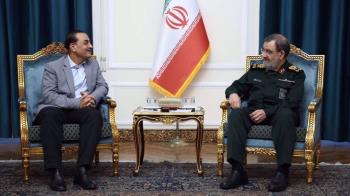
Iranian Security Chief Vows No Enriched Uranium Will Leave the Country
Iran’s top security official has firmly rejected transferring enriched uranium abroad, declaring that all nuclear material will remain within the countryIran Warns of Threat to Hormuz Undersea Cables in Event of Infrastructure Attacks IRGC official Yadollah Javani warns submarine cables in Strait of Hormuz could be endangered by attacks on Iranian infrastructure
Israel’s Latest Gaza Attacks Kill At least Four Palestinians Amid Genocide Allegations At least four Palestinians have been killed in Israeli strikes on Gaza, further raising doubts about Israel’s commitment to a year-old ceasefire
France Tightens Curbs and Threatens Large-Scale Police Deployment Ahead of Demonstrations French officials have prolonged nighttime movement restrictions in Paris and several other major urban centers
Iranian Military Chief Vows Armed Forces Will Defend Nation in All Circumstances Iran’s senior military chief has affirmed that the country’s armed forces are fully prepared to safeguard national sovereignty and confront any threat
IRGC Warns Further Attacks on Iran Could Spark Worldwide Energy Crisis The Islamic Revolution Guards Corps (IRGC) cautioned that renewed attacks on Iran would provoke a far stronger retaliation
Araghchi: Tehran-Moscow Ties Vital for Regional Peace and Stability Iranian Foreign Minister Abbas Araghchi stressed that closer ties between Tehran and Moscow could contribute to greater regional stability
Iran Says It Has No Fundamental Disputes with Regional States President Masoud Pezeshkian said Monday that Tehran is willing to address outstanding concerns with neighboring countries through diplomatic talks
YAF Carries Out Six Operations Against Saudi Energy and Military Targets Yemen’s Armed Forces report six strikes on Saudi oil facilities, airports and military installations
Iran Warns US and Israel Against Further Miscalculations as Tensions Escalate Iran’s top military commander has delivered a stern warning to the leadership of the United States and the Zionist regime
Araghchi Warns US and Israel: Previous Attempt to Defeat Iran Only Made Us Stronger Iranian Foreign Minister Seyyed Abbas Araghchi cautioned Washington and Tel Aviv against launching another attack on the Islamic Republic
Russian Foreign Minister Lavrov to Arrive in Tehran Monday Iranian Foreign Ministry spokesman Esmaeil Baghaei announced that Russian Foreign Minister Sergey Lavrov is scheduled to visit Tehran on Monday
Iran Signals Capability to Strike Persian Gulf Internet and AI Infrastructure Iran has cautioned that regional data centers and undersea communications cables could become targets if further military action is launched
OIC Foreign Ministers Gather in Baghdad as Araghchi Arrives for Meeting Iranian Foreign Minister Abbas Araghchi arrived in Baghdad on Saturday
IRGC Navy Reports Second Supertanker Explosion Following Naval Mine Strike in Hormuz The IRGC Navy reported that another supertanker burst into flames after hitting a sea mine while attempting to pass through the Strait of Hormuz
Khatibzadeh: Any Agreement Must Include Lebanon Iranian Deputy Foreign Minister Saeed Khatibzadeh said Tehran insists that Lebanon be included in any comprehensive regional agreement
Iran’s U23 Greco-Roman Wrestling Champions Receive Leader’s Congratulations Ayatollah Seyyed Mojtaba Hosseini Khamenei, Leader of the Islamic Revolution, has extended his congratulations to Iran’s Greco-Roman wrestling squad
From Sara to Yair: Will Netanyahu’s Family Become his Election Achilles Heel? Netanyahu’s family is spent by various scandals, each giving the opponents the instruments to wield against him.
YAF Targets Riyadh Airport and Saudi Military Positions The Yemeni Armed Forces launched four ballistic missiles on Wednesday, targeting Riyadh’s King Khalid International Airport
Cargo Vessel Carrying 2,500 Containers Sinks After Hitting Mine South of Strait of Hormuz A container vessel loaded with over 2,500 containers went down south of the Strait of Hormuz after striking a sea mine and subsequently catching fire
Most Viewed
Iran Warns of Threat to Hormuz Undersea Cables in Event of Infrastructure Attacks
Egypt’s Yemen War Dilemma: Balancing Political Reservations and Strategic Interests
Iranian Security Chief Vows No Enriched Uranium Will Leave the Country
Israel’s Latest Gaza Attacks Kill At least Four Palestinians Amid Genocide Allegations
Macron and France Bearing the Fallout of Iran War and Consequent Energy Crisis
Netanyahu’s Transition from Ben-Gurion Doctrine to His Own
Iran’s Diplomacy amid War: Muslim World and Palestinian Question
France Tightens Curbs and Threatens Large-Scale Police Deployment Ahead of Demonstrations
YAF Targets Riyadh Airport and Saudi Military Positions
Khatibzadeh: Any Agreement Must Include Lebanon
IRGC Navy Reports Second Supertanker Explosion Following Naval Mine Strike in Hormuz
Cargo Vessel Carrying 2,500 Containers Sinks After Hitting Mine South of Strait of Hormuz
Bessent’s Prediction Gone Wrong: Economic Resilience in Iran, Collapse Delusion in the US
OIC Foreign Ministers Gather in Baghdad as Araghchi Arrives for Meeting
Iranian, Lebanese Officials Hold Talks on Latest Regional Developments
From Sara to Yair: Will Netanyahu’s Family Become his Election Achilles Heel?
Iraqi PM’s Saudi Visit and Difficult Calculus of Neurality
Quds Force Chief Reiterates Iran’s Support for Palestine, Calls al-Aqsa Protection a Priority
Iran Signals Capability to Strike Persian Gulf Internet and AI Infrastructure
Ansarullah’s Control of Saudi Airspace Sounds Economic Alarm in Riyadh
Iran’s U23 Greco-Roman Wrestling Champions Receive Leader’s Congratulations
Hormuz, Tehran’s Deterrence Lever against American Threats
Confiscating Hezbollah’s Explosives Shipment by Govt. a Dangerous Game
Leader Vows Knowledge, Morality Will Disarm Aggressors
US Pressure Strengthening Unity Among Muslim States, Pezeshkian Says
Araghchi: Israeli Lobby Seeks to Tie US Interests to Israel’s Fate
Trump’s War against the World at UNGA
Shalamcheh and Chazabeh Crossings: How’s Border Closure Impacting Iran-Iraq Trade?
Peshmerga Unification Project: End of a Partisan Military or Start of Redefining Kurdistan Region’s Power?
Araghchi Calls on World to Hold US Accountable for ‘War Crimes’ at UNGA
Ghalibaf Cautions US, Affirms Iran’s Enduring Deterrence
Araghchi Sets Out 7-Day Hormuz Reopening Plan Tied to US Compliance
Netanyahu’s Speech: A Slap at the UN, a Pain at Home
Iran Rules Out Resuming Pre-War Diplomatic Track with US
Iran Armed Forces: Trump Threats Expose US Strategic Failure
Iranian Flight Suspension Tests Iraq’s Sovereignty Amid US Pressure
Pezeshkian at UNGA: Iran Will Not Give in to US Pressure
12 American Bases and Facilities Iranian Missiles Damaged
In Focus
Ansarullah
A Zaidi Shiite movement operating in Yemen. It seeks to establish a democratic government in Yemen.
Shiite
represents the second largest denomination of Islam. Shiites believe Ali (peace be upon him) to be prophet"s successor in the Caliphate.
Resistance
Axis of Resistances refers to countries and movements with common political goal, i.e., resisting against Zionist regime, America and other western powers. Iran, Syria, Hezbollah in Lebanon, and Hamas in Palestine are considered as the Axis of Resistance.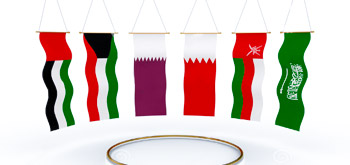
Persian Gulf Cooperation Council
A regional political u n i o n consisting of Arab states of the Persian Gulf, except for Iraq.
Taliban
Taliban is a Sunni fundamentalist movement in Afghanistan. It was founded by Mohammed Omar in 1994.
Wahhabism & Extremism
Wahhabism is an extremist pseudo-Sunni movement, which labels non-Wahhabi Muslims as apostates thus paving the way for their bloodshed.
Kurds
Kurds are an ethnic group in the Middle East, mostly inhabiting a region, which spans adjacent parts of Iran, Iraq, Syria, and Turkey. They are an Iranian people and speak the Kurdish languages, which form a subgroup of the Northwestern Iranian branch of Iranian languages.
NATO
The North Atlantic Treaty Organization is an intergovernmental military alliance based on the North Atlantic Treaty which was signed on 4 April 1949.
Islamic Awakening
Refers to a revival of the Islam throughout the world, that began in 1979 by Iranian Revolution that established an Islamic republic.
Al-Qaeda
A militant Sunni organization founded by Osama bin Laden at some point between 1988 and 1989
New node

News
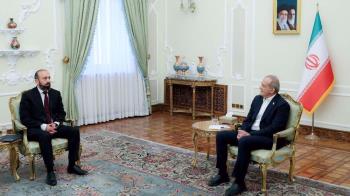
Pezeshkian: US Talks Serve No Purpose
Monday 5 October 2026
sanctions, threats, and other pressure.
Pezeshkian also called for stronger ties with Armenia across trade, science, culture, and technology. Armenian Foreign Minister Ararat Mirzoyan welcomed the progress in bilateral relations and said Yerevan remains committed to expanding cooperation with Tehra ...

Interview
True Security and Political Independence in Iraq Matters after US Military Pullout: Expert
Tuesday 6 October 2026
،
sanctions, investment, weapons, technology, and economic ties.
But that power should not be mistaken for total control. The US can influence some of Iraq’s decisions, but it cannot necessarily dictate every political development in Baghdad. Iraq’s political structure, Shiite factions, K ...
News
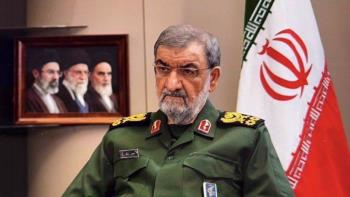
Iran Security Chief: US To Suffer Economic Defeat Just as It Did Militarily
Tuesday 6 October 2026
،
sanctions and blockades.

Paper
Israel’s Fury at Nobel Choice: Pillay and Gaza Genocide Case
Saturday 10 October 2026
،
sanctions on the International Criminal Court.
From fighting apartheid to distinguished place in international law: Who is Navi Pillay?
Pillay, a South African jurist born in 1941, grew up in Durban in a family of Indian Tamil descent. She launched her legal career defending opponents of apartheid ...
Analysis
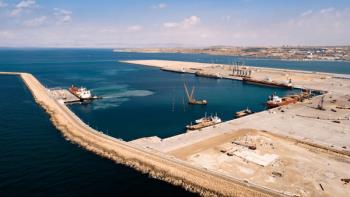
Taliban Investment in Iran’s Chabahar Port: Opportunity or Challenge?
Sunday 11 October 2026
،
sanctions, which have consistently deterred other countries from investing in Iran, as we saw with India.
Another issue is domestic opposition and a lack of transparency over how land is being allocated to India and Afghanistan. A careful examination of this would require reading the texts of the m ...
News
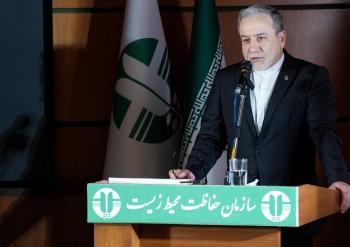
Araghchi Urges Global Accountability for Environmental Destruction During Wars
Sunday 11 October 2026
،
sanctions and restrictions that prevent countries from accessing essential environmental technologies, equipment, and financial resources should also be assessed under international law.
Araghchi said Iran was prepared to cooperate with other countries to prevent widespread environmental destructio ...
Report
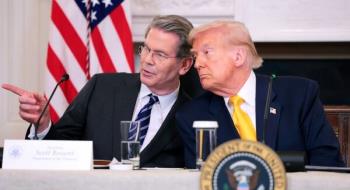
Bessent’s Prediction Gone Wrong: Economic Resilience in Iran, Collapse Delusion in the US
Wednesday 14 October 2026
،
sanctions with goals that go well beyond curtailing Tehran's trade and foreign-currency earnings. On August 20, he declared that new American sanctions would bring down the Iranian government and called on other countries to join the policy. Days later, Washington unveiled a plan dubbed Economic ...
News
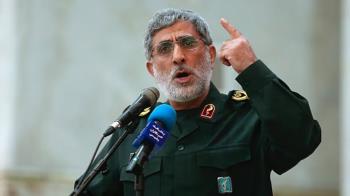
Quds Force Chief Reiterates Iran’s Support for Palestine, Calls al-Aqsa Protection a Priority
Thursday 15 October 2026
،
sanctions, conflicts imposed on Iran, and growing international pressure have not weakened its commitment.
IRGC Quds Force Commander Brigadier General Esmail Qa’ani has reaffirmed Iran’s continued support for the Palestinian people and their resistance, emphasizing that protecting al-Aq ...
Report
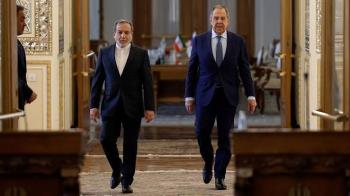
What’s Lavrov’s Mission in Tehran?
Sunday 18 October 2026
،
sanctions, financial restrictions and diplomatic pressure to curb the two countries' power and influence. As it stands now, the US-Israeli war against Iran and Russia's ongoing standoff with the West over Ukraine have pushed Tehran-Moscow relations into a critical phase.
Though Iran and Rus ...
Analysis
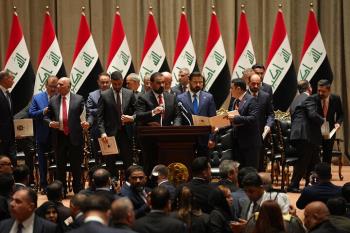
Completion of Iraq Cabinet and Redrawing Balance of Power
Tuesday 20 October 2026
،
sanctions lists and his appointment drew sharp criticism from a US congressman.
From the viewpoint of factions close to the resistance, al-Khazali's appointment as deputy premier can be read as a sign that these groups' political influence within the state's executive structure endures, ...