





Alwaght- West Asia's heated developments and the shifting geopolitical balance in recent years have driven regional powers to strive to play a broader and more determining role in engineering of the new regional order. Meanwhile, Turkey, and particularly its leader Recep Tayyip Erdogan, have stepped up their moves to expand Ankara's regional weight and influence.
Meanwhile, one of the countries that has been gaining significance in Turkish calculations is Lebanon, a country that is already of geopolitical importance due to its strategic location in the Eastern Mediterranean, closeness to Syria as a Turkish ally and to the occupied Palestinian territories. Meanwhile, Turkey's foothold in Syria since fall of Bashar al-Assad in December 2024 has given the Turks a vantage point from which they can seek a deeper role in the Lebanese developments.
Symbolic visit to Lebanon of Erdogan's son
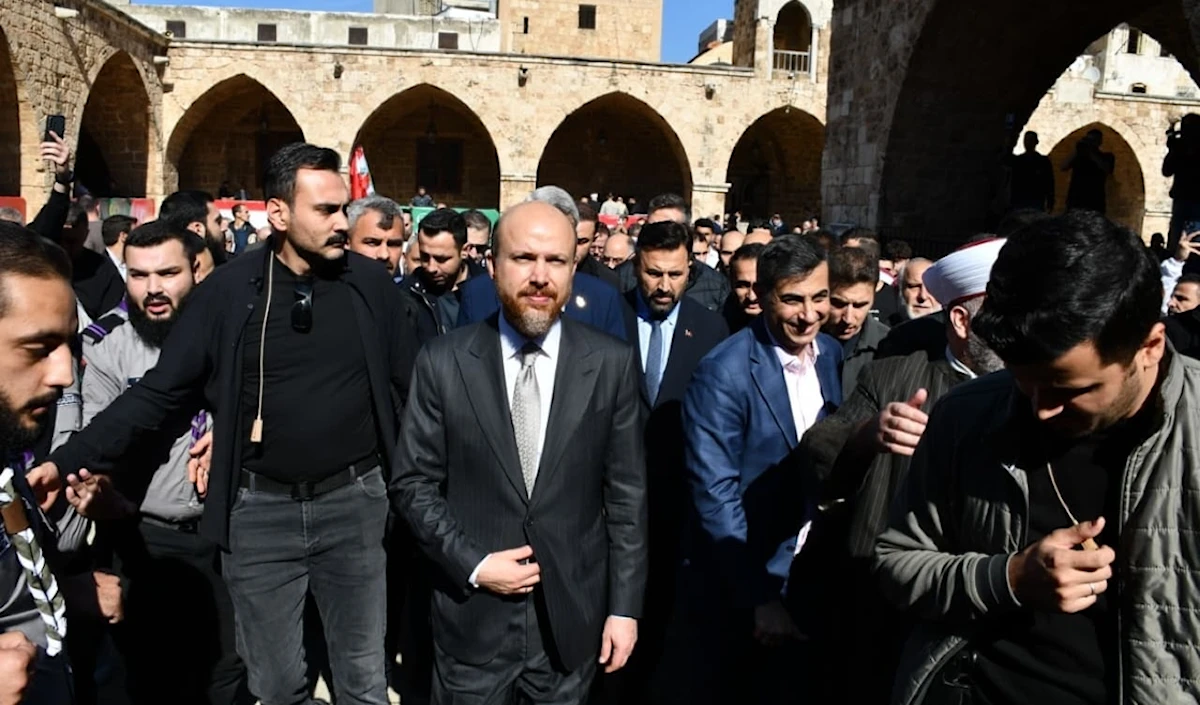
In the semiotics of Turkey's renewed attention to developments in Lebanon, one should not focus solely on official policy. Understanding how Turks deploy public diplomacy،Turkish-language education, cultural and charitable institutions, scholarships, and support for schools and social organizations, as a prelude to political influence, the recent visit of Bilal Erdogan, son of the Turkish president, to Lebanon must be assessed as far more than a ceremonial call.
The trip gains added significance given that Bilal Erdogan has been floated in some media circles as a possible political successor to his father within the Justice and Development Party.
The visit carried symbolic weight on multiple levels, from the sites the president's son chose to visit, to his remarks about the two countries' shared history, to his meetings with senior Lebanese officials.
As a start, the choice of Tripoli as the first stop and the tour of its historic sites hardly seems accidental. Home to a prominent Ottoman-era heritage, the city can occupy a special place in Turkey's neo-Ottoman discourse as a vehicle for reviving Ankara's lost influence in the Arab world, a theme he underscored in his speech to well-wishers.
Lebanese society is a mosaic of sects and communities whose contentious modern history, above all the 15-year civil war, has driven minorities to seek foreign patrons. Against that backdrop, Erdogan's remarks in Tripoli, the center of Lebanon's Sunni community, and his emphasis on Ottoman-era historical ties amount to an attempt to tap that potential. Ankara is thus seeking to convert declarations of understanding for the security and military concerns of Sunnis, and, beyond them, of the Lebanese state, into capital for political power in Lebanon.
Erdogan's son traveled from Tripoli and Akkar to Beirut, where he proposed to President Joseph Aoun that Turkish military forces deploy to Lebanon's southern border with the occupied territories once UNIFIL withdraws, a proposal that, if realized, could draw Ankara into one of the region's most critical security cases.
In that high-stakes meeting, Bilal stressed the need for a complete Israeli withdrawal from southern Lebanon as a fundamental precondition for preserving Lebanese sovereignty, effectively staging a show of readiness for security and military coalition-building with Beirut.
The range of Bilal's meetings was not limited to talks to the Lebanese president and he also met Prime Minister Nawaf Salam, Deputy President Bahya Hariri, and Druze leader Walid Jumbulat. His meetings with Sheikh Abdul Latif Derian, Lebanon's Grand Mufti, and Archbishop Elias Audeh of the Greek Orthodox Church of Beirut further showed that Ankara, beyond the political establishment, is also targeting Lebanon's religious and cultural community in its push to expand influence.
Capitalizing on Lebanon's economic needs
Beside cultural and religious tools, economy is one of the most important leverages of Ankara to get a foothold in Lebanon.
Financial crisis, Israeli destruction of infrastructure, and damage of war have made Aoun's government seem foreign finances to address the needs. Such conditions are proper opportunity for Ankara to, through construction activities, investment, and trade partnership, cement its influence influence in the Lebanese economy.
On the economic assistance front, Bilal announced in his meeting with Aoun that Turkey would help rebuild war-damaged areas, even symbolically selecting a single village for reconstruction. Expanded aid from Turkish institutions in the social and educational spheres was among the other pledges on offer.
On the trade front, Bilal dangled the prospect of turning Lebanon into a regional connectivity and commercial hub, pressing for stronger trade and investment ties and for reviving road and rail links between Lebanon and Turkey via Syria.
Ankara is thus looking to finance infrastructure projects, bring its construction firms into rebuilding war-torn areas and extend trade facilitation, all to open a new market for its own economy while deepening Lebanon's economic dependence on Turkish capacity. The ultimate aim is to turn economic cooperation into leverage over Lebanon's internal affairs and expand Turkey's sphere of influence in this pivotal Arab state.
Military and security influence in Lebanon
The proposal for stationing Turkish forces in southern Lebanon following a possible UNIFIL withdrawal signals Ankara's effort to round out its economic influence with a security component. Such a presence, if the Lebanese government agrees and an acceptable international framework takes shape, could turn Turkey into a direct player in one of the region's most sensitive border disputes. That said, it is hard to imagine Israel readily accepting Turkey's approach to its borders, as suggested by the bombing of Turkish bases on Syrian soil in recent months, strikes aimed at drawing precisely such a red line.
Still, in its ambitious bid to help steer the region's new security order, and its appetite for a trilateral Mecca defense-security pact, Turkey must show it can be a reliable ally against Israeli threats to Lebanon. As Erdogan's son stressed to Lebanese officials, the stability of Lebanon, Syria and the region is part of Turkey's own security.
Beirut in Neo-Ottoman geography
Ankara's measures and steps in Syria and Lebanon can be read as part of Ankara's push to build a geopolitical strategy in the Eastern Mediterranean, one in which Turkey expands its sphere of influence through political sway in Damascus, widening economic ties with Beirut and a possible role in southern Lebanon's security arrangements.
For the Turks, Lebanon is neither merely an economic destination nor just Syria's neighbor, but a key link in its plan to re-enter the balance of power in lands once ruled by the Ottoman Empire.
Today's regional conditions differ fundamentally from the Ottoman era, yet Ankara's policies show Erdogan is seeking to rebuild a measure of Turkey's historic influence through political, economic, cultural and security tools. Bilal Erdogan's Lebanon visit should therefore be seen as a sign of efforts to extend the neo-Ottoman project from Syria to the Mediterranean coast, and to turn Lebanon into one of Turkey's regional footholds.