










Alwaght- Yemen is day by day tightening the noose of its air blockade on Saudi Arabia and meanwhile the economic costs are increasingly rising for the Saudis.
Sana'a leaders have promised they will seriously implement the airport-for-airport strategy in response to over ten years of sea, air, and land embargo on Yemen by Saudi Arabia, and the Yemeni back-to-back attacks on the Saudi airports from Riyadh to Jeddah and Dammam over the past week have turned the deterrence equations on their head.
The Arab kingdom works to protect its airspace security and resume its flights by boosting its air defense infrastructures, but continued strikes have left the activity of the airports in disorder, making it hard to return to normal conditions.
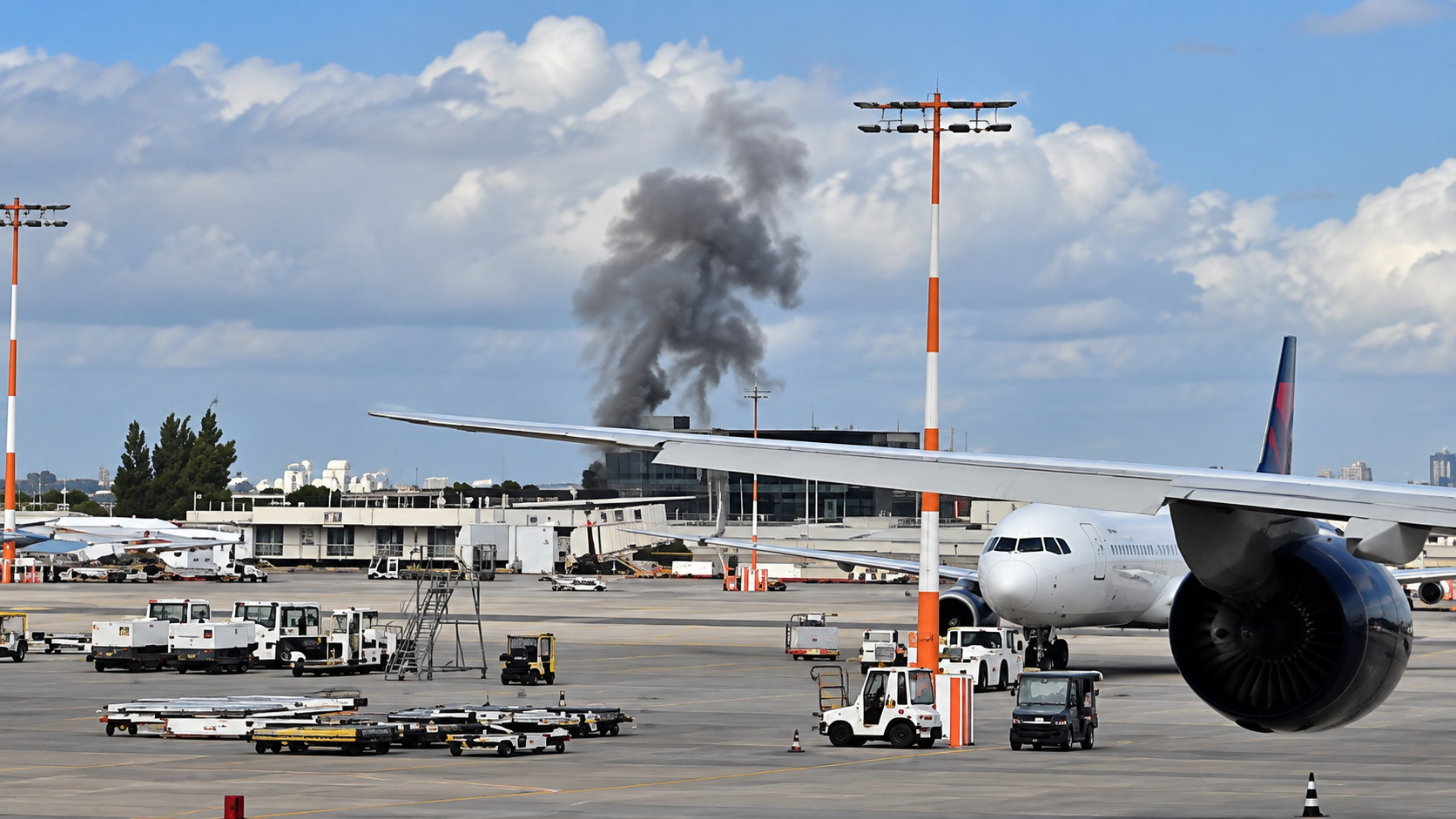
Saudi airports have been hit by repeated shutdowns and disruptions, with more than 1,000 flights canceled so far. In response, the US, Britain, Canada and the European Union have warned their citizens against using Saudi airspace.
Yemeni missile strikes have effectively blocked Saudi Arabia from reopening its airports, prompting countries such as the UAE and Qatar to announce that all flights to the kingdom are suspended until further notice.
Dozens of international airlines have also halted flights to Riyadh, with one wave of cancellations lasting only days while others stretch for months or even into next year.
Air traffic tracking websites showed most of Saudi airspace empty of traffic. FlightRadar24, which displays live commercial flight positions, reported that only one or two of Saudi Arabia's 29 civilian airports remain operational.
In a report, The Economist called Saudi authorities' decision to keep Riyadh's airport open despite missile attacks ill-advised, warning that the kingdom has few options left to counter Yemeni strikes and that Riyadh's insistence on maintaining airport operations under the shadow of Yemeni attacks is a reckless choice.
Ansarullah warns more attacks on airports are coming
Vast disruption in the aviation activities of Saudi Arabia comes as less than two weeks have gone since Ansarullah launched its operations against Saudi airports in a push to end the 11-year blockade on Yemeni airports. Sana'a officials warn that the domain of attacks will expand every day.
Yemeni foreign ministry on Tuesday stressed that if Saudi regime does not end occupation of the Yemeni soil, it will see the consolidation of Yemen deterrence equation necessary and Saudi Arabia as the "horn of evil" should understand that stability and sovereignty is either for all or for none.
The ministry said it highlights what Yemen's armed forces and the Humanitarian Operations Center have stated in their declarations and warnings about the ban on air traffic in Saudi airspace, and urged all companies to comply for their own safety.
Sana'a has warned that even aircraft carrying humanitarian aid must obtain Ansarallah's permission to land at Riyadh airport, a warning that signals the rules of the game have changed and that it is now the Yemenis who decide which planes may land in or take off from Saudi territory, and under what authorization.
Bin Salman in trouble
Arab sources report that absence of civilian airplanes in the Saudi airspace indicates considerable success of the Yemeni strategy, making the Saudis highly desperate as they have not expected such conditions pushed by Sana'a.
This loss to Sana'a is a kind of political humiliation for Saudi Arabia and Crown Prince Mohammed bin Salman who claims Arab world leadership. The push to draw support from Western countries and, even the Israeli regime as the archenemy of Arab world, shows that the kingdom has faced serious challenges confronting Ansarullah.
The situation in Riyadh has grown so dire that Mirat Al-Jazeera news website reported that the Saudi crown prince, fearful of an internal uprising and of military institutions defying his orders, intends to hand responsibility for protecting and securing Saudi airports to foreign companies, particularly an Israeli firm.
As that report circulated, senior Ansarallah member Mohammed al-Bukhaiti announced that the movement would back any action against bin Salman inside Saudi Arabia.
Heavy blows to Saudi economy
The steady barrage of Yemeni missile and drone strikes on Saudi airports has imposed significant economic and strategic costs on Riyadh.
The stakes are high because Saudi Arabia is increasingly dependent on reliable air links to advance its tourism agenda, attract foreign investment, grow its aviation industry and host international events.
Monday's World Energy Council congress in Riyadh offered a stark illustration of the disruption when senior executives from major oil companies including ExxonMobil, TotalEnergies, Shell, Chevron and BP skipped the event because of disrupted air travel. Such conditions hamper the ability of political officials, multinational executives and investors to reach Saudi Arabia and could push some major events to regional rivals.
The scale of the threat becomes clearer when set against official aviation industry figures. According to the International Air Transport Association (IATA), Saudi Arabia's aviation sector, including indirect and tourism-related effects, supported about $90.6 billion in economic activity in 2023, equivalent to 8.5 percent of GDP, and helped create 1.4 million jobs. That same year, the sector moved more than 713,000 tons of air cargo.
Separately, according to the Saudi General Authority for Statistics, the kingdom's airports handled about 140.9 million passengers in 2025, up 9.6 percent from the previous year. Of that total, 75.8 million were international passengers and 65.1 million domestic. Arrivals and departures reached roughly 980,000 flights, while air cargo volumes exceeded one million tons.
So, potential air embargo can bring consequences exceeding sea blockade, since in addition to trade and transportation it directly impacts human communications, business travels, tourism, and international credibility of the country.
Furthermore, if security threats lead to long-term disruption of air travel, the Saudi costs will go beyond flight cancellations and can seriously hit the country's strategy to become a regional tourism, business, and air transportation hub. Meanwhile, Saudi Vision 2030, a project which was unveiled by bin Salman in 2016 to distance the country from extreme reliance on oil revenues, will not survive the fallout. The evidence are the remarks of the Saudi energy minister who at the World Energy Council meeting said that Ansarullah's recent attacks have seriously hit implementation of the ambitious project.
Generally speaking, backfiring of the Yemeni war to Saudi Arabia can be seen as one of the outcomes of years of blockade and war against the Yemeni people who only seek their independence from foreign intervention. So, Saudi Arabia now finds itself in a bind in which airport and oil facility security, its reputational standing as a stable state and its economic agenda are all under serious strain at once, moving out of it is impossible without paying a high price.