















Alwaght- Full US military pullout of Iraq on September 30 marked an end to one of the most important chapters of the direct US presence in West Asia.
This withdrawal ignited serious debates about how to assess the results of one of the costliest and deadliest American wars in a century among the observers.
On the other hand, with the US continuing to dominate the Iraqi oil and economy, there are various analyses about type and level of the US influence and interference in Iraqi affairs, triggering many questions about the future of Baghdad political and security situation after this exit.
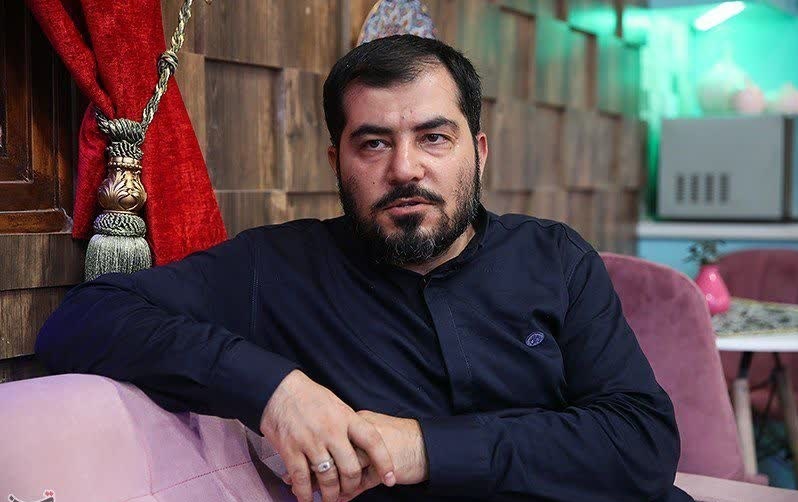
In quest for answers to these questions, Alwaght has talked to Seyyed Hashem Mousavi, a West Asia affairs expert, asking him for comments about the aspects and outcomes of this US military exit and Washington's new instruments to maintain its sway over Iraq.
Alwaght: Now that the US moved its forces out of Iraq, what do you think of its alternative strategy in Baghdad? Can we essentially think that military pullout means Iraq has lost its significance in the White House's regional strategy?
Mousavi: We need to distinguish between US’s “military withdrawal” from Iraq and its “strategic withdrawal.” What happened on September 30 marked the end of direct U.S. military presence in Iraq—but it does not mean the end of Baghdad and Washington’s security, political, and economic relationship. In fact, Washington appears to be trying to shift from a model of “direct presence and control” toward “remote influence.”
In this new phase, instead of stationing a substantial share of its forces at bases in Iraq, Washington can rely on other tools, including intelligence cooperation, training Iraqi forces, arms sales and support, defense partnerships, and political engagement. Previous Baghdad-Washington agreements had, in essence, already anticipated the transition from a coalition mission to a bilateral security relationship.
I therefore do not see the US withdrawal as absolutely equivalent to either a decline or an increase in Iraq’s security. Iraq’s security depends above all on the government’s ability to assert sovereignty, control its borders, strengthen its armed forces, and manage non-state armed groups.
One reality, of course, should not be ignored and it is that the exit of US forces erodes part of the external deterrence that currently exists in Iraq. Especially in air defense, intelligence, and surveillance, Iraq still faces gaps, and Iraqi officials themselves are seeking to strengthen air-defense systems and independent capabilities.
Therefore, if the US withdrawal is accompanied by a strengthening of Iraq’s national capabilities, it could lead to greater security independence for Baghdad. But if Baghdad cannot fill those gaps, competition among regional and domestic actors to shape Iraq’s security architecture may intensify.
Alwaght: How do you think the US exit will impact the type and future of the Baghdad-Washington relations? Will we see them scaled down or their form will change?
Mousavi: To my mind, the relationship will change shape, not come to an end. Even after its military withdrawal, the US still sees Iraq as a country that matters geopolitically, for energy, for regional security, and for Washington’s competition with Iran.
In effect, Washington now faces a choice; whether to use its remaining leverage to apply direct pressure on Baghdad, or to build a long-term relationship grounded in mutual interests. The experience of recent years has shown that excessive pressure can backfire, and can even push parts of Iraq’s political class toward reducing their dependence on the US.
At the same time, no one should assume that Iraq will drift out of Washington’s orbit after US troops leave. The US remains a player in arms, training, intelligence, investment, and finance. Even post-withdrawal American analyses have stressed that the central question for Washington is no longer how many soldiers it keeps in Iraq, but how to convert military presence into political and economic influence.
Baghdad, for its part, is also pursuing a kind of balance in its foreign relations. Iraq does not want to be defined solely through the prism of US-Iranian rivalry. So we will likely see Baghdad try to preserve its ties with Washington while expanding relations with regional countries and powers such as China and Russia.
Under such conditions, the Baghdad-Washington relationship will shift from a “security relationship built on military presence” to a “strategic partnership without a large-scale military footprint.”
Alwaght: How does the US holding of fisncial leverage maintain its power to determine Iraq developments?
Mousavi: This may be the most important part of the story. The withdrawal of US troops does not mean Washington loses all its levers of pressure; one of its most potent tools remains the international financial system and the dollar’s standing.
In recent years, Iraq’s oil revenues and Baghdad’s access to the international financial system have been one of the most sensitive pressure points in the Iraq-US relationship. On the eve of the US troop withdrawal, Reuters explained that a significant share of Iraq’s oil revenues is managed through a structure tied to the US Federal Reserve and the dollar-based financial system.
The stakes became clearer still in April, when the US government halted the transfer of part of the cash linked to Iraq’s oil revenues, a move that, according to Iraqi officials, raised concerns about its effects on Iraq’s currency market and economy.
So, even without soldiers on the ground, the US can wield “financial power.” But this lever is a double-edged sword and if Washington leans too heavily on financial tools for political pressure, it may push Baghdad toward building alternative financial and economic channels.
The US power in Iraq is no longer defined solely by military bases; it now resides in a network of dollars, banks, sanctions, investment, weapons, technology, and economic ties.
But that power should not be mistaken for total control. The US can influence some of Iraq’s decisions, but it cannot necessarily dictate every political development in Baghdad. Iraq’s political structure, Shiite factions, Kurds, Sunnis, the central government, and regional players, each forms part of the power equation.
Alwaght: How do you think the US exit will influence the process of disarming the resistance groups? Can it accelerate it or on the contrary strengthen the resistance groups?
Mousavi: This issue is one of the most complicated of Iraq after the US withdrawal. At first glance, there may be a thought with the US exit, the necessity for resistance arms will decrease. But the fact is that this issue is more complicated than this debate.
Iraq’s resistance groups are not merely a military force sitting outside the state structure and parts of them are embedded in Iraq’s political and security architecture, and that is precisely what makes disarmament so difficult.
In recent months, the Iraqi government has tried to push the issue of bringing weapons under state control, but the effort has run into opposition from some groups. Recent reports also indicate that the deadline for implementing the process has been pushed from its original date of September 2026 to June 2027.
From my viewpoint, the US withdrawal could open new political space on this issue, because one of the resistance groups’ most powerful arguments was resistance to the US military presence in Iraq. With direct American presence over, the government can argue that a new phase has begun and that security should be defined, more than ever, within the framework of the official state.
But on the other hand, if the resistance groups feel that the US withdrawal has created a security vacuum and heightened external threats, their incentive to preserve their military capacity may not diminish.
The core issue is not disarmament, but how to integrate existing military capacity into the official structure of the Iraqi state. If Baghdad can forge an internal political agreement that encompasses all of Iraq’s main factions, the odds of a gradual move toward a state monopoly on weapons will rise.
But if it advances from outside with the US pressure, it will likely face further resistance. So, the future of this debate depends not on the US exit but on the government's capability to create a home consensus and ensure security of all political factions.
American withdrawal has changed one equation in Iraq and it is that from now on, the Americans will rely less on military presence and more on financial, political, intelligence, and security levers to sway Baghdad policies.
In turn, Iraq’s success at this stage will depend on its ability to convert military independence into genuine independence in security and political decision-making.










