






Alwaght- After 23 years of occupation of Iraq, the US forces are scheduled to withdraw from the country by September's end. In recent days, reports and comments by Iraqi officials suggested an accelerated process of exit of the American military.
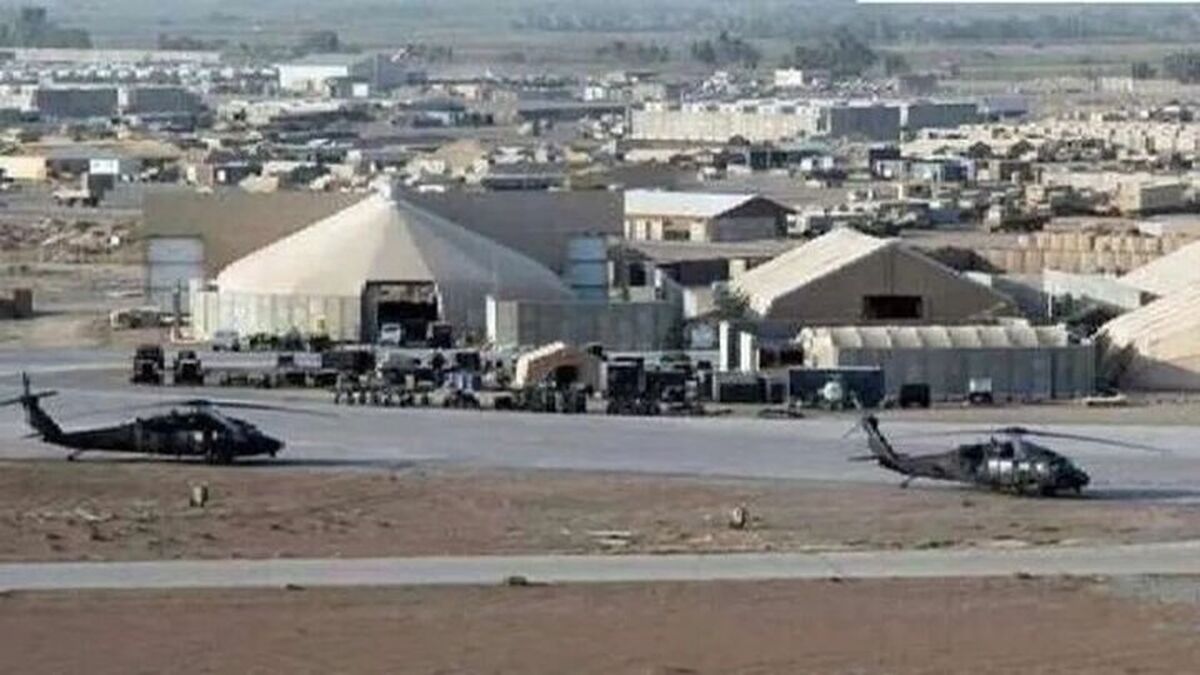
In this connection, security sources of Iraq said that the US continues to exit from Harir air base in Iraq's Kurdistan region and they are slated to evacuate by September 30.
The high-alert status at the Harir Air Base near Erbil has been lifted for the first time in days, with crews now clearing debris from an aerial surveillance balloon used as an early-warning system, according to Al-Ma’louma. Security sources had declared maximum readiness on Monday and sealed all entry points to the base over fears of potential attacks.
Separately, Iraq’s national security adviser, Qasim al-Araji, insisted that the timeline for US troop withdrawal remains firm, warning that "any attempt to delay the international coalition’s exit will have negative consequences."
Tactical withdrawal or sustainable strategy
Despite recent movements by US military personnel signaling a possible withdrawal from Iraq, the question remains: Is this a tactical, temporary pullback, or is Washington finally pursuing a new and lasting strategy?
Skepticism over a full U.S. exit runs deep, rooted in two decades of history. Washington previously withdrew its forces in 2011 after eight years of occupation, only to return three years later, in June 2014, with thousands of troops under the pretext of fighting ISIS terrorist organization. Since then, despite repeated Iraqi demands to end the US military presence and agreements with previous Baghdad governments, American forces have stayed, with Washington finding fresh justifications to dig in.
That track record leads analysts to doubt that Washington will ever truly leave Iraq for good. Atheer al-Shara, an Iraqi political analyst, told Al-Ma’louma: "Current data does not suggest that Washington has any intention of ending its security and defense relationship with Baghdad. The US may resort to delaying tactics regarding its planned full withdrawal by the end of September, tactics that do not necessarily mean keeping American troops on Iraqi soil after Sept. 30. Washington could declare the end of the international coalition’s mission while simultaneously preserving its bilateral defense ties with Iraq."
That scenario, al-Shara argued," would effectively mean transforming the US military footprint rather than ending it, shifting toward new forms of security and military cooperation that allow Washington to retain some leverage and capabilities in Iraq."
It is a playbook the US has already tested in recent years. Last year, for example, American forces pulled out of the Ain al-Asad base and relocated to the Kurdish region. And with Washington now opening its largest consulate in the Kurdistan Region, it is plausible that a number of US military and security personnel could remain under diplomatic or political cover, keeping a close watch on Iran and allied forces across the border.
Terms of Washington-Baghdad security pact
According to the deal signed in 2024 between Washington and Baghdad, the mission of the US-led Western coalition will end by September 30, but the American forces have withdrawn only from some of their bases. The key strategic change of this agreement was that the security relation between Iraq and the US within the Western coalition turned into a bilateral security partnership.
In the second phase, coalition forces could continue using bases in Iraq through September 2026 to support anti-ISIS operations in northeastern Syria, but only conditionally, pending field developments and ongoing consultations between Baghdad and Washington.
Though Washington tried in the agreement to preserve a residual troop presence through various loopholes, Iraqi Prime Minister Ali al-Zaydi, during his visit to Washington two months ago, told President Trump: "US forces will leave Iraq when the American-led coalition’s mission ends on September 30, and after that, American companies will come in."
Baghdad officials insist every US service member must be out by the deadline. Yet ambiguous clauses in the bilateral deal have fueled fresh doubts about a full withdrawal. Under the agreement struck two years ago, even after the coalition’s counter-ISIS mission wraps up, Baghdad and Washington will keep cooperating on training, military advising, arms sales, and defense financing, arrangements that could easily serve as a backdoor for continued US security influence and a de facto on-the-ground presence.
Atheer al-Shara weighed in on that dynamic, saying: "The US pullout may turn out to be largely symbolic, much like previous American announcements about the nature of their presence in Iraq. The next phase will reveal whether the declared end of the mission truly results in a complete withdrawal, or simply rebrands the US footprint under new titles and new arrangements."
Resistance groups' skepticism and conditions for disarming
Although Washington in recent months has put strains, using economic and political tools, on the Iraqi government to disarm the resistance factions, resistance leaders have repeatedly asserted that as long as the occupation forces are still in Iraq, they will not hand over their weapons. Several prominent resistance groups have so far refused to disarm and recently set 10 conditions before they agree to weapons handover.
Salam Hossein, a leader within the Badr Organization, has issued a stark warning against any push to disarm resistance factions, asserting that "the matter of the resistance groups and their weapons is a national and sovereign decision, not one to be dictated from abroad by Trump or anyone else. The occupier must first leave Iraq entirely, and only then can they demand that the resistance hand over its arms."
Hussein added: "The continued presence of occupiers, and the dangers this country may still face, makes surrendering resistance weapons a profoundly risky move, especially against a nation like the US, which has a record of breaking pacts and commitments."
Yet, despite such rhetoric, the latest reports indicate that negotiations within the disarmament committee with resistance factions over state monopolization of weapons have now entered a critical phase.
A three-member panel, comprising Mohammed Shia al-Sudani, Nouri al-Maliki, and Hadi al-Amiri, has held a series of closed-door meetings with armed groups in recent days. Operating under the mandate of the State Administration Coalition and the Shia Coordination Framework (SCF), the committee is backing Prime Minister Ali al-Zaydi’s push to bring all weapons under state control, with the stated goal of reaching a solution that avoids internal conflict.
Notably, the language in these talks appears to be shifting: the term "disarmament" is gradually being replaced by softer formulations such as "weapons regulation," "weapons management," and "placing the use of weapons under the authority of the commander in chief of the armed forces."
According to a report by Shafaq News, this formula could allow groups to preserve their organizational structures while conditioning any weapons use on government approval and the commander-in-chief’s authorization.
On the other side, factions like Kata'ib Hezbollah, Harakat al-Nujaba, and Kata'ib Sayyid al-Shuhada remain adamantly opposed to handing over their arms. They insist that the withdrawal of all foreign forces from Iraq and binding guarantees against external attacks are non-negotiable prerequisites.
Distrustful of Washington, these resistance groups have also warned against Trump’s latest overtures. Akram al-Kaabi, secretary-general of al-Nujaba, recently warned that "let Trump know that we will be watching September 30 with eagerness and full readiness. If the occupier reneges on its commitment to a complete withdrawal, we will launch a decisive battle against them. If even a single US soldier remains on Iraqi soil after September 30, we will send his corpse back to America."
Al-Kaabi added: "If Iran sent the American president fleeing in terror in a refrigerator, Iraq will soon give him a stroke."
Strategic policy or escape?
The gradual withdrawal of US forces from Iraq cannot be written off simply as a sign of Washington's waning interest in Baghdad within its regional strategy, nor can it be reduced to American fear of Iranian strikes or pressure from resistance factions.
The reality is, both factors are at play. The US-Iraq security agreement reached in September 2024 makes clear that Washington had long since concluded that a large-scale military footprint in Iraq no longer aligned with its strategic needs. The coalition mission needed to end, and the bilateral security relationship had to evolve into a new phase.
Yet, the security developments of recent months have dramatically raised the cost of keeping US troops in Iraq. Iraq's geographic proximity to Iran, along with warnings from resistance groups and the growing reality that American bases and personnel are sitting targets for missile and drone attacks, has made the continued presence far riskier for Washington. Particularly amid escalating US-Iran tensions, Iraq could easily become one of the most critical arenas for direct or proxy confrontation, a prospect that carries not only military costs for the US but also risks straining its relationship with Baghdad.
Seen through that lens, the American withdrawal looks like a calculated retreat under pressure. Washington wants to reduce its forces' vulnerability on one hand, while on the other, it is trying to frame that pullback not as a defeat or a flight, but as a transition from "military presence" to "security partnership." Actually, the US can factor an exit that comes under increasing costs and pressure of resistance groups as a strategic and preplanned decision.